Category Innovation/ R&D

Key IP Delegates In Geneva – Fully Updated!

Geneva, Switzerland is the gathering point for the world's governments to set international policy and practices relating to intellectual property rights, as they cut across many of the public policy issues of the day (eg innovation, trade, internet, health, food), including at the World Intellectual Property Organization, World Trade Organization and World Health Organization. Everyone has a stake in what governments and their stakeholders do in these venues. But who do you talk to in order to get your message through? Now Intellectual Property Watch has fully updated its unique list of the diplomats representing many of the key nations in those institutions in Geneva. Available here for subscribers only!
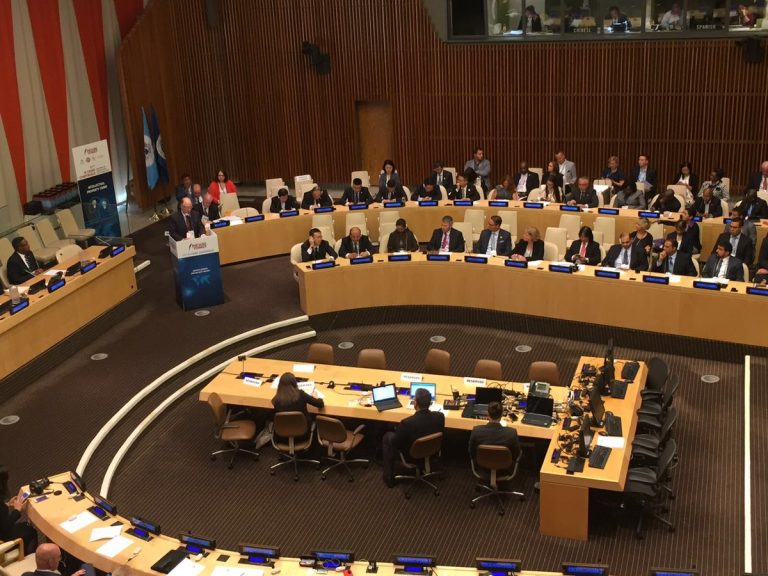
Law Enforcement, Industry Hold Event Against IP Crime At UN

NEW YORK – An event of international law enforcement, security experts and industry this week at the United Nations headquarters in New York aimed at building strategies against a wide range of intellectual property crime worldwide. At the event, a senior United States official discussed plans to expand a program of US IP experts abroad.

Case Study – Building Effective IP Coverage Efficiently Within An International Engineering Conglomerate

This article describes how to build up an effective IP coverage for an international industrial conglomerate by defining the basic IP shield construction for all group companies, setting up IP generation programs and developing an IP focus while doing this efficiently by engaging the management into the IP decisions and managing the mix of internal and external IP service resources.

Deadline Next Week For Swedish Sida Training On Genetic Resources And IP Regulation

Applications are due by 4 September for an all-expenses-paid Swedish International Development Cooperation Agency (Sida) Advanced International Training Programme aimed at building capacity in intellectual property and genetic resources in support of innovation.

Malaysia Inclusion In Gilead Voluntary Licence – A Product Of Compulsory Licence Pressure

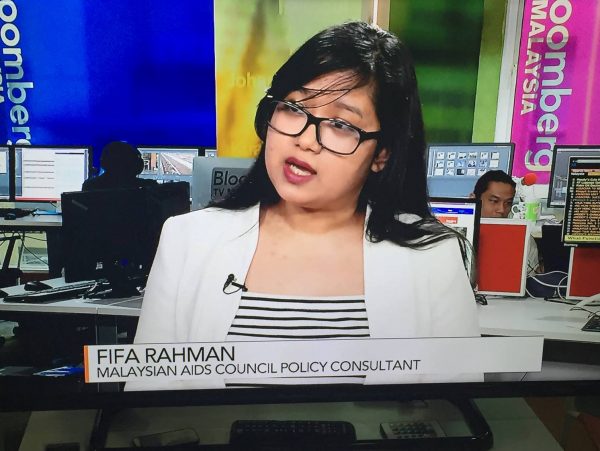
Fifa Rahman

Gilead’s announcement today that they would include four middle-income countries (Malaysia, Thailand, Belarus, Ukraine) in their sofosbuvir voluntary licence was a welcome surprise, and will enable millions access to their highly effective, but exorbitantly priced, drug. The decision to include these countries, however, no doubt is a response to increasing pressure from within these countries to either issue a compulsory licence (CL) or a government use licence (GUL), invalidate the sofosbuvir patents, or block data exclusivity for the drug.

Access To Medicines Foundation Details Methodology For 2018 AMR Benchmark

The Amsterdam-based Access to Medicines Foundation today published the methodology it will use for its 2018 framework for evaluating how pharmaceutical companies are taking action to limit antimicrobial resistance, addressing the rising the global problem of overuse of antibiotics leading to resistance with few new ones in the pipeline.

Report Shows Benefits Of US Investment In Global Health R&D

A new report from a global health advocacy group in Washington, DC shows the importance to the United States of US government investment in global health research and development and argues that more investment would have a tremendous positive impact on lives worldwide, including in fighting neglected diseases.

Report From WHO Fair Pricing Meeting Shows Balanced Discussion

A wide range of governments and stakeholders attended a closed meeting in the Netherlands in May to address the ongoing problem of pricing medicines to pay for research and the resulting lack of affordability of those medicines. The report from the World Health Organization-led meeting shows a range of points were made by participants and signals a move to change the global policy.

Companies Prefer Trade Secrets To Patents To Protect Innovation, EUIPO Finds

“Despite their economic importance, and in particular their role in protecting returns from innovation, trade secrets are poorly studied and their relationship with patents is often misinterpreted,” the EU Intellectual Property Office (EUIPO) said in a study published this month. It used a survey of around 200,000 companies in Europe's manufacturing and service industries to determine what factors influenced their choice between patents and trade secrets, as well as their overall use of both mechanisms. The results could help policy-makers, the Office said. It also holds out opportunities for innovative lawyers and intellectual property firms, said one IP management consultant.

US, European Views On IP Management And Digital Business

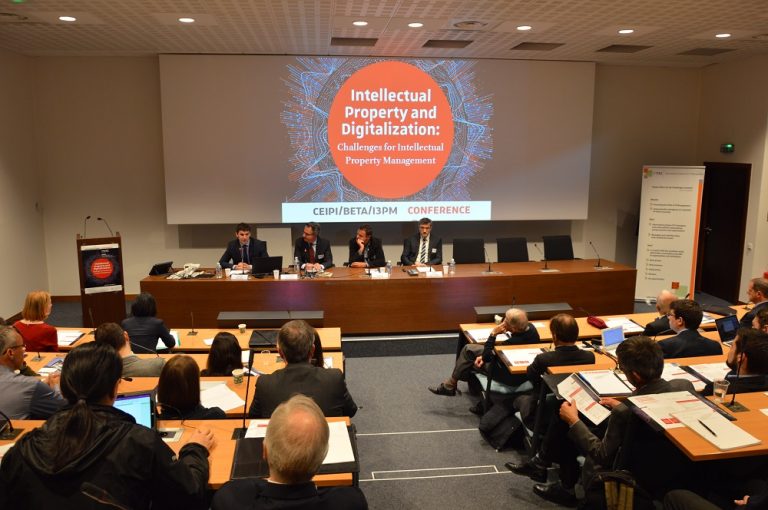
Data-driven technologies are enabling the expansion of trade and data flows around the world. We have disruptive smart products, smart industrial processes, smart clouds and smart services. Traditional industries such as pharmaceuticals, chemical and mechanical engineering digitally transform production processes to generate custom-tailored services and improve competitiveness using artificial intelligence while new companies emerge with disruptive offers. Such artificial intelligence-based business models, however, are bringing about a rethinking in European regulations in relation to copyrights, such as that deployed by DeepMind and Pinterest, for instance, because machine learning may reproduce countless amounts of proprietary content to generate raw solutions. A recent event in Paris delved into these and other issues, including data ownership and access rights, as well as inventions by computers.