Category Innovation/ R&D

A Review Of ‘Standard Essential Patents Within Global Networks – An Emerging Economies Perspective’ By Dieter Ernst

By Roya Ghafele, OxFirst - Dieter Ernst’s study is one of the few, if not the only one, to thoroughly examine the role, function and effects of Standard Essential Patents from a developing country’s perspective. As such, the study is a refreshing read, given that the discourse on Standard Essential Patents and the FRAND (fair reasonable and non-discriminatory) regime is pretty much driven from a developed country’s point of view.


Patent Data – The Modern Investor’s Crystal Ball

Sirena Rubinoff writes: What if there was a crystal ball that could tell you where and when to invest your money? It sounds like science fiction, but engineers at MIT have actually developed a formula that can predict future events in tech development. The formula is based on a combination of big data from patent applications and smart analytics which, when put together, can estimate how fast a technology is advancing.

E-Commerce, Access To Medicines Catching On At WTO TRIPS Council

The World Trade Organization committee on intellectual property rights met this week with some discussion items that departed from past agendas but are becoming more familiar. A discussion on electronic commerce revealed interest from members, despite a slow start on details. And discussions on the United Nations High-Level Panel on Access to Medicines prompted nourished interactions and a wish by some countries to pursue the subject in future sessions.

What Is Fair Pricing For Medicines? WHO-Netherlands Forum Aims To Find Out

Public health stakeholders – and just about everyone else – may take notice of a meeting planned for May in the Netherlands, as it could offer the beginning of a new approach to pharmaceutical costs. High drug prices have become a ‘kitchen table’ issue in countries of all economic sizes recently, and the World Health Organization is teaming up with the Dutch government to address it in a new and practical way.

A Look At Latest Figures On R&D For Neglected Diseases

Financing for research and development into so-called neglected diseases – those predominantly affecting lower-income populations – rose recently mainly due to the Ebola outbreak, and private sector contributions represent a bigger share, according to the latest available data from a Gates Foundation-supported database.

WHO Issues First List Of Potential Deadly Bacteria If No New Antibiotics Are Found

Microbial resistance to antibiotics has been rising and the world is now facing the serious possibility of falling back to the days when infectious diseases were hardly treatable. The World Health Organization today published a list of bacteria for which new antibiotics are most urgently needed, to help with the race against time, as the medical world is running out of treatment options.

German-Backed Report Lays Out Strategy For R&D Into New Antibiotics

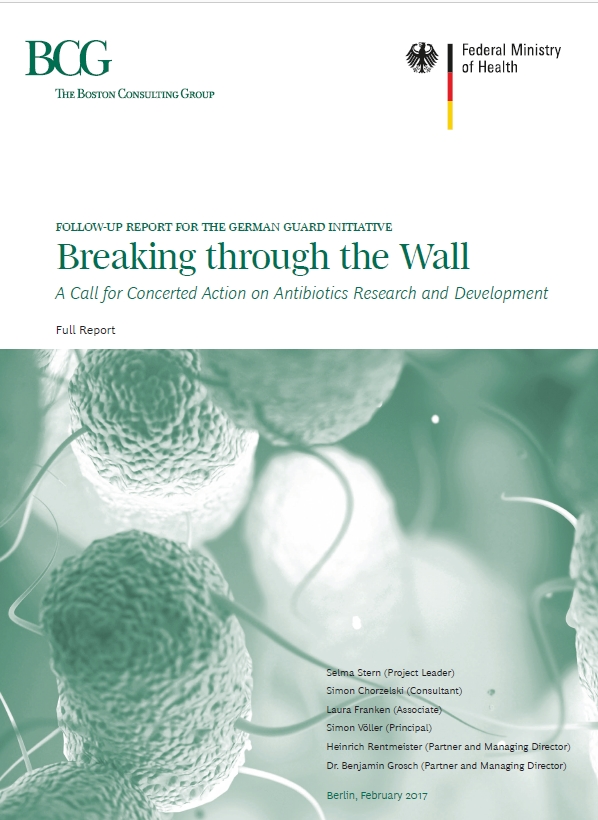
In the face of the lack of attractiveness of investing in research for new antibiotics for the pharmaceutical industry, and the general lack of funding for research and development for novel antibiotics, a new report commissioned by the German Federal Ministry of Health calls for countries to take action. In particular, the report proposes a global union for research and development, a global research fund, and a global launch reward. And access and pricing are key components of the strategy, it says.

Momentum-Building: An Interview With Ruth Dreifuss On High-Level Panel On Access To Medicines

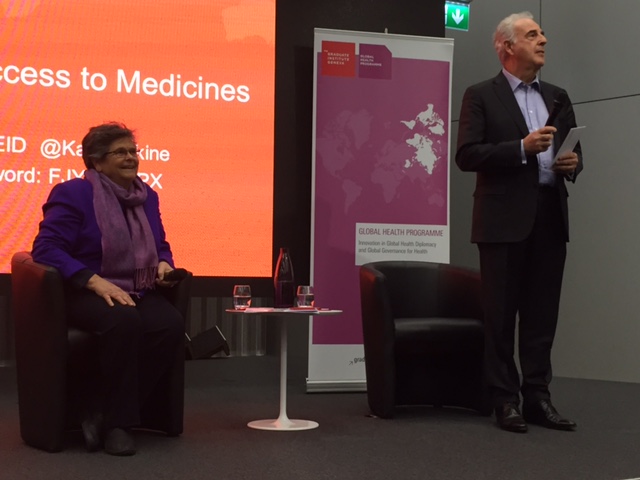
Former Swiss President Ruth Dreifuss, co-chair of the United Nations Secretary General’s High-Level Panel on Access to Medicines, participated in a Geneva event on rare diseases earlier this month. She agreed to answer Intellectual Property Watch’s Catherine Saez about the High-Level Panel report, in particular how it was received by the international community, her take on criticisms that have been voiced, and the importance that the report be discussed at the international level such as the World Health Assembly.

New Gene-Editing Technology Whets Appetites In Health, Food Industry, Fuels Patent Fights

A new discovery allowing easier and swifter genome editing, considered by some as a major game changer in the field of biology, is opening doors to new technological wonders in many areas, such as medicines and agriculture. Yesterday, the United States Patent and Trademark Office issued a ruling on a case where two US university laboratories both claimed the invention of a genome editing technique. The USPTO decided that the two universities had made distinct discoveries. In Europe, patents from both universities on the technology are also challenged at the European Patent Office.