Category Innovation/ R&D

Disclosure, Sanctions – Still To Be Overcome In WIPO Genetic Resources Negotiations

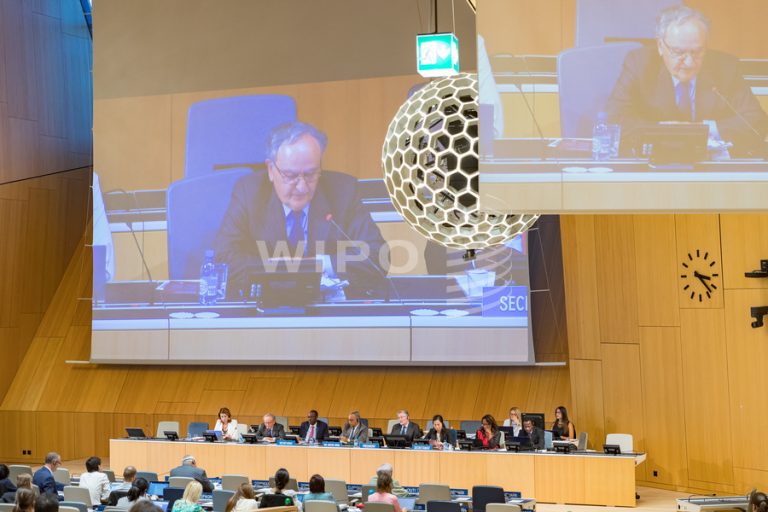
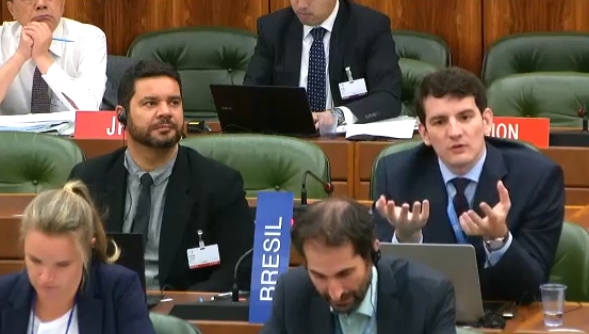
Efforts to draft new language to bridge gaps in this week’s negotiations on a potential treaty protecting genetic resources at the World Intellectual Property Organization were praised by a number of participants. However, what is now presented as a "package" proposition, focusing the instrument on patents, left some developing countries with the feeling that the concessions they made on the patent-only focus are not being met with a similar efforts by others, in particular on a proposed disclosure requirement for patent applicants.

WIPO Genetic Resources Expert Group Ponders Disclosure Requirement, Databases

On the eve of this week's meeting of a World Intellectual Property Organization committee on genetic resources, an expert group met behind closed doors to discuss some of the more difficult issues. The report of the expert group to the full committee on 25 June confirmed differences but also common views and avenues to be explored, and has been carried into the week.

US Raises Economic Concerns About Proposals At WIPO On Patents And Genetic Resources

Normally known for sanguine views of rules to strengthen intellectual property rights globally, the United States government this week submitted a paper at the World Intellectual Property Organization putting forward private sector economic concerns about proposals to strengthen international rules for patenting of genetic resources aimed largely at helping developing countries.

On Questionable Legal Basis, US Court Expands Range Of Patentable Inventions

For more than a decade, the United States has been making it harder to obtain patents. A series of court rulings have steadily restricted the types of inventions that are patent-eligible. The tide, however, may be now turning. The Federal Circuit’s recent decision in Vanda Pharmaceuticals v. West-Ward Pharmaceuticals has opened the way to many future patents on biotech and personalized medicine. The ruling is a big step forward for the biotech and medical industries, and perhaps for patients seeking better medical care. But there’s a catch. Vanda could be overturned because it conflicts with the US Supreme Court’s 2012 decision in Mayo Collaborative Services v. Prometheus Laboratories.

The Myth Of IP Incentives For All Nations – Q&A With Carlos Correa

Dr Carlos Maria Correa, an Argentinian economist and lawyer, is globally renowned for his expertise on international trade, intellectual property, health, technology transfer, investment policy and especially their impact on developing countries. He has authored several books and academic articles and been a visiting professor at several universities. Additionally, he has consulted with many United Nations agencies, the World Bank, and other regional and international organisations and has advised several governments on intellectual property, innovation policy and public health. Correa was a member of the UK Commission on Intellectual Property, of the Commission on Intellectual Property, Innovation and Public Health established by the World Health Assembly and of the FAO Panel of Eminent Experts on Ethics in Food and Agriculture.

Currently, he is the Director of the Centre for Interdisciplinary Studies on Industrial Property and Economics Law, at the University of Buenos Aires. He takes over as the Executive Director of the Secretariat of the Geneva-based South Centre from 1 July 2018. Correa recently engaged in an interview with Patralekha Chatterjee for Intellectual Property Watch. [Note: this interview is number two of two. The first was with Dr Othoman Mellouk.]

WIPO Workshop Looks At Potential Impact Of Reducing Patent Fees For Universities

The World Intellectual Property Organization's main financial resource is from the global patent treaty it manages, allowing inventors to file international patent applications and gain protection in a large number of countries. WIPO members have been debating for some time whether universities should benefit from a fee reduction, in particular those from developing countries to encourage patent filing. A workshop held at WIPO this week pondered whether a fee reduction would lead to more patenting of inventions by universities. The answer is apparently not clear-cut.

Rethinking Article III Standing In IPR Appeals At The Federal Circuit (US)

If the Federal Circuit will not correct its misplaced jurisprudence, then it is time for the Supreme Court to correct course, and bring into line the Federal Circuit’s IPR standing to appeal jurisprudence, with the Supreme Court’s (and other Circuits’) more forgiving law of allowing petitioners whose petitions are denied, to challenge such denials, particularly when Congress has set forth reasonable conditions, like Section 319, upon which such challenge is to occur, write Charles Macedo, Chandler Sturm, and James Howard.

Deference, Not Delegation! – WIPO PCT Negotiations

A new PCT Proposal seeks to amend the PCT Regulations so as to provide Member States to enter into a voluntary or opt-in arrangement that would allow such Member state to ‘outsource’ it’s patenting mechanism to another country/ regional treaty office even if it is not a member of such regional treaty. However, a patenting office with a full-fledged examination cadre acts a core component in capacity building for the Member State and serves to protect against imposition of TRIPs plus provisions by being an active part of the national policy discourse. Instead of opting in for full-fledged ‘outsourcing’ of their patenting function, it may be a better idea (in the long term) to develop their internal patent office cadre, develop appropriate IP policies best suited to their stage of development and at the same time, giving deference to the patenting decisions of like-minded countries. Developing countries will stand to benefit more by showing deference to decisions of like countries, rather than delegating the power to make those decisions. By granting a Contracting state the power to grant and reject patents of another State, this proposal could tantamount to introducing substantive patent law provisions through the backdoor: an endeavour to harmonize substantive patent law that the WIPO has failed to achieve over the years.

Experts To Regulators: AI Is A Panacea – With Hidden Dangers To Humanity

The heads of national telecommunications and technology regulatory authorities are gathering next month at the International Telecommunication Union to address new technologies. Not surprisingly, artificial intelligence and data hold centre stage in the programme. The meeting comes after a recent event at the United Nations where divergent voices recognised the potential beneficial uses of new technology, but warned against the undeclared intentions behind it. Separately, a new study from the Massachusetts Institute of Technology shows the influence of data in machine learning algorithms with chilling consequences.

Opportunities, Risks Of Rapid Technological Change Discussed At UN

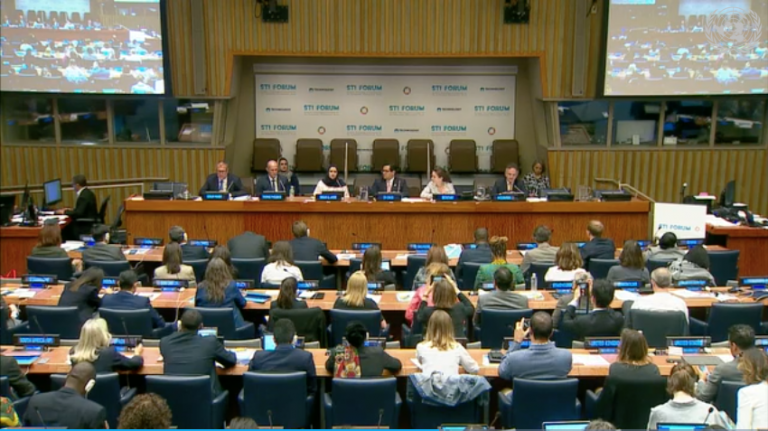
The Third annual United Nations Multi-stakeholder Forum on Science, Technology and Innovation for the Sustainable Development Goals opened with Marie Chatardová, president of the Economic and Social Council, stating that “STI is shaping the trajectory of our society, helping the world address global challenges and achieve Sustainable Development Goals.”