Category Innovation/ R&D

Global Innovation Divide: Can Investment In Innovation Bridge The Gap?

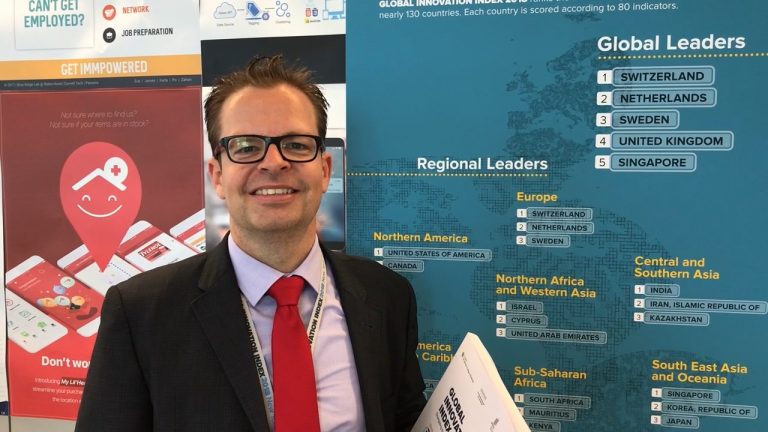
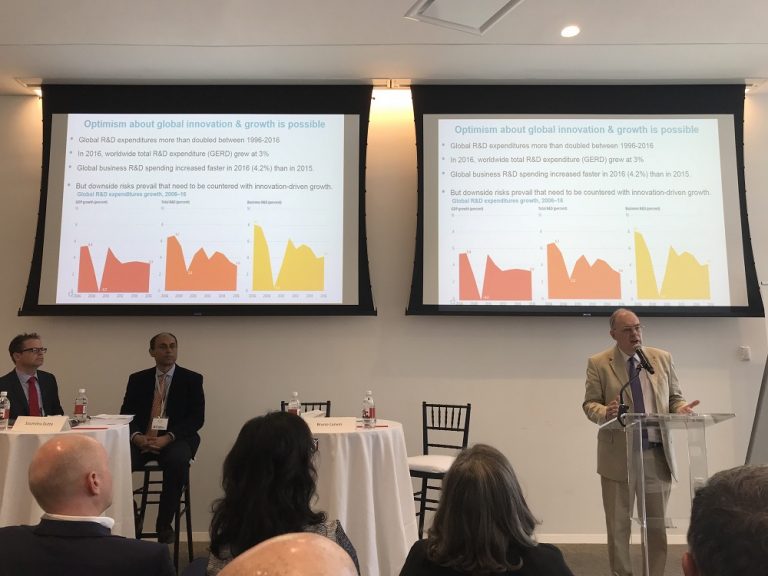
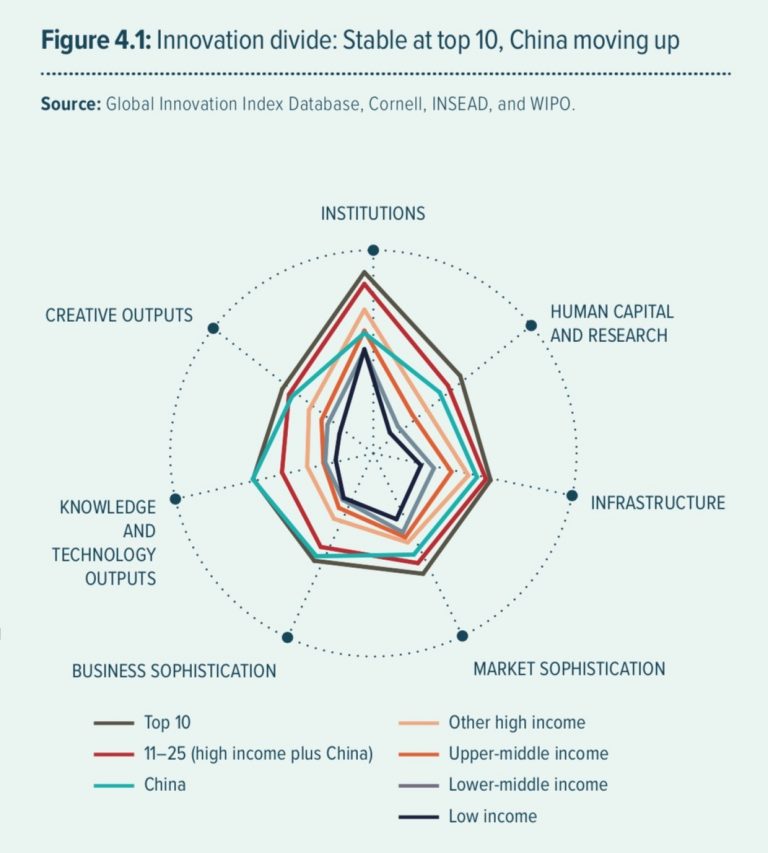
The Global Innovation Index 2018, launched on 10 July in New York, has lauded the rise of China as a model for how other low and middle-income economies can advance on innovation. Amid this optimism, however, the global innovation divide remains in step with the global income divide, raising questions for how to bridge this gap. The new index shows signs of progress.

Balance Achieved In Future Work For WIPO Patent Law Committee, Delegates Say

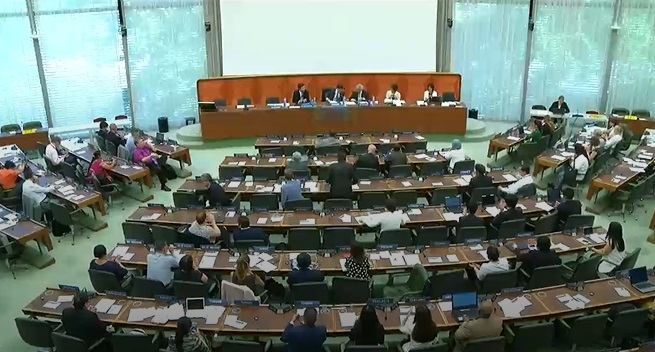
The last World Intellectual Property Organization committee before the summer break ended on a happy note this week. After some time spent tweaking the future work of the WIPO committee on the law of patents, delegates appeared satisfied with the balance achieved. The week saw plans for conferences, numerous new proposals and calls for reports, on subjects such as research exceptions, patents and medicines access, compulsory licensing, technology transfer, and patent quality.

Global Innovation Index 2018: China Breaks Into Top 20, US Drops Out Of Top 5

NEW YORK -- The 11th edition of the Global Innovation Index 2018 (GII), co-published by Cornell University, INSEAD, and the World Intellectual Property Organization, was released yesterday at a launch event in New York. This year's report showed Switzerland still at the top overall, China continuing to rise, the United States slipping, and explored how countries can vary on inputs and outputs of innovation.

Monopolies: State And Corporate Interests Surrounding Access To Medicines

Amongst the many issues faced by developing countries to ensure access to medicines, cost is a primary one. Proposals to tackle it include limiting the price and regulating competitive conditions. Monopolies created by patents are seen by many as an impediment to accessing basic healthcare. Meanwhile, countries have realised that imposing stringent criteria for granting patents and taking a long duration to process them could be detrimental to them as much as resisting the regime.

Excessive Pricing And Sham Patent Litigation: The Pfizer And AbbVie Decisions

Frederick Abbott writes: Competition law is a critical tool in seeking to maintain some semblance of reasonable pricing in the pharmaceutical market. It is particularly important as legislators around the world appear extremely hesitant to address pharmaceutical pricing in meaningful ways, regrettably influenced by well-funded lobbying.

Two recent competition law decisions discussed below illustrate the importance of and challenges to regulating the pharmaceutical sector. In the first, the UK Competition Appeal Tribunal (CAT) partially upheld and partially reversed and remanded (pending briefing) a decision by the Competition and Markets Authority (CMA) fining Pfizer and Flynn close to £90 million for abuse of dominant position in the excessive pricing of an anti-epilepsy drug. The CAT decision is problematic because it creates unnecessary and unwarranted hurdles to findings of excessive pricing in the UK. In the second decision, the US Federal Trade Commission succeeds in proving that AbbVie engaged in abuse of monopoly power by engaging in sham patent litigation against two generic producers in order to delay market entry of competitive products. The Federal District Court found that AbbVie’s patent lawyers by “clear and convincing” evidence had knowingly pursued patent infringement claims without chance of success for no other purpose than to delay market entry.

Disclosure, Sanctions – Still To Be Overcome In WIPO Genetic Resources Negotiations

Efforts to draft new language to bridge gaps in this week’s negotiations on a potential treaty protecting genetic resources at the World Intellectual Property Organization were praised by a number of participants. However, what is now presented as a "package" proposition, focusing the instrument on patents, left some developing countries with the feeling that the concessions they made on the patent-only focus are not being met with a similar efforts by others, in particular on a proposed disclosure requirement for patent applicants.

WIPO Genetic Resources Expert Group Ponders Disclosure Requirement, Databases

On the eve of this week's meeting of a World Intellectual Property Organization committee on genetic resources, an expert group met behind closed doors to discuss some of the more difficult issues. The report of the expert group to the full committee on 25 June confirmed differences but also common views and avenues to be explored, and has been carried into the week.

US Raises Economic Concerns About Proposals At WIPO On Patents And Genetic Resources

Normally known for sanguine views of rules to strengthen intellectual property rights globally, the United States government this week submitted a paper at the World Intellectual Property Organization putting forward private sector economic concerns about proposals to strengthen international rules for patenting of genetic resources aimed largely at helping developing countries.

On Questionable Legal Basis, US Court Expands Range Of Patentable Inventions

For more than a decade, the United States has been making it harder to obtain patents. A series of court rulings have steadily restricted the types of inventions that are patent-eligible. The tide, however, may be now turning. The Federal Circuit’s recent decision in Vanda Pharmaceuticals v. West-Ward Pharmaceuticals has opened the way to many future patents on biotech and personalized medicine. The ruling is a big step forward for the biotech and medical industries, and perhaps for patients seeking better medical care. But there’s a catch. Vanda could be overturned because it conflicts with the US Supreme Court’s 2012 decision in Mayo Collaborative Services v. Prometheus Laboratories.

The Myth Of IP Incentives For All Nations – Q&A With Carlos Correa

Dr Carlos Maria Correa, an Argentinian economist and lawyer, is globally renowned for his expertise on international trade, intellectual property, health, technology transfer, investment policy and especially their impact on developing countries. He has authored several books and academic articles and been a visiting professor at several universities. Additionally, he has consulted with many United Nations agencies, the World Bank, and other regional and international organisations and has advised several governments on intellectual property, innovation policy and public health. Correa was a member of the UK Commission on Intellectual Property, of the Commission on Intellectual Property, Innovation and Public Health established by the World Health Assembly and of the FAO Panel of Eminent Experts on Ethics in Food and Agriculture.

Currently, he is the Director of the Centre for Interdisciplinary Studies on Industrial Property and Economics Law, at the University of Buenos Aires. He takes over as the Executive Director of the Secretariat of the Geneva-based South Centre from 1 July 2018. Correa recently engaged in an interview with Patralekha Chatterjee for Intellectual Property Watch. [Note: this interview is number two of two. The first was with Dr Othoman Mellouk.]

WIPO Workshop Looks At Potential Impact Of Reducing Patent Fees For Universities

The World Intellectual Property Organization's main financial resource is from the global patent treaty it manages, allowing inventors to file international patent applications and gain protection in a large number of countries. WIPO members have been debating for some time whether universities should benefit from a fee reduction, in particular those from developing countries to encourage patent filing. A workshop held at WIPO this week pondered whether a fee reduction would lead to more patenting of inventions by universities. The answer is apparently not clear-cut.