Category Innovation/ R&D

Rethinking Article III Standing In IPR Appeals At The Federal Circuit (US)

If the Federal Circuit will not correct its misplaced jurisprudence, then it is time for the Supreme Court to correct course, and bring into line the Federal Circuit’s IPR standing to appeal jurisprudence, with the Supreme Court’s (and other Circuits’) more forgiving law of allowing petitioners whose petitions are denied, to challenge such denials, particularly when Congress has set forth reasonable conditions, like Section 319, upon which such challenge is to occur, write Charles Macedo, Chandler Sturm, and James Howard.
Deference, Not Delegation! – WIPO PCT Negotiations

A new PCT Proposal seeks to amend the PCT Regulations so as to provide Member States to enter into a voluntary or opt-in arrangement that would allow such Member state to ‘outsource’ it’s patenting mechanism to another country/ regional treaty office even if it is not a member of such regional treaty. However, a patenting office with a full-fledged examination cadre acts a core component in capacity building for the Member State and serves to protect against imposition of TRIPs plus provisions by being an active part of the national policy discourse. Instead of opting in for full-fledged ‘outsourcing’ of their patenting function, it may be a better idea (in the long term) to develop their internal patent office cadre, develop appropriate IP policies best suited to their stage of development and at the same time, giving deference to the patenting decisions of like-minded countries. Developing countries will stand to benefit more by showing deference to decisions of like countries, rather than delegating the power to make those decisions. By granting a Contracting state the power to grant and reject patents of another State, this proposal could tantamount to introducing substantive patent law provisions through the backdoor: an endeavour to harmonize substantive patent law that the WIPO has failed to achieve over the years.

Experts To Regulators: AI Is A Panacea – With Hidden Dangers To Humanity

The heads of national telecommunications and technology regulatory authorities are gathering next month at the International Telecommunication Union to address new technologies. Not surprisingly, artificial intelligence and data hold centre stage in the programme. The meeting comes after a recent event at the United Nations where divergent voices recognised the potential beneficial uses of new technology, but warned against the undeclared intentions behind it. Separately, a new study from the Massachusetts Institute of Technology shows the influence of data in machine learning algorithms with chilling consequences.

Opportunities, Risks Of Rapid Technological Change Discussed At UN

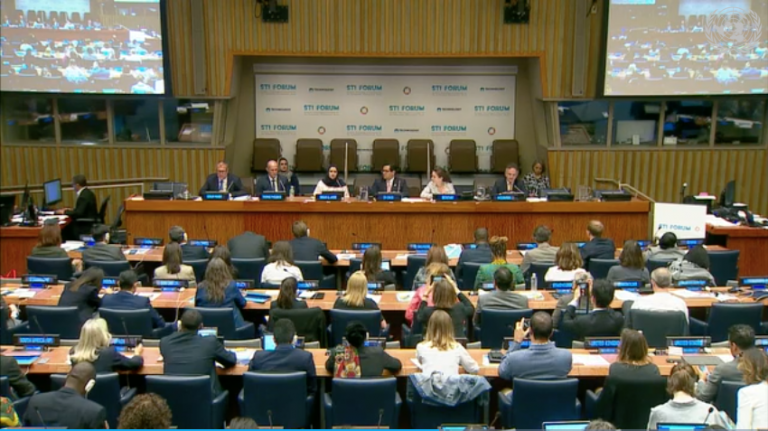
The Third annual United Nations Multi-stakeholder Forum on Science, Technology and Innovation for the Sustainable Development Goals opened with Marie Chatardová, president of the Economic and Social Council, stating that “STI is shaping the trajectory of our society, helping the world address global challenges and achieve Sustainable Development Goals.”

US Section 301, China, And Technology Transfer: Law And Its Limitations Revisited (Again)

Frederick Abbott writes: On 20 May 2018, US Treasury Secretary Mnuchin announced that the US and China were “putting the trade war on hold” while the two countries seek to “execute the framework” of a broad agreement intended to reduce the US trade deficit in goods with China. According to the joint statement issued on 19 May 2018, “Both sides attach paramount importance to intellectual property protections, and agreed to strengthen cooperation. China will advance relevant amendments to its laws and regulations in this area, including the Patent Law.”

Civil Society Issues Call For Action On Draft WIPO Copyright Exceptions

This week the World Intellectual Property Organization copyright committee is looking at exceptions and limitations to copyright. A range of stakeholders with opposing views delivered long statements explaining their positions. Some proponents of mandatory international limitations and exceptions for certain actors cited the United Nations Sustainable Development Goals inscribing equitable quality education as a right. Others, like publishers’ associations, said the current international system provides ample possibilities to devise national exceptions and limitations.

‘Every Great Science Discovery, Invention, Is The Stuff Of Dreams, Not The Stuff Of Reason’: Interview With David Hanson Of Hanson Robotics

Sophia, the well-known human-like robot who acquired citizenship in Saudi Arabia, was at the Artificial Intelligence for Good Global Summit which took place earlier this month in Geneva. Her creator, David Hanson, also CEO and founder of Hanson Robotics, gave an interview to Intellectual Property Watch's Catherine Saez and explained his philosophy about intellectual property, the needed spark of interest in human-like robots, data collection, and innovation.

Hanson is also lead designer and inventor of key technologies including Frubber nanotech, facial expressions and AI software. He is former Walt Disney Imagineering designer, and recipient of numerous awards. A video interview about Sophia is embedded in this text.

IP Rights Through Two Lenses At Next Week’s TRIPS Council: Improving Lives, Competition Law

Next week, the World Trade Organization intellectual property committee is invited to discuss two distinct aspects of intellectual property protection. One group of countries is proposing to explore the value of IP and its role in improving lives in a persistent agenda item on IP and innovation. Another group of countries is pushing for a more recent agenda on IP and the public interest and next week is suggesting to discuss how to use competition laws against the abuse of IP rights.

MPP Board Gives Green Light To Expansion, Now Has To Identify Candidates

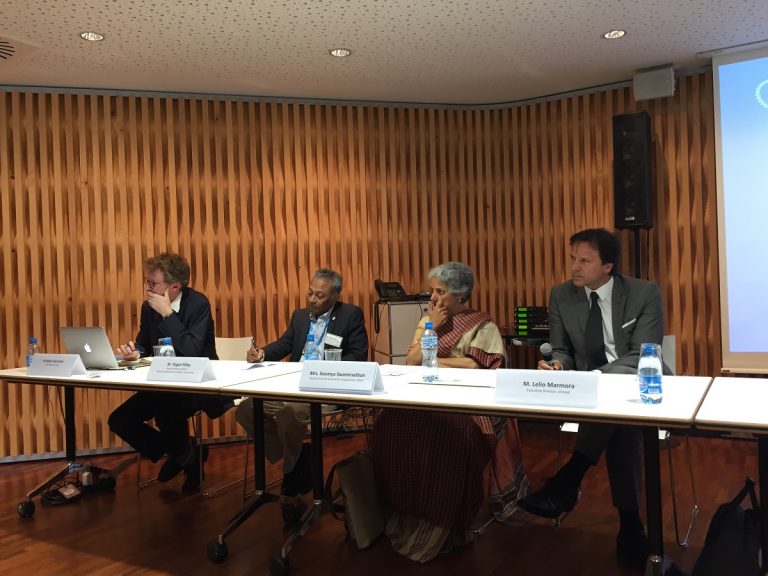
The Medicines Patent Pool announced this week that its Board agreed on the extension of the MPP mandate to patented medicines on the World Health Organization Essential Medicines List. The decision follows an extensive feasibility study. During a side event held on the margins of the annual World Health Assembly, Patent Pool officials explained the findings of the study, while in the audience, a representative of the pharmaceutical industry suggested a cautious approach.