Category Innovation/ R&D

Fifa Rahman

Extended Monopolies On Biologic Drugs – A Warning To Developing Countries

Historically, the US has been the primary demandeur of maximalist IP norms in FTAs. Pharmaceutical IP is market-driven, and this is no different for biologic drugs, which dominate the list of bestselling drugs worldwide, making them important economic commodities. Developing country governments must take note of the US pushing for biologics exclusivity through NAFTA as this signifies an effort to change norms worldwide.

Study: Generic Drug Industry Embraces Faster, Cheaper Pathway For Challenging Patents

A new study by researchers at the Program On Regulation, Therapeutics, And Law (PORTAL) at Harvard Medical School and Brigham & Women’s Hospital reveals that generic drug companies have been successful about 50% of the time when challenging patents covering FDA-approved pharmaceutical products via a new, administrative review procedure of patent validity created by Congress called “inter partes review.”

Negotiators On UN TB Resolution May Have A Deal

NEW YORK – Negotiators for a United Nations declaration on tuberculosis, meeting intensively in New York this week, may have reached agreement today on a key sticking point related to intellectual property, innovation and access to new medicines, according to sources. An agreement, if accepted by other delegations, could allow the text to proceed to the high-profile High-Level Meeting scheduled to take place at the UN General Assembly next month.

Negotiations On UN Tuberculosis Declaration Still Open, Reports Say

Negotiations for a United Nations declaration on ending tuberculosis had drawn to a close earlier this week, with the United States seeming to succeed on a hardline position to keep mention of intellectual property rights and affordability of medicines out of the text. But nongovernmental reports say the draft has not been accepted by all members and that negotiations will have to be reopened.

UN Political Declaration On TB Finalised: No Commitment To TRIPS Flexibilities

Members of the United Nations concluded negotiations on the draft of the Political Declaration on the Fight Against Tuberculosis on 20 July. After weeks of heated negotiations over the inclusion of references to TRIPS flexibilities in the operative paragraphs, with the Group of 77 pushing for inclusion and the United States against it, the final text of the political declaration reflects the deadlock of these positions. Due to the inability of member states to reach agreement, the final text does not include substantive reference to TRIPS flexibilities.

If no countries object, this final draft of the Political Declaration on TB will be adopted by the General Assembly at the High-Level Meeting on Tuberculosis, which will take place on 26 September at the United Nations in New York, and will serve as the authoritative agreement from which action plans will be drawn. According to sources, countries have until tonight in New York to decide whether to object, and G77 nations are considering their options.

Native Tribes Can’t Shield Patents From USPTO Review

The strategy was breathtaking in its boldness. Just days before the USPTO was to hear a challenge to Allergan Inc.’s patents on a dry-eye drug, Restasis, the company transferred those patents to a Native American tribe; the tribe then sought to dismiss the USPTO proceedings by asserting sovereign immunity. Following this action, a number of other patentees made similar transfers to Native tribes, in order to protect their patents. More patentees were poised to do so, should this ploy prove effective. It, however, did not. On 20 July, the Federal Circuit Court of Appeals ruled the tribe’s sovereign immunity did not protect its patents from USPTO review. The ruling thus kept intact a key component of America’s patent system.

WIPO Looks At Importance Of Standards Documents, Collaboration Of IP Offices And Standards Organisations

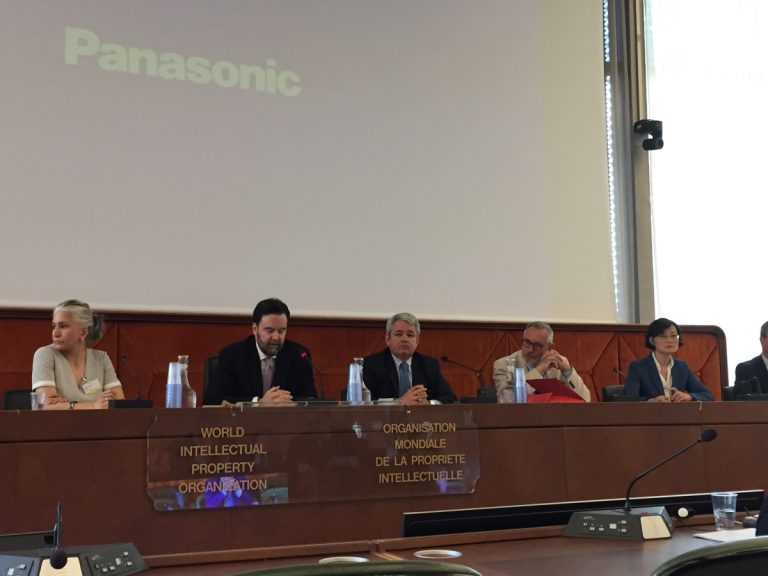
Common standards are essential for technologies, particularly for interoperability. However, a number of technologies essential to standards are patented, which has created issues relating to licensing or high royalties. Last week, the World Intellectual Property Organization organised an information session on patents and standards, including aspects of patent quality, issues relating to international trade, and the role of the organisation in facilitating the relationship between patents and standards.