Category Access to Knowledge/ Education

Studies Presented At WIPO To Better Understand Limitations To Copyright

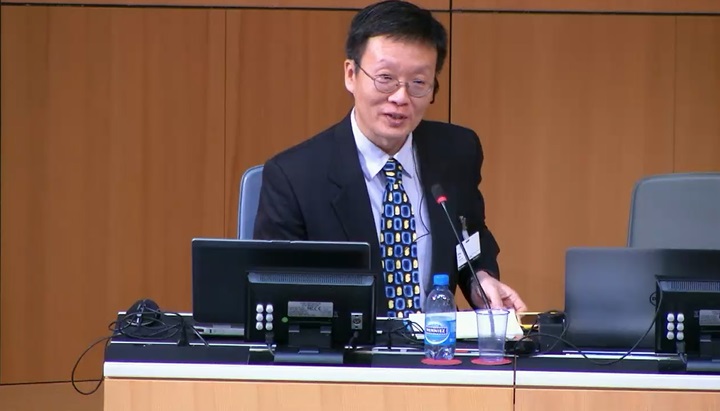
With no consensus on conducting normative work at the World Intellectual Property Organization on the limitations to copyright for certain actors such as persons with disabilities, educational institutions, and museums, the committee on copyright had agreed on several studies so the issues are better understood. This week, several of those studies were presented to the committee and shed some further light on the issues.
New Proposal At WIPO On Exceptions To Broadcasting Rights

While World Intellectual Property Organization delegates held informal closed consultations at the beginning of this week on a potential treaty protecting rights of broadcasting organisations from signal theft and piracy, a group of Latin American countries has proposed language on limitations and exceptions to these rights.

ITU Report Analyzes Revolution In Internet Of Things, Big Data, Cloud, AI

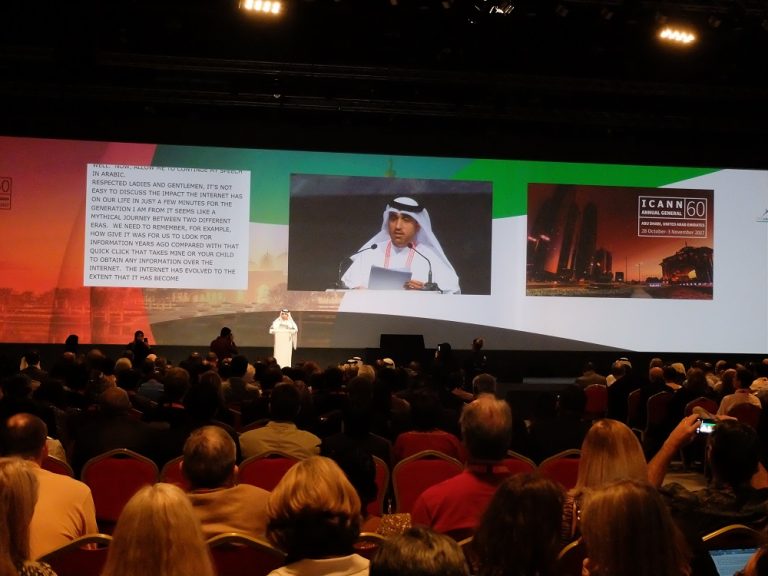
The UN International Telecommunication Union (ITU) today released its annual report on the global information society, this year providing detailed analysis of the transformational "revolution" underway involving the Internet of Things, big data, cloud computing and artificial intelligence. It also ranked countries by their level of ICT development. Hint: the Western Hemisphere did not fare so well.

Infojustice – US, Canadian & Mexican Law Professors, Academics And Policy Experts: NAFTA Must Include Fair Use, Safe Harbors

WASHINGTON – Today, over seventy international copyright law experts called for NAFTA and other trade negotiators to support a set of balanced copyright principles. The experts urge trade negotiators to support policies like fair use, safe harbor provisions, and other exceptions and limitations that permit and encourage access to knowledge, flourishing creativity, and innovation. Signatories include preeminent intellectual property professors and experts from law schools, think tanks, and public interest organizations in the U.S., Canada, and Mexico, as well as Argentina, Australia, China, Ireland, and Switzerland.

Copyright Exceptions For Libraries Widespread, Study At WIPO Shows, But Disharmony Persists

Nobody among members of the World Intellectual Property Organization disputes the importance of the public services provided by libraries and archives. However, positions are different when it comes to providing exceptions to copyright to those entities so they can continue to dispense their services, in particular in the digital age. An updated study presented today in a WIPO committee shows that most countries have exceptions relating to libraries, but termed in very different ways, and are hesitant on how to deal with digital technologies.

New Draft Action Plans On Copyright Limitations And Exceptions At WIPO

The World Intellectual Property Organization has grasped the nettle after years of discussion on the issue of limitations and exceptions to copyright, and provided draft action plans, one each for libraries, archives, museums, educational research institutions, and persons with other disabilities than sight impairment. The plans, being discussed in this week's committee meeting, include brainstorming sessions, studies, and regional seminars, and conferences to advance understanding and issues related to copyright for those particular actors.

The User Rights Database: Measuring The Impact Of Copyright Balance

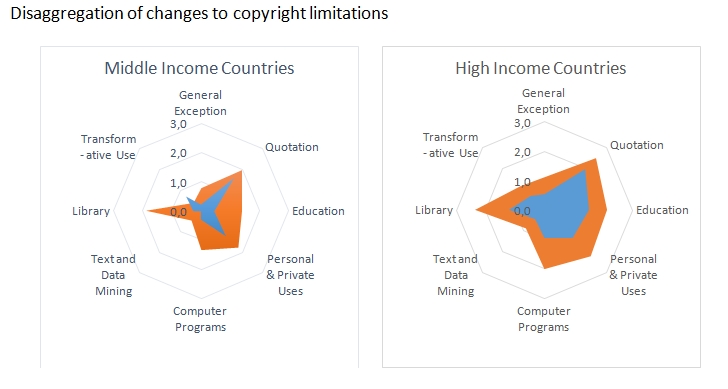
PIJIP’s Copyright User Rights Database tracks changes to copyright user rights (aka limitations and exceptions) over time in a sample of 21 countries of different development levels. The data assesses the degree to which other countries have adopted exceptions that are as open as the US fair use right – i.e. open to a use of any kind of work, by any kind of user and for any purpose. The instrument and results are available at infojustice.org/survey.

A Look Back: Challenges Of Open Access In 2017 (An Industry Perspective)

Suzanne Kavanagh writes: Over the course of the year, three issues repeatedly reared their heads as barriers to the successful implementation of Open Access: the burden of expected author OA expertise; the underutilization of metadata in the publication lifecycle, and the challenges posed to authors and institutions by one-off solutions. As the tenth Open Access Week draws to a close, with its focus on the concrete benefits of making scholarly research openly available, where have we gotten to in solving these problems and realizing the potential of OA?