Category Access to Knowledge/ Education

Must All Foreigners Online Comply With US Copyright Law? (Part 2 of 2)

A case now before the DC Circuit Court of Appeals, Spanski Enterprises v. Telewizja Polska, creates a legal dilemma. The court needs to find Telewizja liable for copyright infringement, or else the court will create a roadmap for pirates, enabling them to stream copyrighted works into the US with impunity. But if the court finds Telewizja committed infringement simply because the Polish company put online works that could be accessed in the US, the court will apply US copyright law in an extraterritorial manner that will create problems around the globe.

European Commission Announces Guidance On Copyright Enforcement, SEP Licensing

The European Commission today announced plans to ratchet up the fight against counterfeiting and piracy, and to introduce more clarity in licensing standard-essential patents (SEPs). The first involves guidance on the 2004 EU directive on the enforcement of intellectual property rights (IPRED); the second recommendations for making the relationship between patent owners and technology users more “balanced and efficient.”

Must All Foreigners Online Comply With US Copyright Law? (Part 1 of 2)

US copyright law is supposed to apply only within US borders, not to actions done in Poland. But when a company in Poland streamed copyrighted TV shows into the US, that infringed US copyrights, according to a US trial court. This decision will be upheld on appeal, experts widely expect. Such an appellate decision, however, could expand the reach of US copyright law to a problematic extent. It will be tricky to find infringement in this case without also extending US copyright law to any online content posted anywhere on the globe.

Expert Panel Recommends That The WHO Move Forward On Transparency And Delinkage

On Monday, 27 November, the WHO published the recommendations of the overall programme review of the global strategy and plan of action on public, health innovation and intellectual property (EB142/14). The expert panel provided 33 recommendations which included 17 forward looking”high-priority actions” including on transparency and delinkage, writes Thiru Balasubramaniam.

WIPO Development And IP Committee This Week: Agenda Includes Flexibilities, Tech Transfer, SDGs, Studies

Following a session in May hailed as the most positive in years, the World Intellectual Property Organization Committee on Development and Intellectual Property reconvenes this week. Among items to be discussed are a revised proposal by the African Group to convene a biennial international conference on IP and development, how to deal with the United Nations Sustainable Development Goals, and recommendations of an independent review of the implementation of the 2007 WIPO Development Agenda Recommendations.

Get Prepared For A Passel Of EU Legislation On Copyright And Related Rights

This week several committees in the European Parliament voted on a pile of copyright-related dossiers, and in some instances the steps taken were really small. But the issues include controversial aspects in the legislative drafts on copyright review, broadcasting content and digital content, such as an obligation for providers to monitor third party content, intermediary liability and website blocking.

Artist Resale Right Does Not Seem To Affect Art Market, Economic Study At WIPO Says

A few days after a Leonardo da Vinci painting shattered the record for the most expensive artwork ever sold at Christie’s auction house in New York, the question of resale right for visual artists was discussed at the World Intellectual Property Organization. According to researchers, the establishment of a resale right in a particular country, which benefits the artist when her work is resold at a much higher value, is likely to have no negative effects on the country’s art market. The United States and China, the two largest global art markets, have not implemented the resale right yet.

WIPO Committee Debates Future Of Copyright Exceptions, Will Keep Working On Broadcasting Text

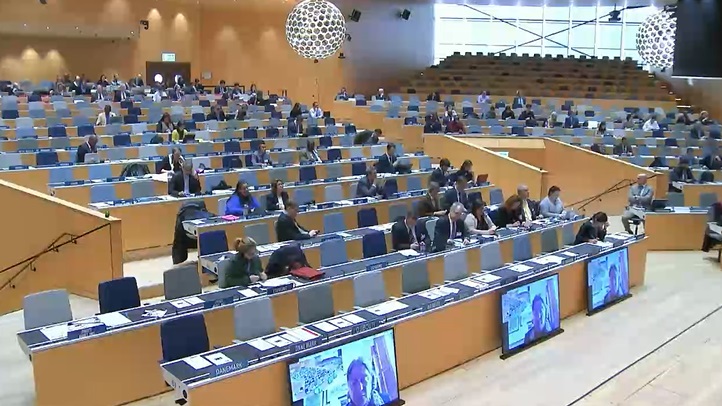
The World Intellectual Property Organization copyright committee last week sent back to the drawing board draft action plans provided by the secretariat on exceptions and limitations to copyright for specific actors such as educational institutions and libraries. Meanwhile, discussions on the rights of broadcasting organisations against signal theft and piracy are expected to give way to a new text on specific topics, to be produced by the end of the month, while topics such as the resale right did not make it to standing agenda items but remain on list of items to be discussed in the spring.