Category Regional Policy

US Complaints About Technology Transfer In China: Negotiating The Endgame

Dean Pinkert writes: The United States Trade Representative (USTR) has been open about its view of the difficulties faced by US companies who claim – generally anonymously – that they have been forced to transfer technology to Chinese entities: “The fact that China systematically implements its technology transfer regime in informal and indirect ways makes it ‘just as effective [as written requirements], but almost impossible to prosecute.’” As I explain in this article, I believe such informality is not merely a barrier to prosecutions; it also presents conceptual challenges for US trade negotiators as they attempt to craft effective means to address the concerns of US companies doing business in China.


US IP Law – Big Developments On The Horizon In 2019

The US started 2019 with a bang. Its Supreme Court has just announced a major patent decision, and more big developments could arrive in the coming months. Here are some of the top issues to watch this year.

Sudden Vacancies At Some International Agencies, Industry Sees New Top Officials, Lawyers Engage In Firm-Hopping

While the World Bank Group and the United Nations Environment Programme (UNEP) are looking for new leaders following the unexpected resignations of their heads, the International Telecommunication Union re-elected its secretary general. The European Patent Office got two new vice-chairs, and the European Organization for Nuclear Research (CERN) a new president, both starting in January. Associations for the creative industry and the pharmaceutical industry also elected new top officials, and lawyers continued to practice firm-hopping.

Nearly 100 European Authors Demand ‘Proportionate’ Remuneration In EU Copyright Directive

With negotiations for the European Union Copyright Directive apparently approaching an end, a group of some 95 screenwriters and directors joined the intensive lobbying efforts with a letter today urging that a principle of "proportionate" remuneration to them be enshrined. The letter spells out several elements they argue are key to ensuring European audiovisual authors are able to "make a living from our craft and creativity."

European Council Advances SPC Waiver For Generics; Negotiations Coming

The European Union Council of member states has approved a mandate for negotiations with the EU Parliament concerning a draft regulation aimed at boosting EU-based generic and biosimilar manufacturing for export by providing an exception to the extended intellectual property protection granted by special protection certificates (SPCs). The mandate brings the draft regulation a step closer to adoption, and it also suggests that Parliament’s recent amendments to the regulation are likely be key areas of debate in the negotiations, which are expected to begin in the coming weeks.

Supporting UHC And Better Explaining IP – The 2019 Pharma Industry Agenda

In 2019, IFPMA work will continue to focus on constructive engagement in supporting UHC and working with others to strengthen health care systems. The association will continue to engage with a range of stakeholders, particularly multilateral organizations, to better explain the benefits of IP and exchange ideas to address issues of coverage, capacity, affordability and sustainability of healthcare.

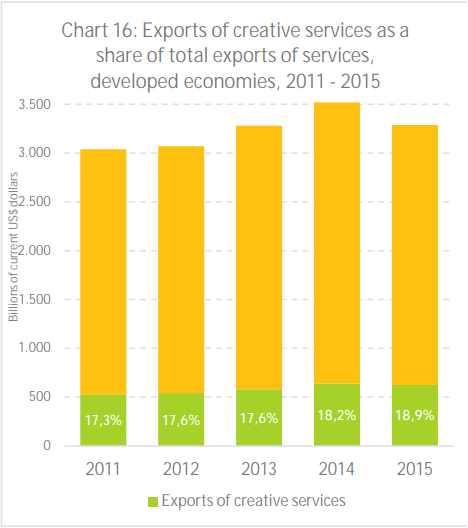
UNCTAD Finds Growth In Global Creative Economy Led By ‘New Breed’ Of Countries

In a new report on the creative economy, the United Nations Conference on Trade and Development (UNCTAD) found that despite a slowdown in global trade since the 2008 financial crisis, the creative economy has remained robust and has exhibited significant growth. Leading this growth is China, with four times the creative goods exports as the United States in 2015.

Time To Put A Stop To The Abuse Of Orphan Drug Regulation- The Latest Scandal

Ellen 't Hoen writes: Today, the Dutch Medical Journal (Nederlands Tijdschrift voor Geneeskunde) reported on the case of lutetium-octreotaat, a cancer drug developed by researchers in the Dutch Erasmus medical centre in Rotterdam. For the last 18 years, the hospital pharmacy made the medicine to treat their patients, keeping prices relatively low. But now the drug is being marketed by Swiss pharmaceutical giant Novartis, and its price has skyrocketed to Euro 23,000 an infusion from an original price of Euro 4,000 an infusion.

What’s The Cost Of Allowing Patent Theft? Don’t Wait To Find Out

Russ Genet writes: Protecting patents can be expensive, especially for companies competing in a global arena where aggressive startups, cut-rate competitors and industrial giants are all vying for the next big innovation to snatch up or move to market. However, failing to protect patents can be equally expensive. It is estimated that patent theft costs the US economy billions each year. And for the corporate patent owner, failing to defend patent rights today can significantly limit their value in the future.