Category Regional Policy

European Commission Introduces Its Inaugural IP “Watch List”

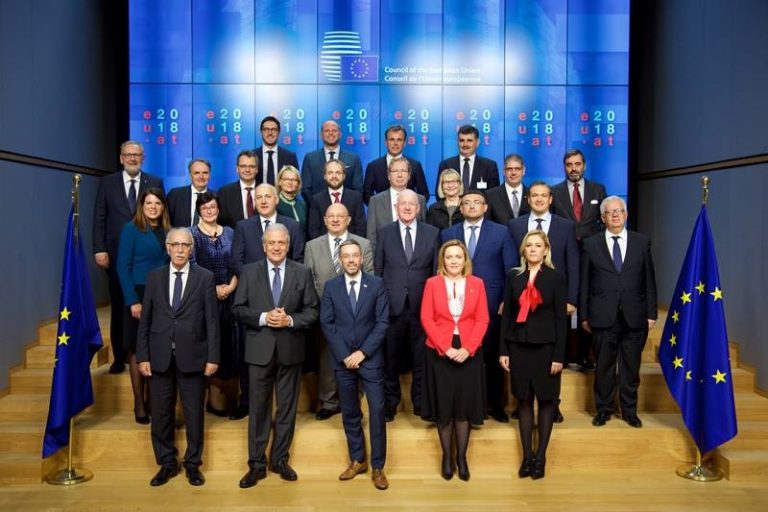
Echoing the United States' Special 301 Report on alleged inadequacy of trading partners’ protection of US intellectual property rights, the European Commission has released its first ever Counterfeit and Piracy Watch List, which exposes rogue cyberlockers, stream-ripping sites as well as peer-to-peer and BitTorrent indexing sites among the threats to the EU's legitimate intellectual property-driven businesses.

The Future Of The Ideas Business – The Rise Of Data-Driven Invention

New ideas are getting harder to find, and with less ideas there is a decline in organisational productivity and economic growth. This isn’t new, nor is the fact that to counterbalance the decline in idea generation, research and development have received and continue to require heavy investment. But with daily news of innovation centres opening up across the globe, the question remains whether initiatives like open innovation, crowdsourcing, or simply putting more scientific brains together will do this investment justice.

Last month, leading representatives of the IP, R&D and technology arenas met in Switzerland to discuss a technology-based alternative to human only idea generation. Hosted by data-driven invention company Iprova, the 2nd Data-Driven Invention Forum saw attendees from companies, such as Panasonic, Philips and DuPont as well as many other global organisations explore the future of innovation and the role data-driven invention plays in it. Here are some of the conclusions of the conference.


Report: Core Copyright Industries Add $1.3 Trillion To US Economy

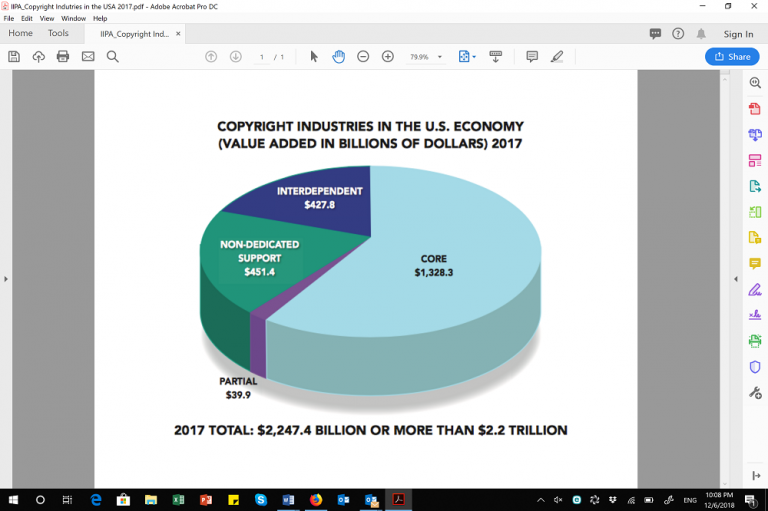
Core copyright industries have contributed more than $1.3 trillion to US gross domestic product (GDP) in 2017, and accounted for 6.85% of the US economy. They employed nearly 5.7 million workers in 2017, accounting for 3.85% of the entire US workforce, or 4.54% of total private employment in the United States, according to the International Intellectual Property Alliance (IIPA)'s “Copyright Industries in the U.S. Economy: The 2018 Report.”

Defending Fair Use In South Africa

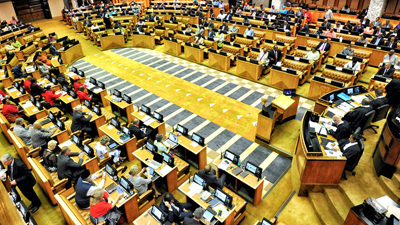
Sean Flynn, Peter Jaszi, and Mike Carroll write: On Wednesday the South African National Assembly vote on the Copyright Amendment Bill, which includes a new “fair use” right. Learned professors at the University of Stellenbosch have taken to calling the bill “shambolic”, and “an abomination.” It is certainly time for a little light to go with the heat.

Promoting Education Rights In South African Copyright Reform

Eve Gray and Desmond Oriakhogba write: The publishing industry is making a mad dash to defeat South Africa’s adoption of a fair use rights in Parliament on Wednesday. Their latest effort includes an alarmist petition being circulated among authors. It is interesting to note that, while one of the most persistent and loud complaints in these protests has been that the drafting of the new legislation was badly handled, our perception, along with a number of experienced observers in the process, has been that the level of discussion and debate; the degree of participation and engagement of government representatives; and the consensus on the needs to be addressed, was of a higher standard and the debate much better informed than in previous such attempts at reform over the past decades. It should also be noted that, while it is true that international publishers might have much to lose in the new law, local publishers, authors and students have much to gain. It is time to lower the heat and concentrate on the facts and context of what is before Parliament.

US IP Stakeholders Seek To Strengthen Public Support For IP, Ensure Future US Competitiveness

NEW YORK -- United States intellectual property stakeholders from academic, business and legal backgrounds gathered recently to discuss how to increase public support to strengthen the intellectual property rights system in the US, in light of China’s steady rise in numbers of patent and trademark filings. US IP stakeholders argued that developing public awareness and understanding of IP is key to building this support, with some holding diverging views on how to go about this.