Category Other International Orgs

Global Health In The Glare In G7 Final Resolutions; Trade Deals Promised For 2016

Reform of the WHO, support for the Contingency Fund for Emergency to enable swift initial responses by the WHO, and a special R&D and innovation chapter in the G7 Ise-Shima Vision for Global Health that does not include the word intellectual property are some of the notables after the G7 Summit closed today in Japan. Counting pages, Global Health and lessons from the recent Ebola and Zika outbreaks did receive the biggest attention. But the G7 would not be its old usual without considerable warnings and some concrete proposals how to fight global terrorism and violent extremism.

G7, In Japan, Put Their Heads Together Over Crises

Eight ministerial meetings have prepared a fat stack of paper, the “sherpas” have nearly concluded their work, and civil society once more has passed its own resolution on how they propose to tackle the most daunting global problems. Now it's time for the G7 leaders' roundtables – and the photo ops in Ise-Shima, Japan. For two days, the heads of state of Canada, France, Germany, Italy, Japan, the United Kingdom and the United States will talk on trade, foreign policy, climate change and energy. And maybe some digital, R&D and intellectual property issues.

Alleged R&D Costs: Not A Transparent Driver Of Drug Prices

Whether laws enforcing transparency on costs would help curb extortionate drug prices in today’s world is hardly predictable now that pharma companies and their allies are lobbying governments to scupper any rules that would require them to disclose the real R&D costs and profits of their medicines and the rationale for charging what they do, writes Daniele Dionisio.

IEEE Patent Policy Changes Seek To Put Brakes On Surging Litigation

Intense debate, reignited by a 2012 International Telecommunication Union roundtable on rampant patent litigation and the “innovation-stifling” use of intellectual property, together with the growing lack of standards bodies' patent policies, prompted the IEEE Standards Association (IEEE) last year to revisit parts of its patent policy that had been causing some concerns, Managing Director Konstantinos Karachalios said at a 17 February Oxfirst webinar.

The changes aim to clear up some ambiguities. Perhaps predictably, however, some pushback has arisen among industries affected by the change.

Climate Change Panel Seeks To Improve Communication, Open Doors To Private Sector

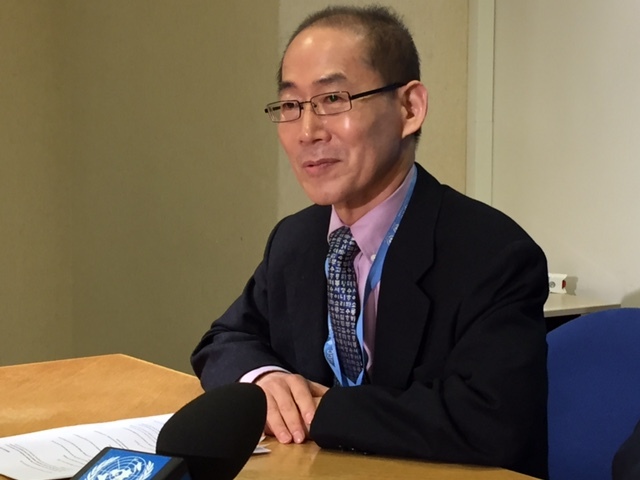
The Intergovernmental Panel on Climate Change seeks to improve its communication to promote its reports, its chair said at a briefing yesterday. Working on its next assessment report expected to be released in five or six years, the IPCC seeks to increase participation of the private sector as a major stakeholders upon which depends the investment to find solutions to climate change he said.

Plant Treaty In 2016: Sustainability Solutions, Farmers’ Rights, Global Information System

The International Plant Treaty, which established a global system to make available genetic materials for main agricultural crops for farmers, plant breeders and scientists, and in exchange provide a system of benefit sharing, has been struggling to find ways to be financially sustainable for some time. This year, the treaty will work on ways to do that, including in devising a subscription system that would reach a twin goal: avoiding non-payment of voluntary contributions, and ensuring a sustainable and predictable income stream. In addition, a global consultation on farmers’ rights is planned, and work should be ongoing on a global information system allowing more visibility for plant genetic material for food and agriculture.

European Court Of Human Rights Finds Turkey Violated Freedom Of Expression In YouTube Blocking

Ten sites allegedly disrespectful to Kemal Attaturk, founder of modern Turkey, were enough for the courts in Turkey to ban a whole platform - YouTube - from 2008 until the end of 2010. But a ruling of the European Court of Human Rights today declared the blanket blocking a violation of the right to receive and impart information freely, protected under Article 10 of the European Convention on Human Rights.

New Industry Coalition To Promote Fair Standards In Licensing

A group of companies launched the Fair Standards Alliance this week in Brussels, aimed at ensuring licensing of standard-essential patents is done on fair, reasonable and non-discriminatory (FRAND) terms. This reflects an industry trend toward clarifying the meaning of FRAND to help boost use of patents included in standards.