Category Other International Orgs

OECD Ministerial On Internet Wraps Up: Openness A Concern

The Organization for Economic Cooperation and Development (OECD) should not wait 8 or 10 years before its next Internet Ministerial, said OECD Secretary General Angel Gurria at the closing session in Cancun Mexico yesterday. Gurria called for a faster pace for government and regulators to adapt to the digital markets. Better data on the data economy will help, as reflected in the new Cancun Declaration.
OECD Ministerial On Internet: Trust, But Whom?

Beware “digital protectionism.” That was one of the key messages of United States Commerce Secretary Penny Pritzker, speaking at the official opening of the Organisation for Economic Cooperation and Development (OECD) Ministerial on the digital economy in Cancun, Mexico.

As OECD Gathers, Call For New Internet Social Compact – With Some Open Questions

On the eve of the third internet-related Ministerial Meeting of the Organisation for Economic Development and Cooperation (OECD) starting on 22 June in Cancun, Mexico, the Global Commission on Internet Governance (GCIG) published a think report on “One Internet.” Calling for a new “social compact” for the internet, the 140-page report that was fed by 50 research studies has a number of well-known recommendations, some surprisingly technical and some interesting ones.

European Commission Eyes Update Of EU Standards-Setting Policy

As standardisation increasingly takes place at the global level, Europe needs a speedier, more streamlined way to set the technical specifications that define requirements for products, production processes, services and test methods, the European Commission said today. As part of its single market strategy, the EC announced plans for a joint initiative on standardisation (JIS), guidance to boost the development of European standards, and an annual reporting system among EU institutions on how the standardisation policy is working and contributing to competitiveness, jobs and growth.

Global Health In The Glare In G7 Final Resolutions; Trade Deals Promised For 2016

Reform of the WHO, support for the Contingency Fund for Emergency to enable swift initial responses by the WHO, and a special R&D and innovation chapter in the G7 Ise-Shima Vision for Global Health that does not include the word intellectual property are some of the notables after the G7 Summit closed today in Japan. Counting pages, Global Health and lessons from the recent Ebola and Zika outbreaks did receive the biggest attention. But the G7 would not be its old usual without considerable warnings and some concrete proposals how to fight global terrorism and violent extremism.

G7, In Japan, Put Their Heads Together Over Crises

Eight ministerial meetings have prepared a fat stack of paper, the “sherpas” have nearly concluded their work, and civil society once more has passed its own resolution on how they propose to tackle the most daunting global problems. Now it's time for the G7 leaders' roundtables – and the photo ops in Ise-Shima, Japan. For two days, the heads of state of Canada, France, Germany, Italy, Japan, the United Kingdom and the United States will talk on trade, foreign policy, climate change and energy. And maybe some digital, R&D and intellectual property issues.

Alleged R&D Costs: Not A Transparent Driver Of Drug Prices

Whether laws enforcing transparency on costs would help curb extortionate drug prices in today’s world is hardly predictable now that pharma companies and their allies are lobbying governments to scupper any rules that would require them to disclose the real R&D costs and profits of their medicines and the rationale for charging what they do, writes Daniele Dionisio.

IEEE Patent Policy Changes Seek To Put Brakes On Surging Litigation

Intense debate, reignited by a 2012 International Telecommunication Union roundtable on rampant patent litigation and the “innovation-stifling” use of intellectual property, together with the growing lack of standards bodies' patent policies, prompted the IEEE Standards Association (IEEE) last year to revisit parts of its patent policy that had been causing some concerns, Managing Director Konstantinos Karachalios said at a 17 February Oxfirst webinar.

The changes aim to clear up some ambiguities. Perhaps predictably, however, some pushback has arisen among industries affected by the change.

Climate Change Panel Seeks To Improve Communication, Open Doors To Private Sector

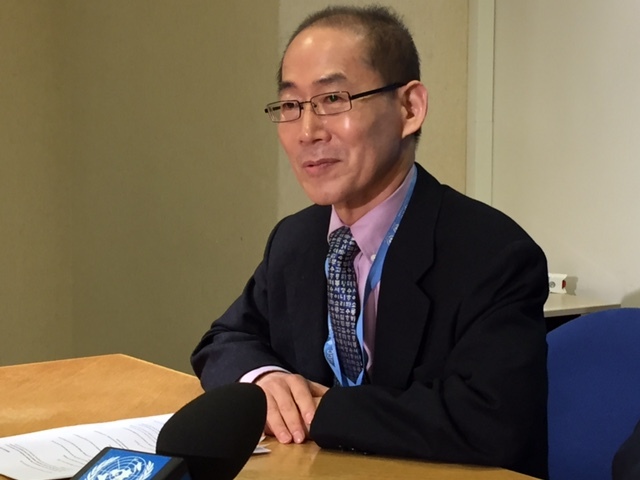
The Intergovernmental Panel on Climate Change seeks to improve its communication to promote its reports, its chair said at a briefing yesterday. Working on its next assessment report expected to be released in five or six years, the IPCC seeks to increase participation of the private sector as a major stakeholders upon which depends the investment to find solutions to climate change he said.

Plant Treaty In 2016: Sustainability Solutions, Farmers’ Rights, Global Information System

The International Plant Treaty, which established a global system to make available genetic materials for main agricultural crops for farmers, plant breeders and scientists, and in exchange provide a system of benefit sharing, has been struggling to find ways to be financially sustainable for some time. This year, the treaty will work on ways to do that, including in devising a subscription system that would reach a twin goal: avoiding non-payment of voluntary contributions, and ensuring a sustainable and predictable income stream. In addition, a global consultation on farmers’ rights is planned, and work should be ongoing on a global information system allowing more visibility for plant genetic material for food and agriculture.