Category Technical Cooperation/ Technology Transfer

New Local Pharmaceutical Plant Expected To Enhance Access To Drugs In Kenya

Kenya’s pharmaceutical products manufacturing sector is hopeful it will experience significant growth after the Square Pharmaceuticals ltd (SPL) of Bangladesh commissioned a US$ 75 million plant in the East African nation this week. [A reminder: this story, like all of our stories, is completely free for almost every developing country in the world. Just sign up for a free password here!]

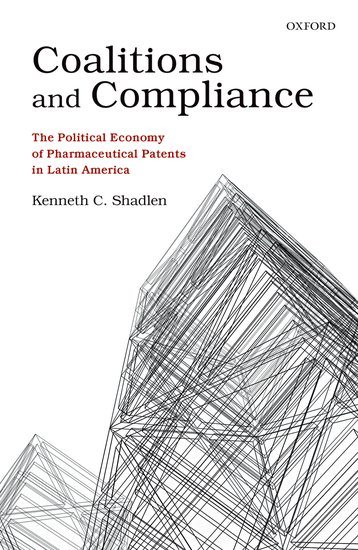
How International IP Policy Reconfigured National Politics: An Interview With Prof. Ken Shadlen

The recently published book Coalitions and Compliance by Professor Ken Shadlen of the London School of Economics examines how international changes can reconfigure domestic politics. Since the late 1980s, developing countries have been subject to intense pressures regarding intellectual property rights. These pressures have been exceptionally controversial in the area of pharmaceuticals. Historically, fearing the economic and social costs of providing private property rights over knowledge, developing countries did not allow drugs to be patented. Now they must do so, an obligation with significant implications for industrial development and public health. This book analyses different forms of compliance with this new imperative in Latin America, comparing the politics of pharmaceutical patenting in Argentina, Brazil, and Mexico. The book focuses on two periods of patent politics: initial conflicts over how to introduce drug patents, and then subsequent conflicts over how these new patent systems function. Intellectual Property Watch recently conducted a Q&A with Prof. Shadlen, which appears below.

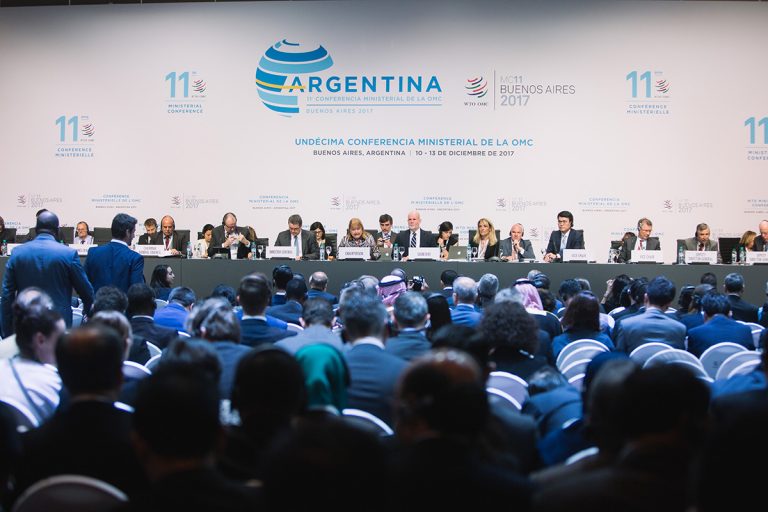
WTO Stalemate Concerns Include Non-Violation Complaints, E-Commerce; TRIPS Health Amendment Extended

A few weeks after the failure of the World Trade Organization ministerial meeting in Buenos Aires to cut deals advancing issues from fisheries to e-commerce, some governments and trade experts around the world are concerned about the WTO’s future. Meanwhile, a couple of intellectual property-related provisions moved ahead after the ministerial without change.

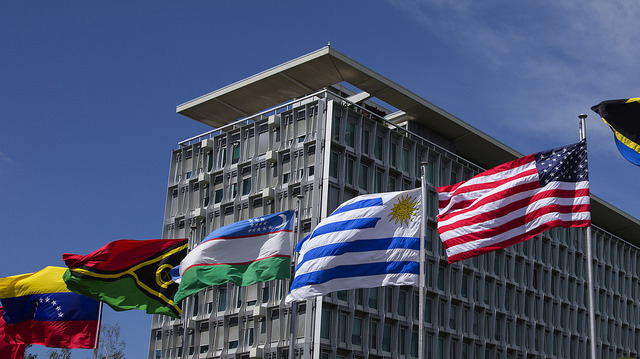
WHO’s Revised Work Programme: Evidence-Based Normative Work, Access To Medicines

In a couple of weeks, the World Health Organization will be holding its annual January Executive Board meeting. Delegates will consider the edited version of the draft 13th WHO general programme of work for 2019-2023, published on 5 January. Following comments to the first version of the programme in November, the secretariat produced a more fleshed-out document, emphasizing the WHO's normative role, in particular evidence-based. The necessity of access to medicines and vaccines has been extended to other products, such as devices and blood products, and mention is made of the WHO Global Strategy and Plan of Action on Public Health, Innovation and Intellectual Property.

Top IP-Watch Stories Of 2017: What Do They Tell Us About Multilateral IP Policy?

What IP-Watch stories were readers reading most in 2017, and what does it say about the state of global intellectual property policy? In this article, we look at the most-trafficked stories of last year, and make a few assumptions. Asia, Europe, trade, health. These were the top targets of interest to readers among our offerings. Interestingly, despite all the sound and fury in Washington, our coverage there was not at the top of the list. Even more interestingly, neither was our extensive and world-leading coverage of the World Intellectual Property Organization.

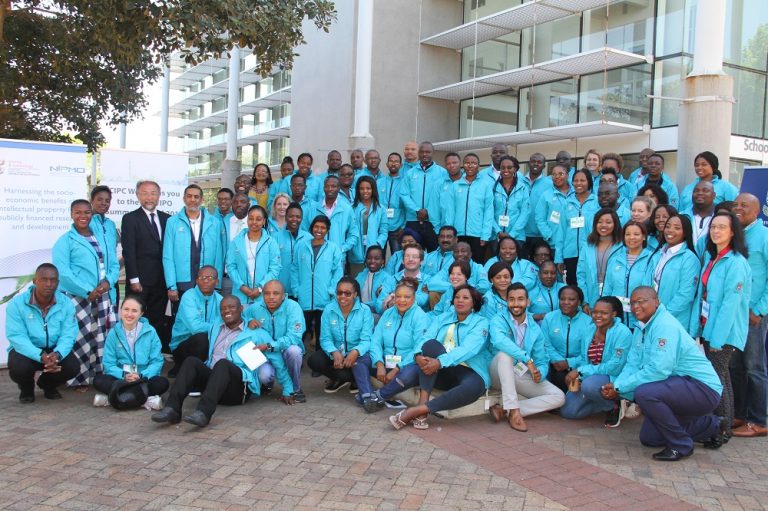
South Africa’s Push For Knowledge-Based Economy Through IP

CAPE TOWN, South Africa – “If you want to create a knowledge-based economy and be part of it, be players not observers. There isn’t a stronger backbone than having an understanding of what IP is.” This statement was made by Mmboneni Muofhe, Department of Science and Technology (DST) deputy director general for technology and innovation, at the ninth Intellectual Property Summer School held at the University of the Western Cape (UWC) in December. The meeting brought together students, lawyers, scientists and different professionals drawn from Africa and other parts of the developing world for a ten-day intensive programme in intellectual property.

What Could Have Entered The Public Domain On January 1, 2018?

Current US law extends copyright for 70 years after the date of the author's death, and corporate “works-for-hire” are copyrighted for 95 years after publication. But prior to the 1976 Copyright Act (which became effective in 1978), the maximum copyright term was 56 years—an initial term of 28 years, renewable for another 28 years. Under those laws, works published in 1961 would enter the public domain on January 1, 2018, where they would be “free as the air to common use.” Under current copyright law, we’ll have to wait until 2057.1 And no published works will enter our public domain until 2019. The laws in other countries are different—thousands of works are entering the public domain in Canada and the EU on January 1, writes the Duke University Center for the Study of the Public Domain.

Internet Governance Forum – An Encyclopaedic Endeavour

The 12th Internet Governance Forum has closed its doors and sent home the last of the more than 2,000 die-hard internet governance adepts from 142 countries who stayed until a mere three days before Christmas in the halls of the United Nations in Geneva. Asking the adepts and the critics about what has changed in the forum that started because governments just could not agree on how critical internet infrastructures should be managed during the 2005 UN World Summit on Information Society, the first answer always is just “big”.

With originally 3,000 registered, it is the biggest international internet politics conference. But “big” is not only the size of the meeting, it is also the number of workshops, panels, best practice forums and bi-, pluri- and (nearly) multi-lateral meetings taking place over the five days. So this year Intellectual Property Watch, having participated substantively all week, decided to make an encyclopaedic endeavour to bring you the first IGF dictionary (or to make a dictionary about that encyclopaedic endeavour) in an effort to give credit to the richness of the forum, but highlight some problems, too.


Friends, Foes Of Big Data Discuss Its Promise For Development, Privacy Issues

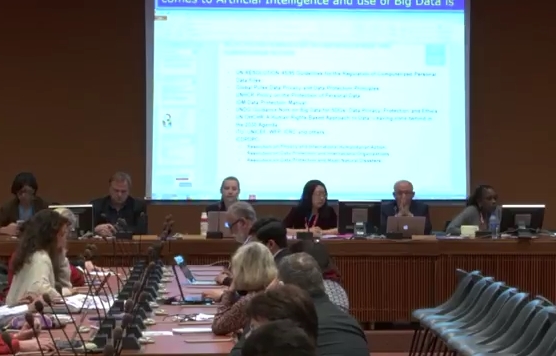
Big data and artificial intelligence hold promise for achieving the United Nations Sustainable Development Goals, but risks associated with extensive data collection should not be minimised, according to speakers at this week’s Internet Governance Forum. Of particular concern: privacy issues, the digital divide, the need for raising awareness of internet users, and current or upcoming legislation and guidelines seeking to address challenges associated with big data.

Artificial Intelligence Is Changing Societies, But What Cost To Social Justice? Transparency Is Key

The desire of countries to hop on the train of artificial intelligence and get a piece of the pie might be contrary to democracy, according to a speaker at this week’s Internet Governance Forum. Even though artificial intelligence has the potential to improve lives around the globe, the challenges that come with it are complex and difficult to address, said the speakers.