Category Innovation/ R&D

US Section 301, China, And Technology Transfer: Law And Its Limitations Revisited (Again)
Frederick Abbott writes: On 20 May 2018, US Treasury Secretary Mnuchin announced that the US and China were “putting the trade war on hold” while the two countries seek to “execute the framework” of a broad agreement intended to reduce the US trade deficit in goods with China. According to the joint statement issued on 19 May 2018, “Both sides attach paramount importance to intellectual property protections, and agreed to strengthen cooperation. China will advance relevant amendments to its laws and regulations in this area, including the Patent Law.”
European Patent Office Discusses Patenting Artificial Intelligence

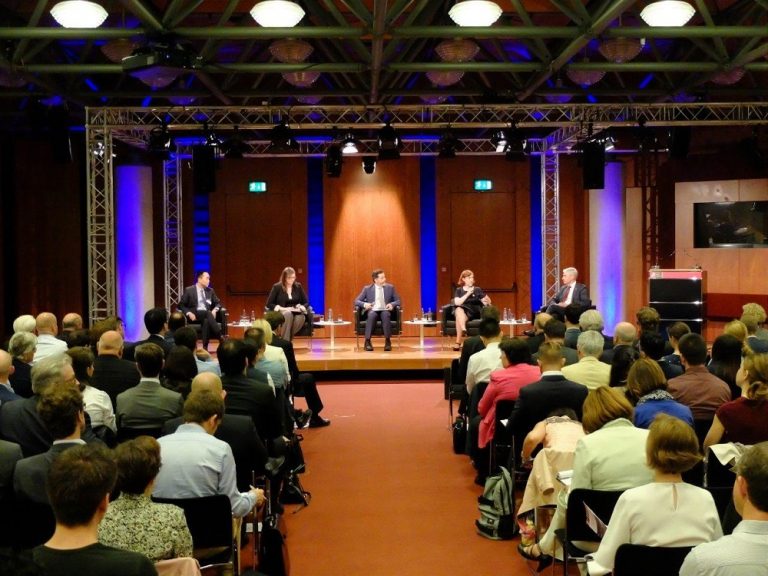
MUNICH -- United States and Chinese patent practitioners this week called for considerations to change patent legislation and allow patenting algorithms in the future. They spoke at a 30 May conference of the European Patent Office in Munich on “Patenting Artificial Intelligence.”

Civil Society Issues Call For Action On Draft WIPO Copyright Exceptions

This week the World Intellectual Property Organization copyright committee is looking at exceptions and limitations to copyright. A range of stakeholders with opposing views delivered long statements explaining their positions. Some proponents of mandatory international limitations and exceptions for certain actors cited the United Nations Sustainable Development Goals inscribing equitable quality education as a right. Others, like publishers’ associations, said the current international system provides ample possibilities to devise national exceptions and limitations.

‘Every Great Science Discovery, Invention, Is The Stuff Of Dreams, Not The Stuff Of Reason’: Interview With David Hanson Of Hanson Robotics

Sophia, the well-known human-like robot who acquired citizenship in Saudi Arabia, was at the Artificial Intelligence for Good Global Summit which took place earlier this month in Geneva. Her creator, David Hanson, also CEO and founder of Hanson Robotics, gave an interview to Intellectual Property Watch's Catherine Saez and explained his philosophy about intellectual property, the needed spark of interest in human-like robots, data collection, and innovation.

Hanson is also lead designer and inventor of key technologies including Frubber nanotech, facial expressions and AI software. He is former Walt Disney Imagineering designer, and recipient of numerous awards. A video interview about Sophia is embedded in this text.

IP Rights Through Two Lenses At Next Week’s TRIPS Council: Improving Lives, Competition Law

Next week, the World Trade Organization intellectual property committee is invited to discuss two distinct aspects of intellectual property protection. One group of countries is proposing to explore the value of IP and its role in improving lives in a persistent agenda item on IP and innovation. Another group of countries is pushing for a more recent agenda on IP and the public interest and next week is suggesting to discuss how to use competition laws against the abuse of IP rights.

MPP Board Gives Green Light To Expansion, Now Has To Identify Candidates

The Medicines Patent Pool announced this week that its Board agreed on the extension of the MPP mandate to patented medicines on the World Health Organization Essential Medicines List. The decision follows an extensive feasibility study. During a side event held on the margins of the annual World Health Assembly, Patent Pool officials explained the findings of the study, while in the audience, a representative of the pharmaceutical industry suggested a cautious approach.

South Africa Approves New IP Policy, With Guidance From UN Agencies

It took nine years of policy development, two different draft policies and various rounds of public consultation, to finally see Cabinet give the nod to the new Intellectual Property (IP) policy in South Africa.

WHA Agrees On Recommendations To Reinvigorate Plan Of Action To Boost R&D, Access

Ten years after the adoption of a World Health Organization plan of action meant to stimulate innovation for diseases that disproportionately affect developing countries, and with very little to show for it since, delegates at the World Health Assembly this week agreed to a number of recommendations to reinvigorate the effort. How to finance the implementation of those recommendations, however, is unclear.

WHA Agrees On Drafting Of Roadmap For Access To Medicines And Vaccines; US Blasts Compulsory Licences

The World Health Assembly yesterday agreed on a roadmap to be designed by the World Health Organization in consultation with member states to facilitate access to medicines and vaccines, including actions and activities for the period 2019-2023. If everyone agrees access to medicines and vaccines is indispensable for universal health coverage, views are still divided when it comes to intellectual property rights. The ranks of strong proponents of IP resulting in high prices are however thinning. The United States remains unshakeable, criticising compulsory licences used by countries to ensure affordable medicines are available.