Category Health & IP

‘Damaging’ Provisions On IP Dropped From TPP Agreement, MSF Says
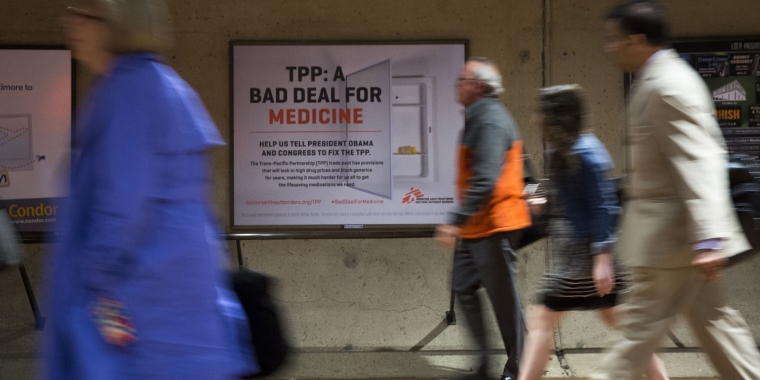
Trade ministers negotiating the Trans-Pacific Partnership (TPP) without the United States have dropped many problematic provisions related to intellectual property and health, Médicins Sans Frontières (MSF, Doctors Without Borders) reported today. Also removed from the agreement appears to be the investor-state dispute settlement provisions, according to a source.

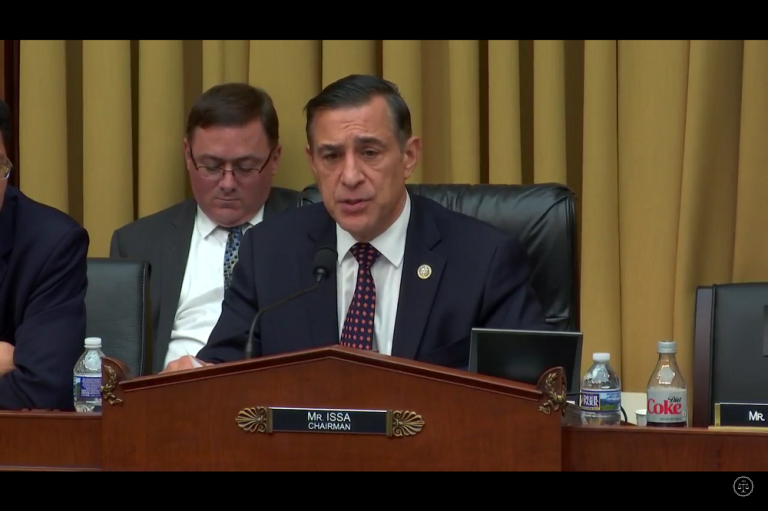
US Congress Members Signal Move To Block Allergan Patent Deal With Tribe

Members of a US congressional subcommittee on intellectual property held a hearing last week that appeared aimed at finding ways to stop companies from “renting” the sovereignty of Native American tribes in order to avoid a process that can lead to the invalidation of patents. Elected officials called a deal between Allergan pharmaceutical company and a northeastern tribe a “sham” and a “mockery”, and signalled the start of the legislative procedure to prevent such deals.

As Global Fund Board Meets To Choose New Director, Sands Seeks To Reinstate Candidacy

Days after withdrawing from consideration to be the next director of the Global Fund for AIDS, Tuberculosis and Malaria, the UK's Peter Sands has asked to be reinstated. The actions come as the Fund's Board gathers this week to choose among the final candidates for head of the international health funding organisation based in Geneva.

Next Global Congress On IP And The Public Interest

American University Washington College of Law (AUWCL) Program on Information Justice and Intellectual Property has announced the hosting of Fifth Global Congress on Intellectual Property and the Public Interest, from 27-29 September 2018. And it is now actively seeking sponsors, partners and expressions of interest.

First Consultations Held On WHO Pandemic Flu Framework Options

The World Health Organization is consulting member states and stakeholders on the future of its mechanism to help prepare the world for the next influenza pandemic. It is particularly asking whether countries should submit not only the biological samples of their influenza viruses, but also their genetic information through the mechanism. Also in question is whether the mechanism should be extended to cover seasonal influenza. Stakeholders had different views but all questioned the absence of recognition by the WHO of a widely used database currently hosting most of the world’s influenza genetic information.

WIPO Vaccines Report Contestable, With UN High-Level Panel Misquoted, Advocate Says

The World Intellectual Property Organization this week held an event that delved into research, markets and access for vaccines with panels that showed unusual breadth of representation for the UN IP agency. But health advocates have taken issue with the wording of a report released by WIPO at the event.

WIPO Hosts Widely Represented Discussion On Vaccine Innovation And Access

A well-represented set of experts this week held discussions on the current situation of access to vaccines, the market, the role of pharmaceutical companies, and partnerships. Vaccines were not a field much affected by patents in the past, but the situation has changed and new vaccines are now covered by intellectual property, which might constitute a barrier to access, according to speakers.

South Centre: Clear Rules Needed On Biosimilars Equivalence To Help Market Entry, Lower Prices

As soon as 2022, biological drugs made from active protein substances are expected to make up 50 percent of the pharmaceutical market, as they are increasingly used to treat a number of illnesses such as diabetes, cancer and hepatitis. But with the high price of therapeutics and difficulty in producing biologically similar products, and with the originator products now coming off patent, regulation is of high importance, says a new report from the intergovernmental South Centre.

Hepatitis C Buyers’ Clubs Grow Worldwide As A Way To Obtain Affordable Treatment

Hidden amongst the thousands of Facebook pages given over to holiday snaps and gossip are groups of patients who have hepatitis C, a disease that affects more than 70 million worldwide and kills around 400,000 people a year. But importantly, these groups of patients from Russia to Australia have got together to help each other import a relatively new class of drug that is able to cure most of the patients who take it.