Category Health & IP

Fifa Rahman

Malaysia Inclusion In Gilead Voluntary Licence – A Product Of Compulsory Licence Pressure

Gilead’s announcement today that they would include four middle-income countries (Malaysia, Thailand, Belarus, Ukraine) in their sofosbuvir voluntary licence was a welcome surprise, and will enable millions access to their highly effective, but exorbitantly priced, drug. The decision to include these countries, however, no doubt is a response to increasing pressure from within these countries to either issue a compulsory licence (CL) or a government use licence (GUL), invalidate the sofosbuvir patents, or block data exclusivity for the drug.

Report From WHO Fair Pricing Meeting Shows Balanced Discussion

A wide range of governments and stakeholders attended a closed meeting in the Netherlands in May to address the ongoing problem of pricing medicines to pay for research and the resulting lack of affordability of those medicines. The report from the World Health Organization-led meeting shows a range of points were made by participants and signals a move to change the global policy.

The Case For Nations To Act On Medicines Access

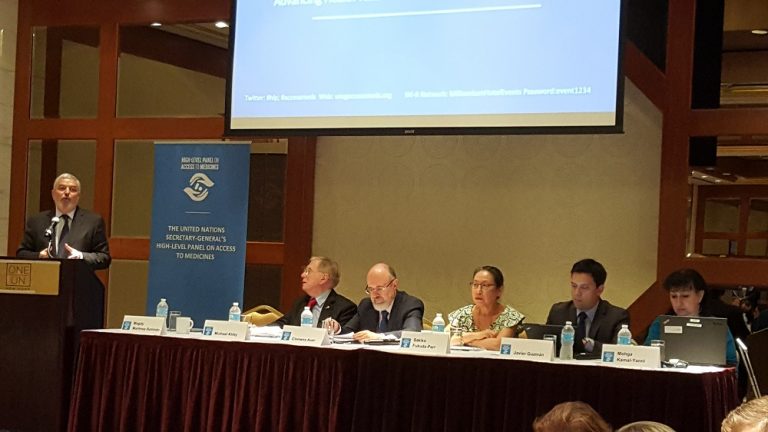
NEW YORK -- A range of speakers, including top health officials from both a developed and developing country, last week laid out the case for why the world’s leaders must now launch a shift in the way medicines all populations need are developed and priced. The need for global collaboration is clear, speakers said, but who will lead?

WHO Prequalifies First Generic Hepatitis C Drug And First HIV Self-Test

In the days before this month's AIDS conference being held in Paris, the World Health Organization has announced the prequalification of the first generic version of sofosbuvir, a "critical" medicine for treating hepatitis C. Treatment for hepatitis C under patent has been notoriously priced at extreme high levels, putting it out of reach of patients in economies of all sizes.

WIPO Patent Law Committee Agrees On Future Work: Exceptions, Quality, Health, Confidentiality, Tech Transfer

General satisfaction was expressed today at the World Intellectual Property Organization as members of the patent law committee agreed on a future work programme. That is an exercise that they could not complete in December 2016. Included in the work programme is a half-day information exchange on cooperation between patent offices on search and examination, a half-day information exchange on publicly accessible databases on medicines and patent information, and a reference document on exceptions and limitations to patent rights.

WIPO Patent Law Committee Looks At Health, Quality

Discussions carried out at the World Intellectual Property Organization patent law committee this week reflect strong interest for the subjects but from different angles. Topics such as how patents may affect access to medicines are favoured by some countries, while others view patents as the main enabler of innovative new products. Some find collaborative work between patent offices primordial, while others worry that it could be harmonisation in disguise. Proposals are not lacking about activities to be conducted in the committee but countries need to agree on those which meet their common goals. [Update: the committee finished early with an agreement on future work. Story to come shortly.]