Category Health & IP

UNCTAD Shows Role As Convenor On Investment In Antimicrobial Resistance

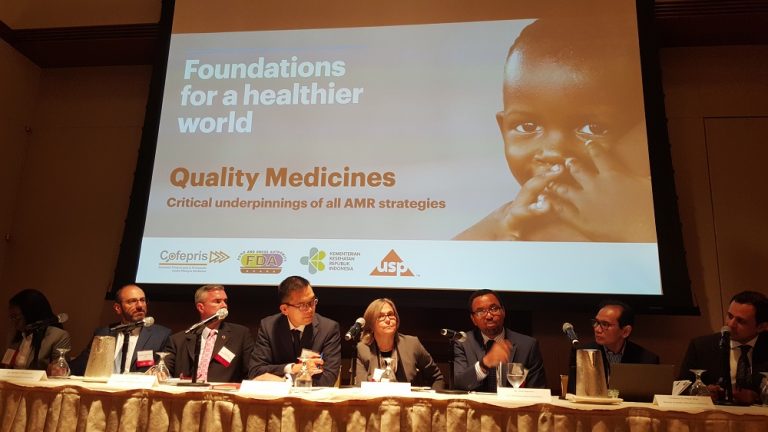
The United Nations Conference on Trade and Development (UNCTAD) this month gathered a wide range of key stakeholders to have a frank discussion about how to solve rising global resistance to existing antibiotics. While not a negotiation, stakeholders in the expert group opened up and shared perspectives, leading to some informal conclusions. Among them: more public and private investment, and a shift in the R&D system to new-style incentives, are needed.

WHO Draft 5-Year Plan Would Focus On Impact & Innovation, Be Discreet On Medicines Access

After the new head of the World Health Organization provided his vision for his tenure of the global health institution this summer, the organisation is working on its next programme of work for the period 2019-2023. A preliminary concept note has been issued for public consideration. The note lays out priorities and new orientations and describes a financially sober, more efficient organisation, focused on measurable impact, set on aligning with the United Nations Sustainable Development Goals, and affirming its role as a multi-stakeholder platform of global governance on health, but stays clear of controversial issues, such as the affordability of medicines.

Consultation On Future Of WHO Pandemic Flu Programme To Look At Seasonal Viruses, Genetic Information

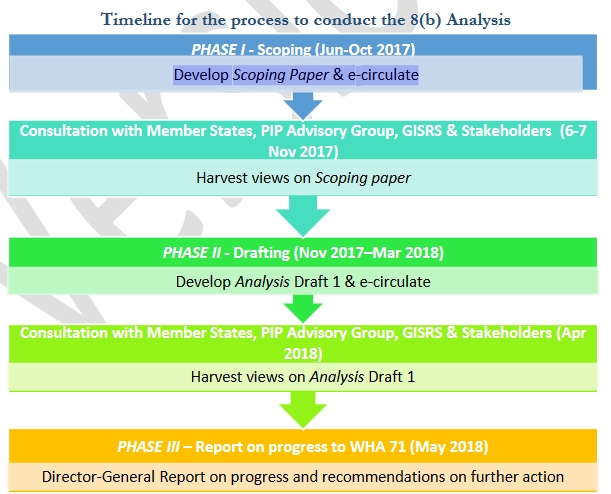
The World Health Organization mechanism to prepare the world for the next influenza pandemic is pondering its future and possible improvements. Among them are its extension to seasonal influenza, and the inclusion of genetic virus information along with biological samples to keep pace with technological developments. Member states and stakeholders (except the media) have been invited by the WHO to a consultation next month to discuss an analysis showing the potential beneficial or deleterious effects of the suggested changes to the system.

TRIPS Council Serves As Ground For Discussion Of Compulsory Licensing

The escalating prices of medicines has become a growing global concern. Among many issues, intellectual property has been pointed to as providing monopolies that allow for unaffordable prices, in particular in developing countries. Though there is consensus among countries that IP is but one of the issues, the extent of the IP influence is not agreed. The use of compulsory licences as a way for developing countries to grant access to medicines to their populations was discussed during the World Trade Organization committee on intellectual property last week, with divergent opinions.

TRIPS Council: Fears That Non-Violation Complaints Could Undercut Flexibilities In IP Trade Rules

World Trade Organization committee members this week were asked to recommend to the upcoming ministerial conference whether to lift or indefinitely prolong a moratorium shielding intellectual property from complaints between members not involving a breach of a WTO agreement. Short of a consensus, the intellectual property committee will have to reconvene next month to try to find agreement. Separately, a two-year extension was granted to countries not yet having ratified the public health amendment to WTO IP rules.

On Eve Of TRIPS Council, Experts Promote Benefits Of IP For Small Enterprises

The importance of intellectual property protection for micro, small and medium-sized enterprises and the challenges they might encounter to ensure that protection was the focus of an event organised this week by a group of developed and middle-income countries at the World Trade Organization. According to the group, the event aimed at drawing connections between IP policies that are under discussion in the WTO IP committee.

EU To Get Rid Of Big Pharma-Friendly SPCs

Extended monopoly protection by the Regulation EC 469/2009 concerning the supplementary protection certificate (SPC) mechanism for medicinal products has led to spiralling prices in Europe for lifesaving medicines, while exhausting the national budgets and depriving patients of fair access to treatments. The EU Commission should repeal the SPCs and put in practice the recommendations signed on 8 September 2017 by thirty-three civil society organisations, in alignment with the final report of the UN High Level Panel on Access to Medicines, writes Daniele Dionisio.

WIPO-Pharma Patent Database Started With Industry In Early 2017

A newly announced partnership between the UN World Intellectual Property Organization and the international pharmaceutical industry to set up a database of medicines patents announced this month to the surprise of governments and civil society was an idea originally brought to WIPO by a group of companies in February of this year. Now they appear to be encouraging others to join in.

Mechanism To Assess Trade Agreements Needed, UN Forum On Access To Medicines Hears

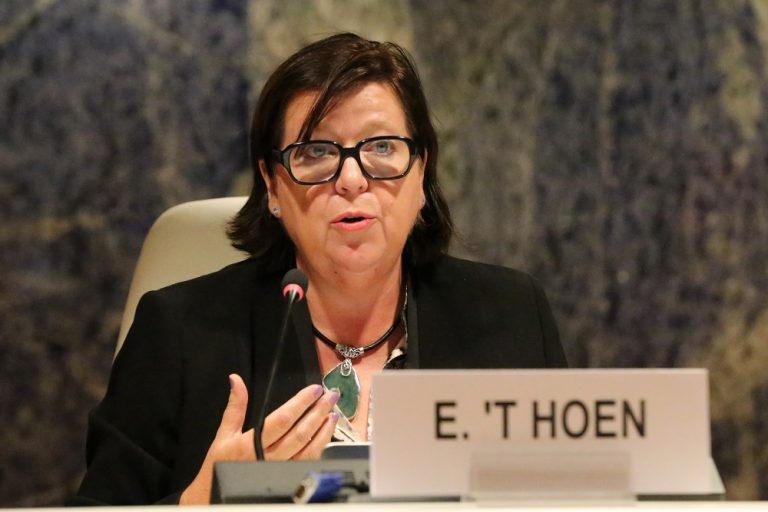
A mechanism to systematically assess trade agreements from a public health perspective, including accession agreements of the World Trade Organization and European Patent Office’s validation agreements is needed, says Ellen ´t Hoen, senior researcher at the Global Health Unit of the University Medical Centre, Groningen, The Netherlands. who publishes the Medicines Law and Policy website.

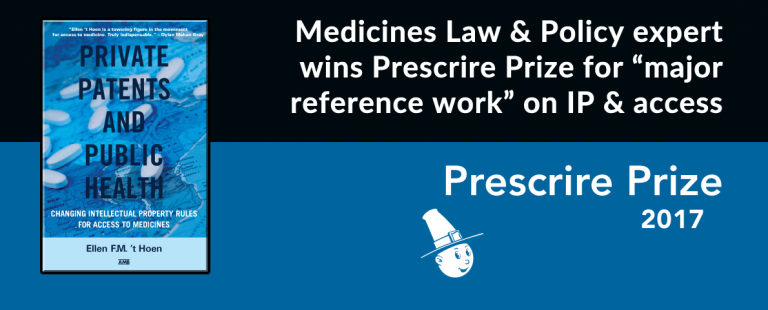
Medicines Law & Policy Expert Wins Prescrire Prize For ‘Major Reference Work’ On Access To Medicines

PARIS -- La Revue Prescrire, a French journal for healthcare professionals, has chosen “Private Patents and Public Health” — a 2016 book written by Ellen ’t Hoen — as one of four winners of its 2017 Prescrire Prize Book Award. Calling it “a major reference work on access to medicines and the patent system,” Prescrire praised ’t Hoen’s book both for its extensive collection of data and examples as well as its readability. (Medicines Law & Policy contributor, Kaitlin Mara was the editor of the book).