Category Enforcement

‘Mede In China’: US Customs May Bring In Rights-Holders To Help Stop Counterfeiters
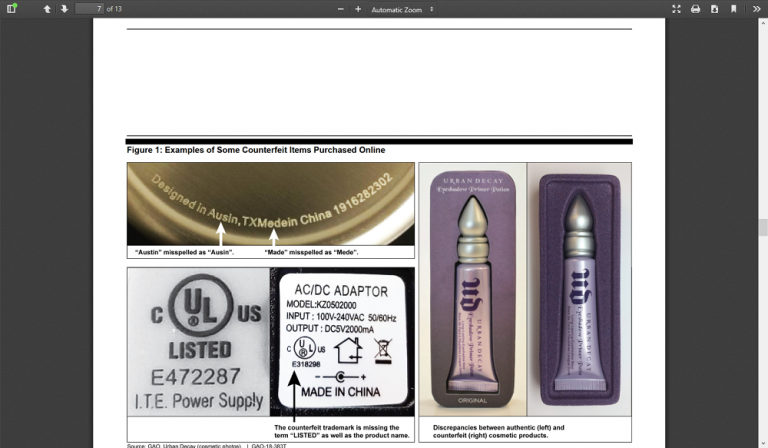
The United States Customs and Border Patrol (CBP) this week said it is considering sharing more information with the intellectual property rights holders about possible counterfeit goods entering the US, in order to improve prevention. But CBP said it is still unclear whether changes in the law will be required to allow it to do this.
What We Know – And What We Don’t – About Counterfeit Goods And Small Parcels

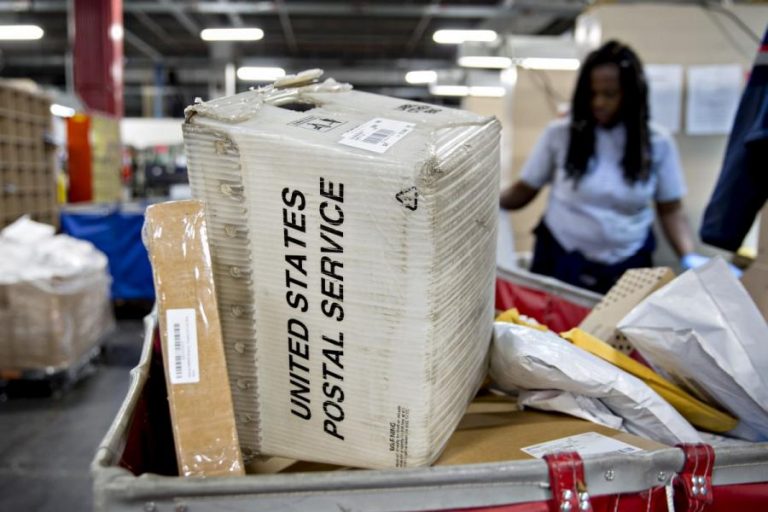
Kasie Brill writes: Cross-border e-commerce is growing exponentially. Consumers can purchase products from all over the world and have them delivered straight to their doors with just the click of a button. In fact, the U.S. Postal Service’s (USPS) international small parcel business increased 232% from 2013 to 2017, when it received nearly half a billion packages.

Out of those half a billion packages, USPS only had critical safety information on 36% of them. In other words, millions of packages reached American consumers with little or no security screening at all. Though most of these packages contained exactly what the customer ordered, counterfeiters have discovered that small parcels are an easy means to distribute fake and often dangerous goods.

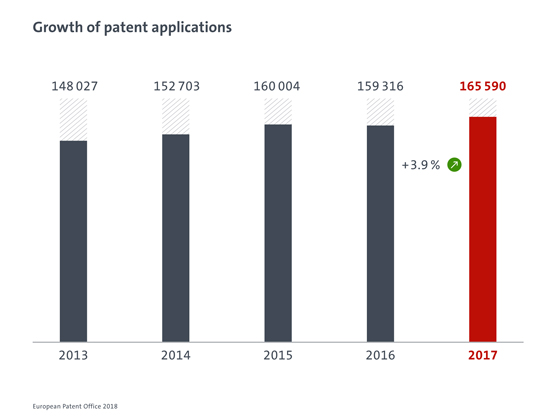
EPO Reports Record Volume Of Patents, Seeks To Assure Quality

The European Patent Office today issued statistics which it claimed show the continued ascendance of Europe as a premier destination for patenting, not only from European countries. The statistics focus strongly on the increased volume of patents filed and granted, which it argued is a result of the office's focus on "efficiency and quality" and a boost to innovation.

USTR Lighthizer To NAFTA Partners: Step Up Pace Or Lose Window Of Opportunity

United States Trade Representative Robert Lighthizer warned his Mexican and Canadian counterparts today (5 March) that if they don't quickly pick up the pace of the North American Free Trade Agreement (NAFTA) renegotiations, they will face "headwinds" from elections in all three countries. And if they can't progress, the US is prepared to proceed bilaterally.

EU Commission Proposes Measures Against Illegal Online Content Including IP Infringement

The European Commission today recommended a set of operational measures against a wide range of online content considered illegal, lumping intellectual property rights-infringing material in with that of terrorists, child sexual abusers, hate speech, and commercial scams.

Video Gaming Industry Issues Attack On WHO’s Proposed Gaming Disorder Classification

Teens' (and others') life-altering obsession with video gaming is well-known to almost any parent in most countries around the world, and the World Health Organization recently identified it as an addiction called "gaming disorder." Today, the self-acclaimed $36 billion video gaming industry hit back with a statement about a new paper from "preeminent researchers and scientists" that it says casts doubt on the WHO's efforts.

WTO TRIPS Council Looks At IP And The Public Interest, Importance Of Research Exemption

A relatively new topic of discussion at the World Trade Organization committee on intellectual property is the relationship between intellectual property and the public interest. This week, WTO delegates discussed the application and benefits of a regulatory exception to IP rights allowing earlier entry of generics to the market, known as the Bolar exception. The committee also heard about a request from least-developed countries (LDCs) to improve technology transfer measures that developed countries have the obligation to provide under WTO rules.

Academies’ Group Urges EU Harmonisation Of Rules On Inventorship, Patenting

A high-level group of academic experts in intellectual property rights and innovation in the European Union has released a statement highlighting the rise in inventions due to international research and development and says EU regulations on inventorship, assignment and patent filing should be assessed for harmonisation and reducing complexity.

WTO TRIPS Council: For Some, IP-Intensive Industries Are Engine Of Economy. For Others, IP Alone Is Not Sufficient

The World Trade Organization committee on intellectual property met this week and gave an opportunity to WTO members to discuss the value of intellectual property for micro, small and medium sized enterprises (MSMEs), and its importance for IP-intensive industries. Several members, such as the European Union on behalf of its members presented data to illustrate the importance of IP for MSMEs. Meanwhile, India and South Africa remarked that IP is only one factor to promote innovation, but are not a sufficient ingredient.