Category Enforcement

Custom Built Software And The IP Law – What You Need To Know

The practice of building custom software is alive and well despite the emergence of tons of ready to use offline and online business apps. Businesses build custom software for various reasons. Some are unsatisfied by solutions available on the market, others need very specific features or overall functionality, security and privacy concerns are another major driver of tailored software development. The process of building custom software involves five basic stages, if you stick to traditional software development workflow, or an indefinite number of iterations under agile development method. Both approaches, however, include various scenarios in which intellectual property rights are involved, writes Jorge Sagastume.

UPOV Approves Budget, Explains Contribution To SDGs; Civil Society Disagrees

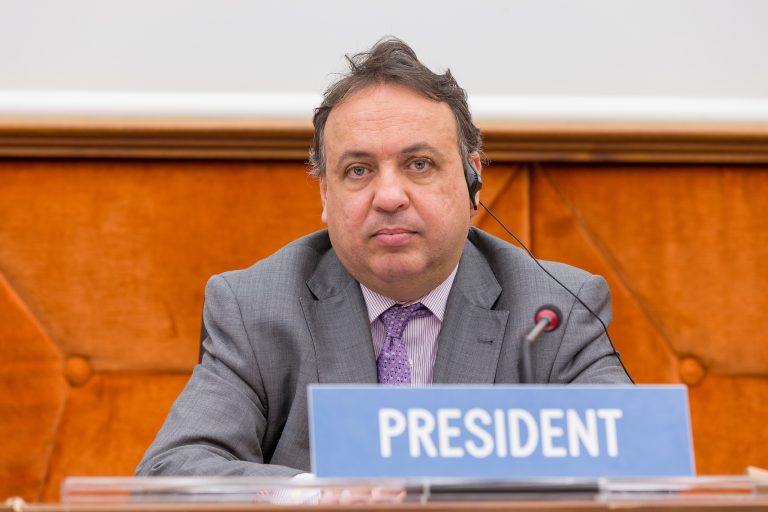
The International Union for the Protection of New Varieties of Plants (UPOV) met a few days ago and took a number of decisions, such as approving its budget for the 2018/2019 biennium, adopting a document describing the union's contribution to the United Nations Sustainable Development Goals, and the extension of the appointment of its vice secretary general. Civil society, however, has issues with UPOV's take on its contributions to the SDGs. They also reiterated their request that farmers be included in UPOV's decisionmaking.

WIPO Trademark Committee Agrees On Work Programme For GIs, Action On Country Names

Statements were praiseful at the close of the World Intellectual Property Organization committee on trademarks, industrial designs, and geographical indications meeting this week. After a number of unsuccessful past sessions, delegates agreed on a work programme on geographical indications. They also decided on a half-day information session on the examination by trademark offices of requests including country names, during the next session of the committee.

New Worldwide Compilation Of GIs Launched: Helping To Bridge Two Approaches?

The Organization for an International Geographical Indications Network (oriGIn) launched a worldwide compilation of geographical indications today at the World Intellectual Property Organization. The compilation, which lists over 7,000 geographical indications, beyond providing a technical tool, is also presented as a tool of reconciliation.

WIPO Committee Meets Next Week To Discuss Country Name Trademarks, Icons, GIs

The World Intellectual Property Organization committee on trademark, industrial designs and geographical indications meets next week. Among the issues expected to be discussed are whether and how country names should be protected in trademark applications and on the internet. The committee also will consider again deepening its understanding of how GIs are protected at national and regional level, whether through trademarks or a sui generis system. And on the agenda next week is an information session on new technology designs, such as icons and type fonts used on internet, social media, smart phones and tablets.

Reaping The Benefits Of Artificial Intelligence

Your brand is everything in the global marketplace. It is no exaggeration to say that a business now lives and dies by both its offline, online and social reputation. Because of this, searching a trademark is more vital than ever before. It is important for trademark professionals to work faster and more effectively in searching, clearing and registering strong marks to ensure clients have a competitive advantage. To do so requires the merging of the old and new: the specific knowledge that only highly experienced trademark experts can provide, with the advantages of the latest wave of artificial intelligence (AI) technology, writes Ronda Majure.

Qatar WTO Dispute Case: An Issue Of IP Or National Security?

The United Arab Emirates (UAE) this week blocked the first request by Qatar for a World Trade Organization dispute settlement panel to rule on measures by UAE that Qatar alleges interfere with trade in goods and services and with protection of Qatar's intellectual property rights. Neighbouring countries say they have taken actions out of concern that Qatar is providing financial support for terrorist groups.

TRIPS Council Serves As Ground For Discussion Of Compulsory Licensing

The escalating prices of medicines has become a growing global concern. Among many issues, intellectual property has been pointed to as providing monopolies that allow for unaffordable prices, in particular in developing countries. Though there is consensus among countries that IP is but one of the issues, the extent of the IP influence is not agreed. The use of compulsory licences as a way for developing countries to grant access to medicines to their populations was discussed during the World Trade Organization committee on intellectual property last week, with divergent opinions.

TRIPS Council: Fears That Non-Violation Complaints Could Undercut Flexibilities In IP Trade Rules

World Trade Organization committee members this week were asked to recommend to the upcoming ministerial conference whether to lift or indefinitely prolong a moratorium shielding intellectual property from complaints between members not involving a breach of a WTO agreement. Short of a consensus, the intellectual property committee will have to reconvene next month to try to find agreement. Separately, a two-year extension was granted to countries not yet having ratified the public health amendment to WTO IP rules.

On Eve Of TRIPS Council, Experts Promote Benefits Of IP For Small Enterprises

The importance of intellectual property protection for micro, small and medium-sized enterprises and the challenges they might encounter to ensure that protection was the focus of an event organised this week by a group of developed and middle-income countries at the World Trade Organization. According to the group, the event aimed at drawing connections between IP policies that are under discussion in the WTO IP committee.

“WTO Must Not Be The Odd One Out” – Members Revive Talks On GIs, Genetic Resources

Members of a 2008 World Trade Organization coalition are trying to rekindle a negotiation to provide the same level of protection granted to wines and spirits to other geographical indications, and to grant intellectual property protection to genetic resources and traditional knowledge. The discussion might not make it to the December WTO ministerial, but the group hopes to open a “fresh window” for discussion.