Category Enforcement

ISPs In US Face New Copyright Challenge

Online firms don’t do enough to combat copyright infringement. That, at least, is what US copyright owners have been saying for years. They recently received some good news from the US Fourth Circuit Court of Appeals. The decision in BMG Rights Management v. Cox Communications puts new teeth in the legal requirements for internet service providers (ISPs) to act against infringing customers. The ruling, however, is worrying ISPs and many legal experts, because it empowers copyright trolls, increases costs for ISPs, and puts many of their customers in an untenable situation.


Tentative New Wording For Draft WIPO Instrument Protecting Genetic Resources

Delegates at the World Intellectual Property Organization this week started discussing core articles of what could potentially become a treaty preventing the misappropriation and the granting of intellectual property rights on genetic resources. Facilitators named by the chair of the WIPO committee addressing this issue produced a new tentative draft version of the objectives of such treaty.

New Domain Names Should Protect Country Names, Proposal At WIPO Says

A group of countries submitted a new proposal for the World Intellectual Property Organization committee on trademarks and geographical indications, set to meet next month, to protect country names and geographical names. The proponents suggest that this proposal, if adopted by the WIPO General Assembly, could influence the Internet Corporation for Assigned Names and Numbers' second round of registration for new generic top-level domain names.

WIPO Committee On The Protection Of Genetic Resources Meets This Week

World Intellectual Property Organization delegates will meet in the coming week to try to advance work on the protection of genetic resources against misappropriation. Through its renewed mandate, the WIPO committee is expected to focus on accommodating diverse points of view and try to reach a common understanding on core issues, including what and whom should benefit from protection.

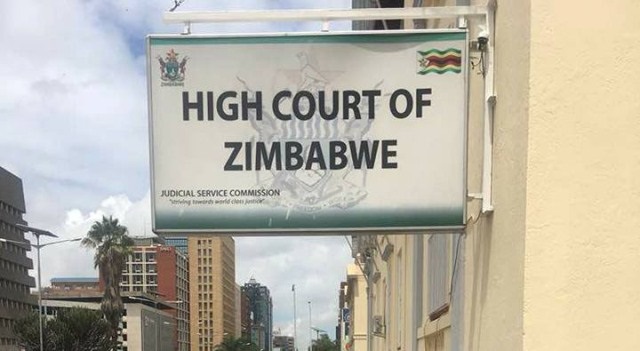
Zimbabwe Establishes An Intellectual Property Tribunal, As A Special Division Of High Court

KAMPALA, Uganda -- In what is seen as a significant achievement in the making of history of intellectual property law, the Government of Zimbabwe has instituted and operationalised an Intellectual Property Tribunal, with the mandate to speedily preside over all IP matters, disputes, infringements, passing off and other related issues. The Tribunal recently heard its first case. [A reminder to readers: All IP-Watch stories are totally free for least-developed countries and almost all developing countries. Just sign up for a password under Subscribe.]

EU Council’s IP Enforcement Changes: Judicial Systems, Customs, Open Source, WIPO – And An IP Watchlist

The European Council of ministers today adopted a set of conclusions on the enforcement of intellectual property rights in the European Union, aimed at improving protection in the digital era and promoting innovation. This includes a list of suggested actions, including possible changes to national laws and judicial systems, bolstering customs, agreements with industry, encouraging open source, strong representation at the World Intellectual Property Organization, and possibly setting up an IP watch list reminiscent of the one in the United States.

New TPP Still Most Advanced IP Trade Agreement Ever, Think Tank Says

The Comprehensive and Progressive Agreement for Trans-Pacific Partnership (CPTPP) is on track to offer "the most advanced and detailed standards on intellectual property in a trade agreement to date" despite revisions scaling back the IP chapter after the United States dropped out, says the Washington, DC-based Center for Strategic and International Studies (CSIS).

US Generic-Named Food Industries Cry For US Government Help Against ‘Relentlessly Aggressive’ EU

Something that was unimaginable just a few years ago: What if Americans could not buy ordinary bologna, feta or parmesan cheese? Or worse, make them and export them under those names? The industry group in the United States representing a range of products like those today called on the US government to help them defend their products and their jobs against what they called "purposeful," "relentless" and "aggressive" efforts by Europe to promote adoption of geographical indications (products named for places and with particular characteristics) to the detriment of the US common-named goods.

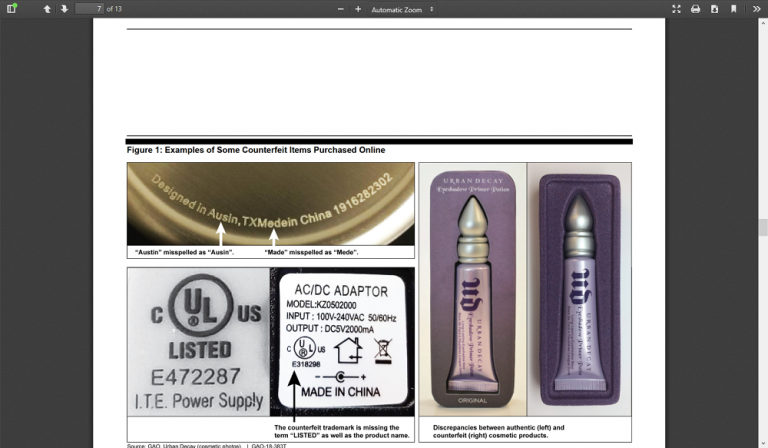
What We Know – And What We Don’t – About Counterfeit Goods And Small Parcels

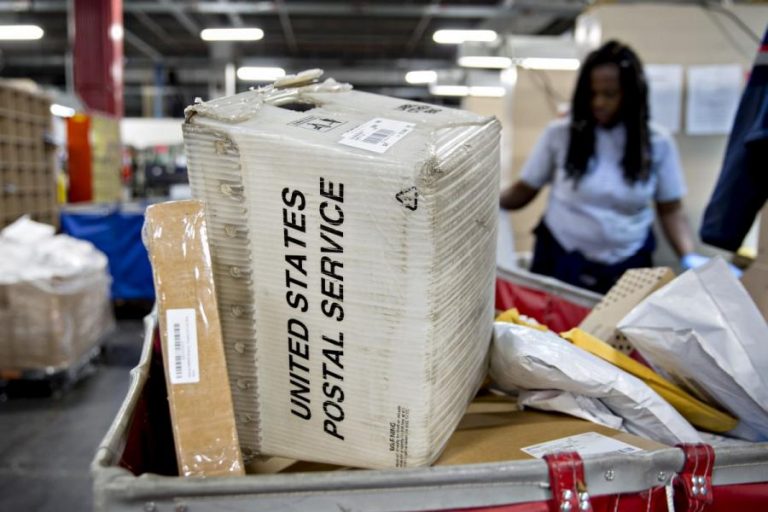
Kasie Brill writes: Cross-border e-commerce is growing exponentially. Consumers can purchase products from all over the world and have them delivered straight to their doors with just the click of a button. In fact, the U.S. Postal Service’s (USPS) international small parcel business increased 232% from 2013 to 2017, when it received nearly half a billion packages.

Out of those half a billion packages, USPS only had critical safety information on 36% of them. In other words, millions of packages reached American consumers with little or no security screening at all. Though most of these packages contained exactly what the customer ordered, counterfeiters have discovered that small parcels are an easy means to distribute fake and often dangerous goods.

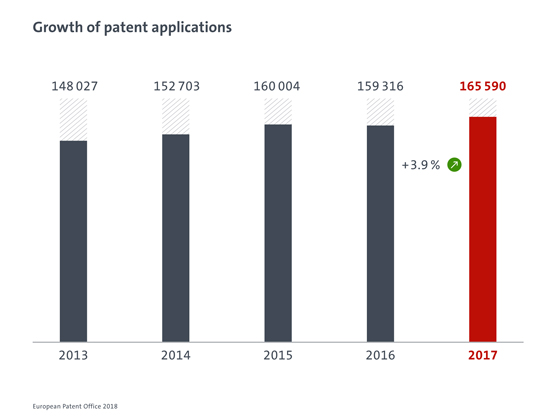
EPO Reports Record Volume Of Patents, Seeks To Assure Quality

The European Patent Office today issued statistics which it claimed show the continued ascendance of Europe as a premier destination for patenting, not only from European countries. The statistics focus strongly on the increased volume of patents filed and granted, which it argued is a result of the office's focus on "efficiency and quality" and a boost to innovation.