Category Features

In US, New Legal Ploy May Protect Bad Patents

It had been a bad three months for Allergan, Inc. The drug maker’s stock price had fallen over 20 percent, as the company faced two legal challenges to the patents on its blockbuster drug, Restasis. Then, on 16 October, Allergan lost one of those challenges. A US court found the patents invalid. Allergan vowed to appeal, thus maintaining its monopoly on the drug until a final court determination, which could be over a year away. But Allergan’s monopoly could collapse far sooner, if the company were to lose the second challenge to the patents, before the USPTO. Such a loss was probable, as the agency had already found a “reasonable likelihood” that prior art invalidated the patents on Restasis. So back in September, Allergan employed an innovative legal strategy: The company gave its patents to a Native American tribe, and the tribe claimed its sovereign immunity prevented the USPTO from reviewing the patents’ validity. If this strategy were to succeed, it will do far more than just boost Allergan’s bottom line. The new strategy will increase the power of patent owners, help patent trolls, and dramatically alter the US patent system.
EU To Get Rid Of Big Pharma-Friendly SPCs

Extended monopoly protection by the Regulation EC 469/2009 concerning the supplementary protection certificate (SPC) mechanism for medicinal products has led to spiralling prices in Europe for lifesaving medicines, while exhausting the national budgets and depriving patients of fair access to treatments. The EU Commission should repeal the SPCs and put in practice the recommendations signed on 8 September 2017 by thirty-three civil society organisations, in alignment with the final report of the UN High Level Panel on Access to Medicines, writes Daniele Dionisio.

Early Whispers Of Next WIPO Director General Election Cycle

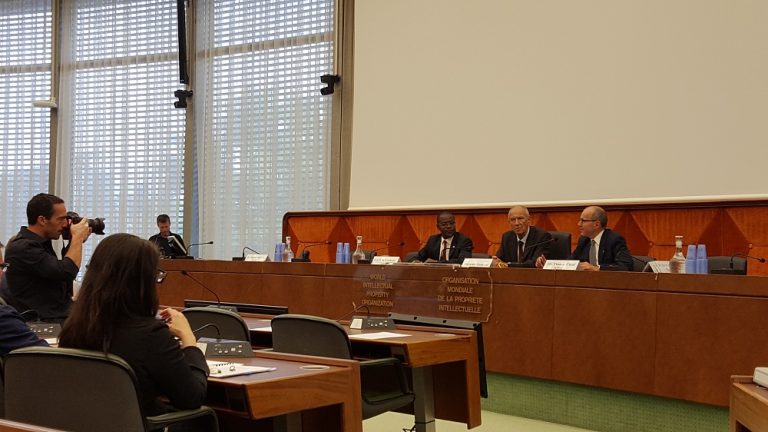
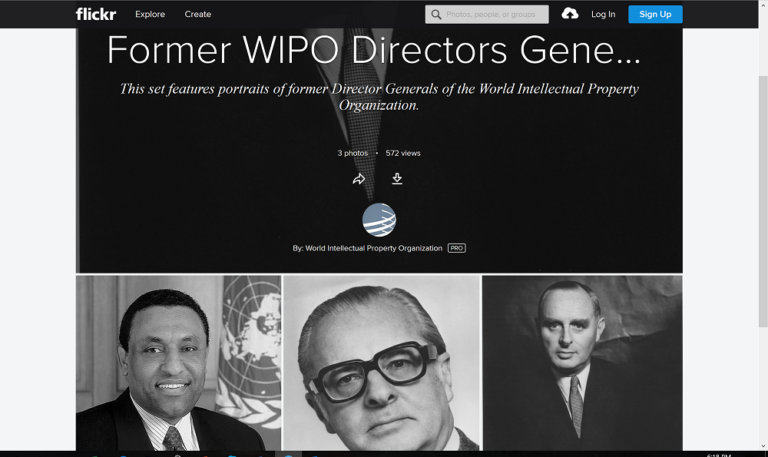
It’s safe to say most delegates at the annual World Intellectual Property Organization General Assemblies this month gave no thought to the next election for the director general of the UN agency. It’s not surprising, as it is still years away and was not on the agenda this year. But it was surprising to hear a few delegates in the hallways utter the first very early whispers about what the next election might look like. So Intellectual Property Watch talked to delegates and looked at the possible timeline for the next election for the top post at WIPO.

WIPO’s Program And Budget Stand-Off Highlights That Member States Must Act On WIPO’s Governance System

As the WIPO Annual Assemblies draw to a close this week, governments face a dramatic stand-off over the organisation’s biennial Program and Budget. Unless a series of its demands regarding the organisation’s financing and treaty-making processes are met, the United States is refusing to approve the WIPO budget – a decision Member States normally take by consensus. While sparring among governments over the budget and content of a UN organisation’s programs is not unusual, the debate at WIPO this year highlight challenges at the heart of its governance system, writes Carolyn Deere.

Section 301: US Investigates Allegations Of Forced Technology Transfers To China

On 18 August 2017, the Trump administration invoked Section 301 of the Trade Act of 1974 to launch an investigation into alleged Chinese violations of intellectual property rights (IPR). In response, China stated that the United States ‘disregards the rules of the WTO’ and that it will ‘take all proper measures to safeguard its legitimate rights’. Alongside investigations into steel and aluminium imports, the new Section 301 case holds the potential to escalate US–China trade tensions, write Zhiyao (Lucy) Lu and Gary Clyde Hufbauer.

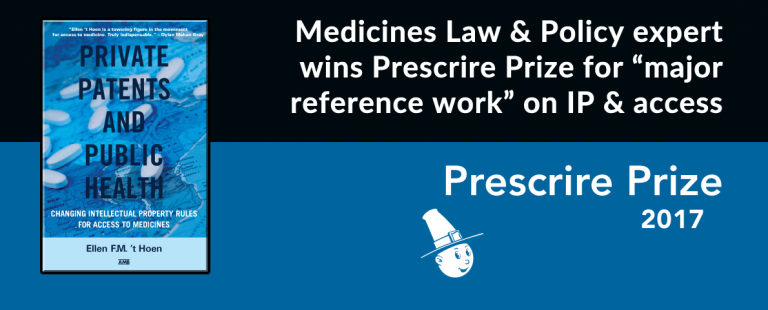
Medicines Law & Policy Expert Wins Prescrire Prize For ‘Major Reference Work’ On Access To Medicines

PARIS -- La Revue Prescrire, a French journal for healthcare professionals, has chosen “Private Patents and Public Health” — a 2016 book written by Ellen ’t Hoen — as one of four winners of its 2017 Prescrire Prize Book Award. Calling it “a major reference work on access to medicines and the patent system,” Prescrire praised ’t Hoen’s book both for its extensive collection of data and examples as well as its readability. (Medicines Law & Policy contributor, Kaitlin Mara was the editor of the book).

WIPO, Pharma Join Forces To Set Up Database For Medicine Procurers

Today WIPO Director General Francis Gurry and Thomas Cueni, Director General of the International Federation of Pharmaceutical Manufacturers and Associations (IFPMA), signed an agreement establishing the Patent Information Initiative for Medicines, or “Pat-INFORMED,” during the General Assemblies of the Member States of WIPO taking place this week. IFPMA worked with Intellectual Property Watch to prepare a Q&A with Mr Gurry and Mr Cueni about this new initiative.

Interview With New Korean IP Commissioner Sung Yunmo

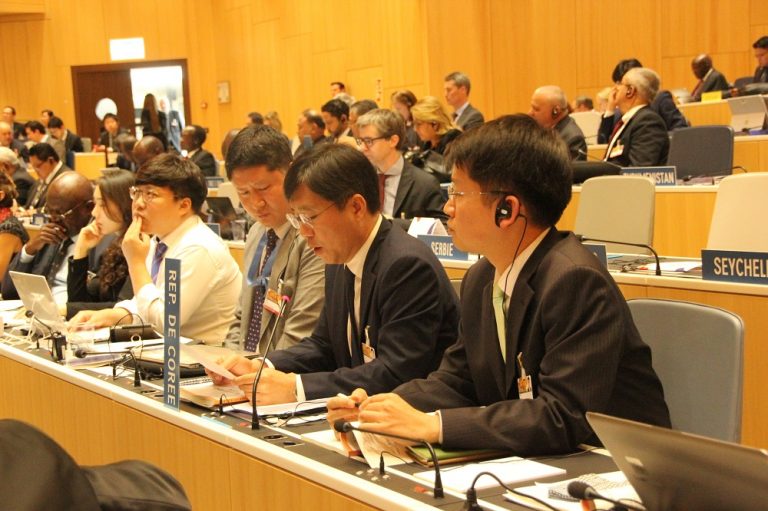
Korean Intellectual Property Office (KIPO) Commissioner Sung Yunmo took office a couple of months ago and is attending the annual World Intellectual Property Organization General Assembly this week. In that context, he sat down with Intellectual Property Watch, and in a Q&A mutually prepared Q&A, he described some of the policies and plans for his term of office, collaboration with WIPO, international partnerships, a proposed WIPO office in Korea, and regional efforts toward global harmonisation.

Guide To This Week’s Annual WIPO General Assemblies

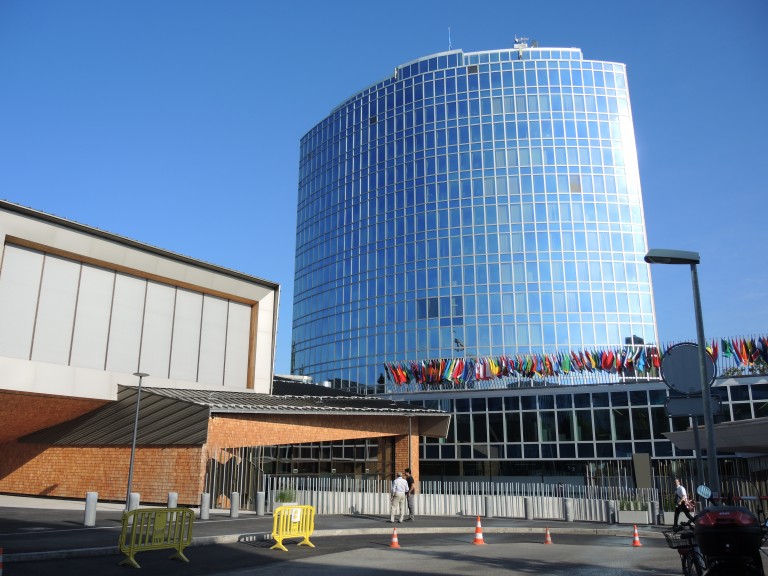
The annual UN World Intellectual Property Organization General Assemblies kick off this week for ten days during which delegates will have to find consensus on the budget for the next biennium, 2018/2019. Also on the agenda is the potential renewal of, and a proposed work programme for, the committee on genetic resources and traditional knowledge. WIPO delegates will also decide if they want to convene a high-level final negotiation for a design law treaty, and provide guidance on the work of the WIPO committee on copyright. A decision on which countries should host the next WIPO field offices has also been left to the General Assembly.

How USPTO Patent Reviews Became Imperiled

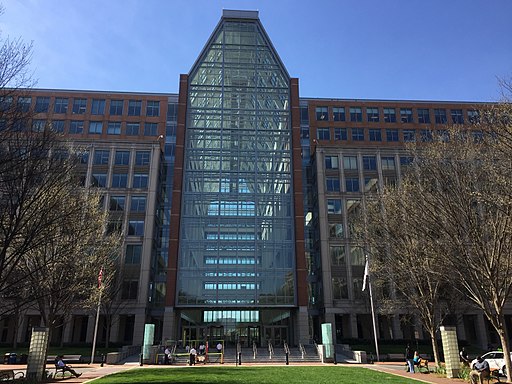
Initially, the lawsuit was widely viewed as a waste of time. The suit asserted a strained legal argument that already had been rejected twice by federal appellate panels, in 1985 and 1992. Yet this lawsuit, Oil States Energy Services v. Greene’s Energy Group, has now reached the US Supreme Court. So later this term, the high court will decide whether the US Constitution prevents the US Patent and Trademark Office from ever striking down issued patents.

Disparity In Access To Medicines Spurs “Humanitarian” Patent Licensing

“There are shameful access disparities around the world” to life-saving medicines, Harvard University Global Access in Action project Co-Director Quentin Palfrey said at a 26 September Center for Strategic and International Studies event in Washington, DC. And while some of the challenges to fuller access involve pricing, getting medicines to poorer countries or populations means overcoming the obstacles of insufficient research and development (R&D) incentives, access barriers and polarised politics, he said.