Category Features

Where There Is A Will There Is A Way: Speakers At WIPO Event Discuss Indigenous Knowledge Protection

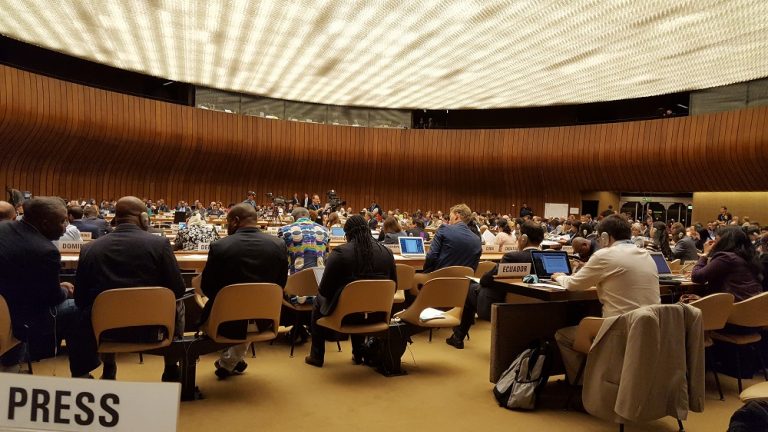
An event held on the side of the World Intellectual Property Organization committee on traditional knowledge meeting last week looked at ways to move discussions forward in the light of the committee’s expected renewed mandate. Speakers explored different perspectives and possible new avenues for indigenous and local communities to protect and manage their knowledge and cultural heritage, without the threat of misappropriation.
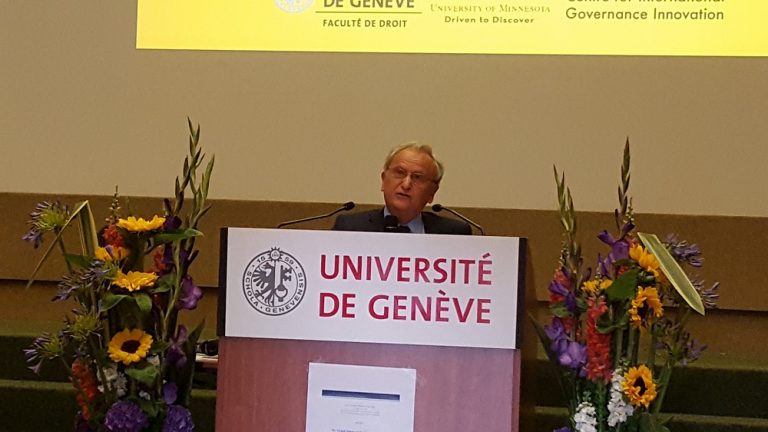

Tribute To An IP Community Influencer Brings Together IP Experts In Geneva

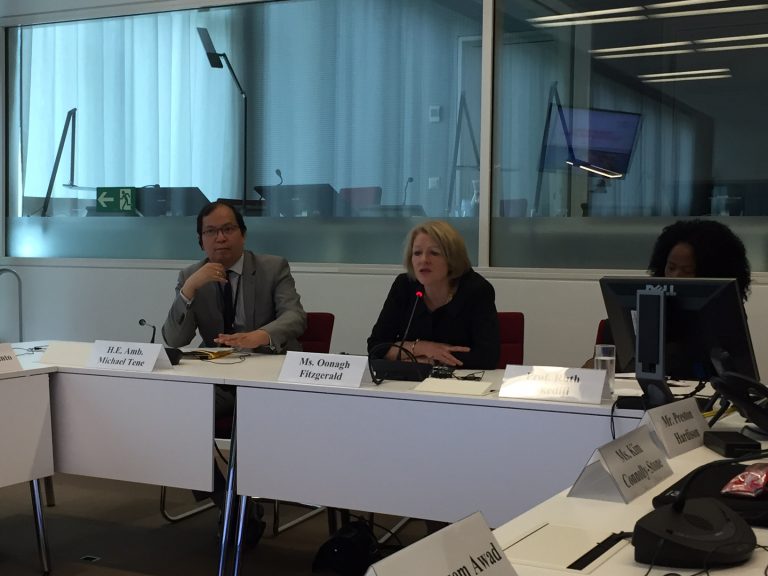
Inspiring, generous, humanist, nobody was short of praise and anecdotes at an event last week to celebrate the lifelong contribution of Pedro Roffe, well-known Geneva thinker and writer on intellectual property. A conference on the evolution of intellectual property, trade and development had been organised for the occasion, congregating many IP experts offering their perspective on the role of IP in fields, such as public health, innovation policy, and competition law.

Made In China: The Past, Present And Future Of Chinese IPR

Shai Jalfin writes: Conservative projections say that China will surpass the United States as the number one economy in the world by 2030, but the shift could happen as soon as next year. Either way, there’s no doubt that China has emerged as one of the most important commercial economies in the world, and businesses everywhere are vying to enter its market. However, there is a serious hurdle when foreign companies decide to take their products to China – intellectual property rights (IPR), or more accurately, the country’s lack of adequate IP protection. History shows that bringing business to China, while extremely lucrative, has also been extremely risky – but it’s a market that cannot be ignored. Here is a look at the past, present and future of IPR in China.

US Supreme Court Adopts International Exhaustion Of Patents (Part II): Addressing the New Competitive Landscape

Frederick M. Abbott writes: The US Supreme Court has created a new competitive landscape with its decision adopting international exhaustion of patents. For the pharmaceutical sector, we can expect an initial period of uncertainty as the US Food and Drug Administration (FDA) assesses the regulatory framework affected by the decision and as competing stakeholders advance their interests. In an earlier Inside Views contribution, I addressed the principal impact of the decision on the US pharmaceuticals market: downward pricing pressure.[1] This follow-on addresses some of the regulatory and access issues affected by the decision, observing that parallel trade in pharmaceutical products is a long-standing practice, that recently introduced US legislative proposals may shape the regulatory framework in the United States, and concluding with ways that access programs in favor of developing countries are protected.

US Ends Post-Sale Patent Rights

On 30 May, the US Supreme Court handed down yet another in a long series of rulings that cut back on the rights of patent owners. This time, the high court made it far more difficult for patentees to impose post-sale restrictions on the use or resale of their patented goods. The ruling should boost parallel imports into the US, increase competition throughout the American economy, lower prices for US consumers, and hurt the bottom line of many companies.

Summit: Artificial Intelligence Is Humanity-Changing, Build Safeguards Now

For artificial intelligence enthusiasts, the future is bright. Soon intelligent machines will help humankind solve most problems, and according to one speaker at an artificial intelligence summit in Geneva this week, humans will be outsmarted by robots in the foreseeable future, in an artificial intelligence bliss. For others, artificial intelligence is far from delivering a fully positive outcome, and for several United Nations representatives, such as the World Health Organization, the world should not be entrusted to robots just yet.

US Supreme Court Adopts International Exhaustion For Patents: Paving the way for parallel imports to exert downward pressure on domestic pharmaceutical (and other) prices

Frederick M. Abbott writes: The Supreme Court of the United States on May 30, 2017 adopted a rule of international exhaustion of patent rights for the United States in Impression Products v. Lexmark International, No. 15-1189. The near-unanimous decision authored by Chief Justice Roberts is unambiguous and unequivocal.[1] The Court paid short shrift to contrary decisions of the Court of Appeals for the Federal Circuit in Jazz Photo Corp. v. International Trade Commission, 264 F. 3d 1094 (Fed. Cir. 2001) and in this case on certiorari, Lexmark International v. Impression Products, 816 F.3d 721 (Fed. Cir. 2016).

In addition to adopting international exhaustion, the Supreme Court ruled firmly against enforcement of post-sale restrictions through infringement actions based on patent. The Court allowed for enforcement under contract law of limitations that may be included in patent licenses.

A Price Too Good To Be True

Steven Tepp writes: Virtually every consumer in every country wants products and services as inexpensively as possible. Nowhere is that demand more acute than in health care, where quality of life, and life itself, is at stake. In Europe, most national governments use the monopsony power of a single-payer national health care system to negotiate (or dictate) what prices they will pay, an activity that has been considered “anti-competitive” in EU private markets. And some governments simply issue price controls.

Beyond The Obvious – Direct And Indirect Territorial Coverage Of MPP/ViiV Voluntary License For Dolutegravir

Pursuant to a license negotiated by the Medicines Patent Pool (MPP) with ViiV Healthcare (ViiV), an important new antiretroviral medicine, dolutegravir (DTG), will soon be available via generic competition in all low- and lower-middle-income countries, and a significant number of upper-middle-income countries as well. DTG is a highly recommended integrase inhibitor which highly effective, durable, inexpensive to produce, and relatively safe with few side effects. It is already an alternative WHO recommended first-line medicine and will probably become the global standard of care following trials on use of DTG to treat pregnant women and people with TB.[1] But until the MPP can succeed in getting inclusive licensing terms covering all low- and middle-income countries (LMICs), this unique clause in the MPP-ViiV license should be adopted in future licenses, as it is a best practice to date in terms of expansive coverage, writes Brook Baker.

World Health Assembly 70: A Spectator’s Guide To Program/Budget, Election, Polio Transition

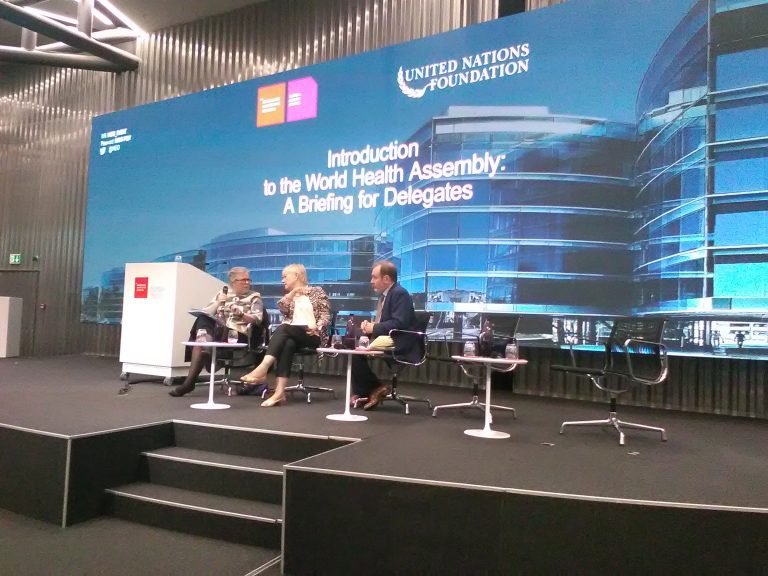
The 70th annual World Health Assembly (WHA), now underway in Geneva, is shaping up to be one of the most consequential in memory. With a record-setting nine-day, 76-item agenda, plus dozens of official and unofficial side events, delegates and WHO followers alike will be hard-pressed to keep up. But yesterday’s introductory briefing, hosted by the Global Health Centre at the Graduate Institute, provided an overview of the proceedings and a few pointers on where to look first. Four items, in particular, stand out.