Category Features

Heading Off Global Action On Access To Medicines In 2018

At the dawn of 2018, political and health leaders must seize the growing momentum and opportunities to tackle the protracted challenges of access to medicines that undermines efforts to save lives and improve health as committed under the Agenda 2030 SDG [Sustainable Development Goals] by all UN member states, write Jorge Bermudez and Viroj Tangcharoensathien.

EPO-EU Conference Examines Hot Topic Of Patentability Of Plants In Europe

The last couple of years have brought heated discussions in Europe on the patentability of plant innovations, leading to a recent amendment of patent application rules at the European Patent Office. Two major actors share this innovation landscape: the biotechnologists and the plant breeders, with similar but not identical needs for protecting their invention. A joint conference on innovation in the plant sector was held recently by the EPO and the Community Plant Variety Office.

Year Ahead: Copyright, Unified Patent Court Remain High On EU Priority List

Plans to update European Union copyright rules advanced in 2017 but remain contentious heading into the new year. The proposal for a directive on copyright in the digital single market is the subject of intense debate between the EU Presidency and the European Parliament, with no clear end in sight to the negotiations. Several issues, including a possible “ancillary right” for news publishers and a plan to force online platforms to filter all uploads to combat copyright infringement, remain unresolved.

Other copyright matters, such as a regulation on broadcasting and a review of the EU database directive, are in the works. On the patent side, a pressing question is whether – and when – the EU unified patent and patent court (UPC) might finally launch.

Several EU comprehensive trade agreements, which include provisions on intellectual property rights, are under negotiation.

Cases to watch in the European Court of Justice include a referral from the Netherlands on the issue of whether the taste of cheese can be copyrighted.


Libraries – A Trio Of European Court Rulings

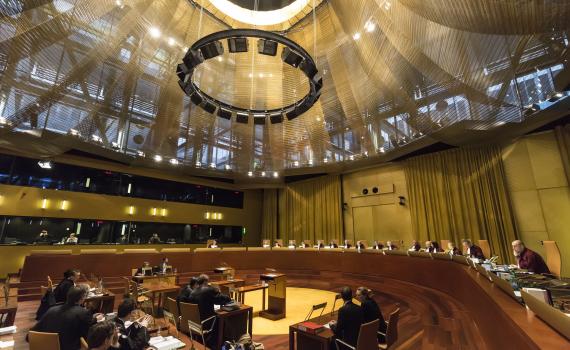
In recent years, the Court of Justice of the European Union (CJEU), Europe’s highest court, has made three important rulings concerning digital library activities in Europe, Vincent Bonnet and Barbara Stratton write on the EIFL blog.

Guide To The WHO Executive Board: Access To Medicines, Noncommunicable Diseases, Non-State Actors

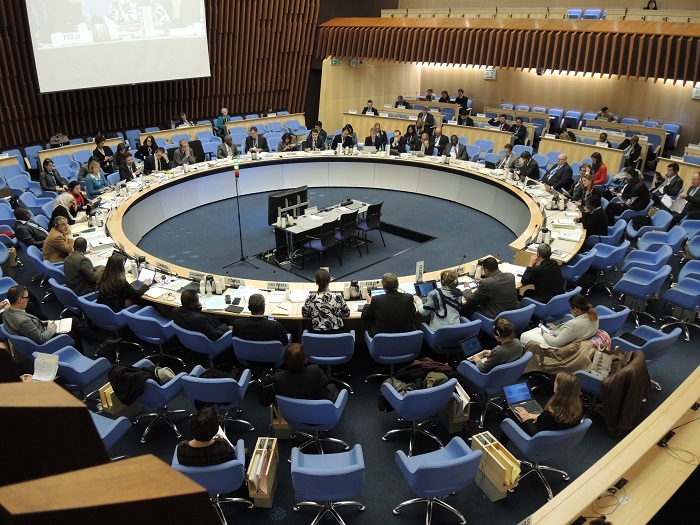
The World Health Organization Executive Board meets next week. On the agenda are recommendations of a review group on the WHO Global Strategy on Public Health, Innovation and Intellectual Property, and WHO proposed actions to increase access to affordable and safe medicines and diagnosis. The Executive Board is also expected to consider a report on noncommunicable diseases, new possible organisations to enter into official relationships with WHO, and how to address the global burden of snakebites, including access to treatment.

Morrison & Foerster’s 2018 Predictions On Intersection Of Technology And Law—From Web Scraping To Blockchain

From the Morrison & Foerster Socially Aware blog: Happy 2018 to our readers! It has become a Socially Aware tradition to start the New Year with some predictions from our editors and contributors. With smart contracts on the horizon, the Internet of Things and cryptocurrencies in the spotlight, and a number of closely watched lawsuits moving toward resolution, 2018 promises to be an exciting year in the world of emerging technology and Internet law.

How International IP Policy Reconfigured National Politics: An Interview With Prof. Ken Shadlen

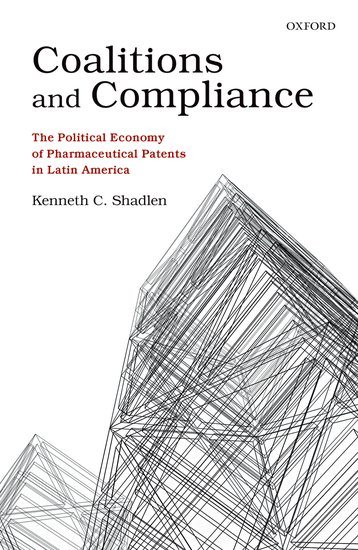
The recently published book Coalitions and Compliance by Professor Ken Shadlen of the London School of Economics examines how international changes can reconfigure domestic politics. Since the late 1980s, developing countries have been subject to intense pressures regarding intellectual property rights. These pressures have been exceptionally controversial in the area of pharmaceuticals. Historically, fearing the economic and social costs of providing private property rights over knowledge, developing countries did not allow drugs to be patented. Now they must do so, an obligation with significant implications for industrial development and public health. This book analyses different forms of compliance with this new imperative in Latin America, comparing the politics of pharmaceutical patenting in Argentina, Brazil, and Mexico. The book focuses on two periods of patent politics: initial conflicts over how to introduce drug patents, and then subsequent conflicts over how these new patent systems function. Intellectual Property Watch recently conducted a Q&A with Prof. Shadlen, which appears below.

US IP Law – A Look At The Year Ahead

In the coming year, one US Supreme Court case promises to dominate developments in America’s IP law. The upcoming decision in Oil States Energy Services v. Greene’s Energy Group could have major ramifications for patents, copyrights, trademarks, and the USPTO. But even as that case steals the limelight, 2018 could bring other significant changes to America’s IP law. Here are some of the key developments to watch for.

Year Ahead: US Music Sector Calls For Major Legislative Changes To Copyright In 2018

The music community is ramping up its efforts to have significant new copyright legislation approved by United States Congress in 2018, amid key changes in the legislative apparatus, with the elevation of Rep. Jerold Nadler (D-New York) as the Ranking Member of the House Judiciary Committee, a pivotal role that puts him at the heart of the US legislative system, and the retirement of the Committee's current Chairman, Bob Goodlatte (R-Virginia), at the end of the year.

Top IP-Watch Stories Of 2017: What Do They Tell Us About Multilateral IP Policy?

What IP-Watch stories were readers reading most in 2017, and what does it say about the state of global intellectual property policy? In this article, we look at the most-trafficked stories of last year, and make a few assumptions. Asia, Europe, trade, health. These were the top targets of interest to readers among our offerings. Interestingly, despite all the sound and fury in Washington, our coverage there was not at the top of the list. Even more interestingly, neither was our extensive and world-leading coverage of the World Intellectual Property Organization.

Changes In EU Data Law: The GDPR Requirements And How To Meet Them

Linkilaw writes: Statistics show 69% of SME owners have heard about the General Data Protection Regulation (GDPR) and 70% admitted to being unaware it will come into effect from 25th May 2018. It is important for small business owners to understand what the GDPR is as well as its application. The GDPR is the outcome of four years of constant discussions, investigations, and amendments made by the EU to update its data privacy rules and regulations.The GDPR will replace the Data Protection Directive established in 1995, creating a greater territorial scope and stricter penalties for those states members, and business dealing with Personal Data, who fail to keep and handle data according to the new regulation. The GDPR was finally approved by the EU Parliament on 14 April 2016 but will apply from 25 May 2018, giving a two-year transition period for all EU members states. This is a call for all SME’s: you need to prepare now!