Category Features

What Could Have Entered The Public Domain On January 1, 2018?

Current US law extends copyright for 70 years after the date of the author's death, and corporate “works-for-hire” are copyrighted for 95 years after publication. But prior to the 1976 Copyright Act (which became effective in 1978), the maximum copyright term was 56 years—an initial term of 28 years, renewable for another 28 years. Under those laws, works published in 1961 would enter the public domain on January 1, 2018, where they would be “free as the air to common use.” Under current copyright law, we’ll have to wait until 2057.1 And no published works will enter our public domain until 2019. The laws in other countries are different—thousands of works are entering the public domain in Canada and the EU on January 1, writes the Duke University Center for the Study of the Public Domain.


Internet Governance Forum – An Encyclopaedic Endeavour

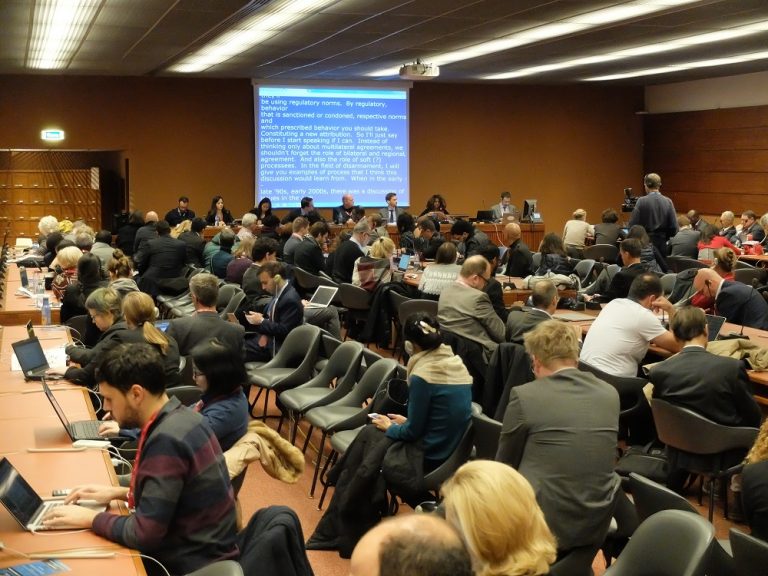
The 12th Internet Governance Forum has closed its doors and sent home the last of the more than 2,000 die-hard internet governance adepts from 142 countries who stayed until a mere three days before Christmas in the halls of the United Nations in Geneva. Asking the adepts and the critics about what has changed in the forum that started because governments just could not agree on how critical internet infrastructures should be managed during the 2005 UN World Summit on Information Society, the first answer always is just “big”.

With originally 3,000 registered, it is the biggest international internet politics conference. But “big” is not only the size of the meeting, it is also the number of workshops, panels, best practice forums and bi-, pluri- and (nearly) multi-lateral meetings taking place over the five days. So this year Intellectual Property Watch, having participated substantively all week, decided to make an encyclopaedic endeavour to bring you the first IGF dictionary (or to make a dictionary about that encyclopaedic endeavour) in an effort to give credit to the richness of the forum, but highlight some problems, too.

Internet Society Official On Internet Governance Challenges, Role In Solving Issues

The Internet Society has participated in the Internet Governance Forum since its inception. Since then, the forum has been able to build trusted relationships with the different groups of stakeholders, but it should be able to attract more participants from all those groups of stakeholders, such as ministers and CEOs, according to Constance Bommalaer, senior director of Global Policy of the Internet Society. Bommalaer sat down with Intellectual Property Watch’s Catherine Saez in the margins of this week’s Internet Governance Forum in Geneva to explain the pressing issues of internet governance, such as the trust issue, and the internet of things, and the work of the Internet Society to bring tangible answers.

A Digital Geneva Convention: Nobel Prize-Worthy Or Dangerous?

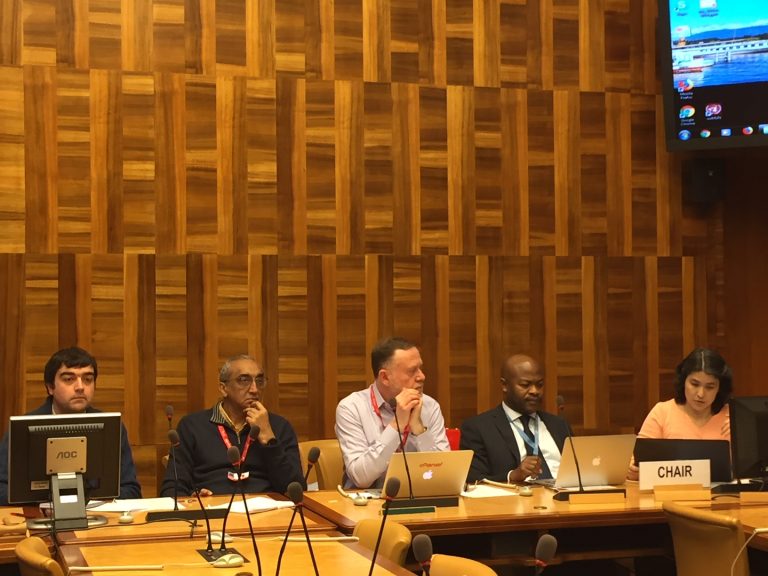
Microsoft on 19 December presented its Digital Geneva Convention during the 12th Internet Governance Forum in Geneva. With cybersecurity being one of the top issues at the forum, the company received a lot of interest for the idea of developing the convention as a multi-stakeholder draft. But there were also voices of caution from individual governments as well network-operating people.

US Court Strikes Down Bar On Scandalous Trademarks

Yet another part of US trademark law is dead. On Friday, a US appellate court struck down a statutory provision that prohibited the registration of immoral or scandalous marks. The decision was almost inevitable, after a recent Supreme Court ruling applying the US Constitution’s free speech guarantees to trademark law. And it is likely to be followed by further successful court challenges to America’s trademark law.

Internet Governance Forum Opening: Wish List For An Open, Trustworthy, Accessible Internet

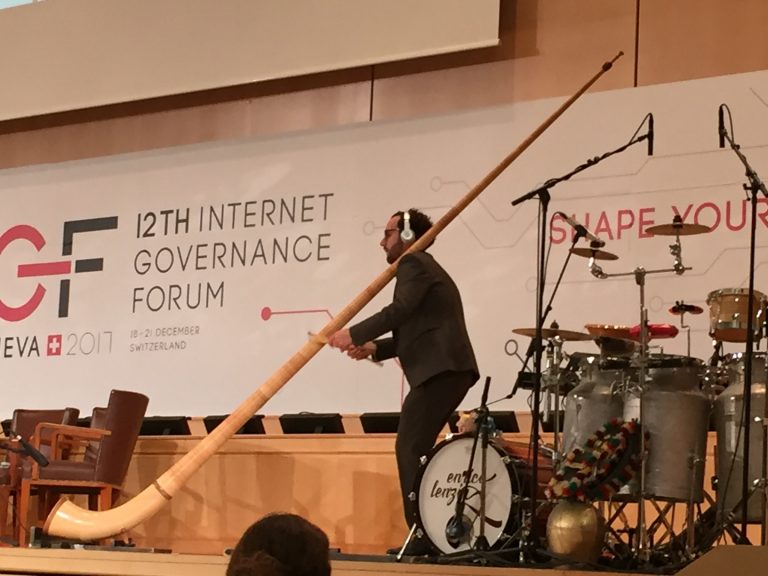
The Internet Governance Forum opened yesterday at the United Nations in Geneva, coming back to its origins, and as the opening ceremony resounded with Swiss alphorn, speakers insisted on the urgency to find fresh solutions to internet-related new issues. Cyber security, digital divide, influence of private companies, lack of digital literacy, the challenges are numerous, and solutions require a multi-stakeholder collective effort, the speakers said in unison.

At Internet Governance Forum, Developing Countries Explain Need To Tread Carefully On E-Commerce Policy

Who does not like to have the possibility to shop online, or benefit from online services? No one disputes the advantage of the digital age, but in a world in which a very small number of actors, such as Google and Facebook, hosted by rich countries, reap most of the advertising benefits, developing countries are wary of binding rules which would only serve to enhance the digital and economic divide, according to speakers on an opening panel today at this week’s Internet Governance Forum.

Intellectual Property Rights In Trade – To Be Rethought?

After two decades of intellectual property regimes in trade agreements, one could have some second thoughts, according to a number of panellists at the Trade and Sustainable Development Symposium, organised by the International Centre for Trade and Sustainable Development (ICTSD) and held alongside the 11th World Trade Organization Ministerial in Buenos Aires, Argentina this week.

Obviousness In The Wake Of Arendi

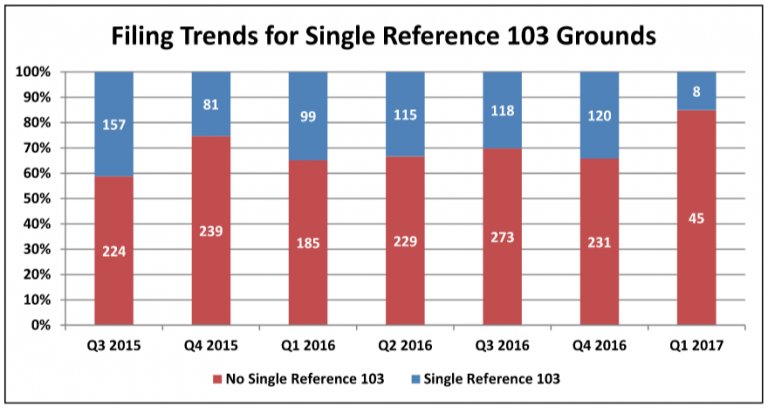
Since the U.S. Court of Appeals for the Federal Circuit issued its opinion in Arendi S.A.R.L. v. Apple Inc. last August,[1] many patent commentators have asserted that the decision marked a significant change in the analysis of obviousness under 35 U.S.C. § 103, especially as a weakening of single-reference obviousness grounds. Notwithstanding this decision, petitioners and the Patent Trial and Appeal Board have continued to rely on single-reference obviousness to assert and find that claims are obvious, write Amy Simpson and Kyle Canavera.

WIPO Delegates Told Patent Information Essential, Given Revealing Data On Medicines Access and Trade

World Intellectual Property Organization patent law committee delegates heard a number of presentations this week on the relationship between patents and health, and access to medicines. The importance of patent information and accurate, up-to-date databases was underlined, particularly for procurement. The weight of intellectual property rights on the issue of access to medicines and prices and generic market entry was pointed out, but so were other factors, such as the small percentage of new drugs with added benefit, tariffs, and trade delays.

Special Feature: 5G And Standard Essential Patents In The US

NEW YORK -- A panel at the recent IP Dealmakers Forum including a US Federal Trade Commission official, a former US judge on a key patent case, and a telecommunications industry licensing expert walked through issues and prospects for the coming of the 5G next generation wireless technology. Views differed on points but panellists agreed that changes are needed to the system for standard-essential patents, including a bigger role for standard-setting organisations. Below is an in-depth account of the discussion. The discussion also included the latest state-of-play at the FTC, which currently has its lowest number of commissioners ever.

Must All Foreigners Online Comply With US Copyright Law? (Part 2 of 2)

A case now before the DC Circuit Court of Appeals, Spanski Enterprises v. Telewizja Polska, creates a legal dilemma. The court needs to find Telewizja liable for copyright infringement, or else the court will create a roadmap for pirates, enabling them to stream copyrighted works into the US with impunity. But if the court finds Telewizja committed infringement simply because the Polish company put online works that could be accessed in the US, the court will apply US copyright law in an extraterritorial manner that will create problems around the globe.