Catherine Saez

Catherine Saez

The Myth Of IP Incentives For All Nations – Q&A With Carlos Correa
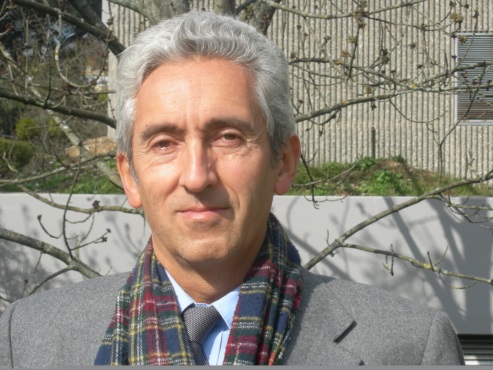
Dr Carlos Maria Correa, an Argentinian economist and lawyer, is globally renowned for his expertise on international trade, intellectual property, health, technology transfer, investment policy and especially their impact on developing countries. He has authored several books and academic articles and been a visiting professor at several universities. Additionally, he has consulted with many United Nations agencies, the World Bank, and other regional and international organisations and has advised several governments on intellectual property, innovation policy and public health. Correa was a member of the UK Commission on Intellectual Property, of the Commission on Intellectual Property, Innovation and Public Health established by the World Health Assembly and of the FAO Panel of Eminent Experts on Ethics in Food and Agriculture.

Currently, he is the Director of the Centre for Interdisciplinary Studies on Industrial Property and Economics Law, at the University of Buenos Aires. He takes over as the Executive Director of the Secretariat of the Geneva-based South Centre from 1 July 2018. Correa recently engaged in an interview with Patralekha Chatterjee for Intellectual Property Watch. [Note: this interview is number two of two. The first was with Dr Othoman Mellouk.]
WIPO Workshop Looks At Potential Impact Of Reducing Patent Fees For Universities

The World Intellectual Property Organization's main financial resource is from the global patent treaty it manages, allowing inventors to file international patent applications and gain protection in a large number of countries. WIPO members have been debating for some time whether universities should benefit from a fee reduction, in particular those from developing countries to encourage patent filing. A workshop held at WIPO this week pondered whether a fee reduction would lead to more patenting of inventions by universities. The answer is apparently not clear-cut.

Countries Discuss Prospect Of Plurilateral Agreement On Genetic Resources Protection

Faced with a longstanding lack of progress at the World Trade Organization and the World Intellectual Property Organization on the protection of genetic resources and traditional knowledge, some developing countries are examining the possibility of moving outside the multilateral system toward a plurilateral agreement with like-minded countries. During an international conference last week, panellists pondered the prospects of such an option.

Indigenous Peoples Seek Involvement In WTO To Defend Rights (Video)

Indigenous peoples are losing their genetic resources and traditional knowledge and need to be involved in negotiations on World Trade Organization intellectual property rules and the UN Convention on Biological Diversity, representatives told a conference on the subject last week. In a podcast and video interview with Intellectual Property Watch below, the indigenous representatives explain their case.

Major Emerging Economies Push To Revive Discussions On Genetic Resources Misappropriation At WTO

Efforts by developing countries to prevent the misappropriation of genetic resources and traditional knowledge have thus far been fruitless at the World Trade Organization. In particular, discussion on the relationship between the rules of the Nagoya Protocol on access and benefit-sharing and the intellectual property trade rules are going nowhere. In this context, India, supported by other major developing nations, initiated a two-day conference recently in order to look at ways to unlock the situation.

Experts To Regulators: AI Is A Panacea – With Hidden Dangers To Humanity

The heads of national telecommunications and technology regulatory authorities are gathering next month at the International Telecommunication Union to address new technologies. Not surprisingly, artificial intelligence and data hold centre stage in the programme. The meeting comes after a recent event at the United Nations where divergent voices recognised the potential beneficial uses of new technology, but warned against the undeclared intentions behind it. Separately, a new study from the Massachusetts Institute of Technology shows the influence of data in machine learning algorithms with chilling consequences.

TRIPS Council Debates IP Improving Lives, Competition Law To Increase Medicines Access

Whether intellectual property rights are improving lives or whether they should be reined in by tools such as competition law to increase access to medicine, education, and innovation, was debated this week at the World Trade Organization committee on intellectual property. Also on the agenda was a suggestion by least-developed countries to create incentives for developed country companies and institutions to transfer technologies for the benefit of the poorest countries.

Experts In Geneva: Substandard, Falsified Medicines Not About IP

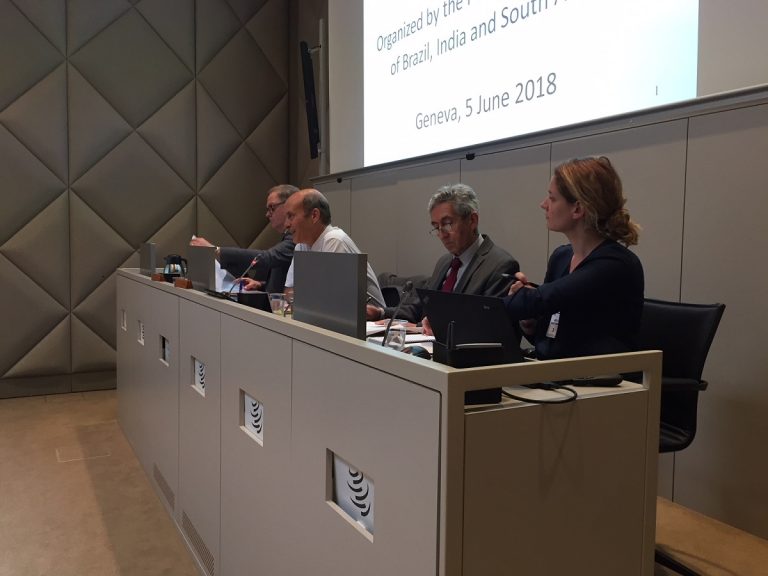
Falsified and substandard medical products continue to be a global concern, and how those products are characterised is important to avoid confusion, particularly with intellectual property rights infringement. A panel convened by Brazil, India and South Africa yesterday at the World Trade Organization looked at the implications of a new definition of such products at the neighbouring World Health Organization.

Civil Society Issues Call For Action On Draft WIPO Copyright Exceptions

This week the World Intellectual Property Organization copyright committee is looking at exceptions and limitations to copyright. A range of stakeholders with opposing views delivered long statements explaining their positions. Some proponents of mandatory international limitations and exceptions for certain actors cited the United Nations Sustainable Development Goals inscribing equitable quality education as a right. Others, like publishers’ associations, said the current international system provides ample possibilities to devise national exceptions and limitations.