Category North America

US Generic-Named Food Industries Cry For US Government Help Against ‘Relentlessly Aggressive’ EU

Something that was unimaginable just a few years ago: What if Americans could not buy ordinary bologna, feta or parmesan cheese? Or worse, make them and export them under those names? The industry group in the United States representing a range of products like those today called on the US government to help them defend their products and their jobs against what they called "purposeful," "relentless" and "aggressive" efforts by Europe to promote adoption of geographical indications (products named for places and with particular characteristics) to the detriment of the US common-named goods.
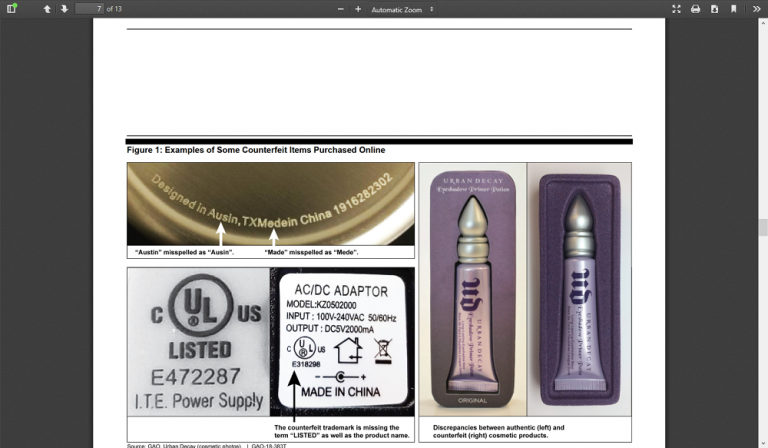
‘Mede In China’: US Customs May Bring In Rights-Holders To Help Stop Counterfeiters

The United States Customs and Border Patrol (CBP) this week said it is considering sharing more information with the intellectual property rights holders about possible counterfeit goods entering the US, in order to improve prevention. But CBP said it is still unclear whether changes in the law will be required to allow it to do this.

What We Know – And What We Don’t – About Counterfeit Goods And Small Parcels

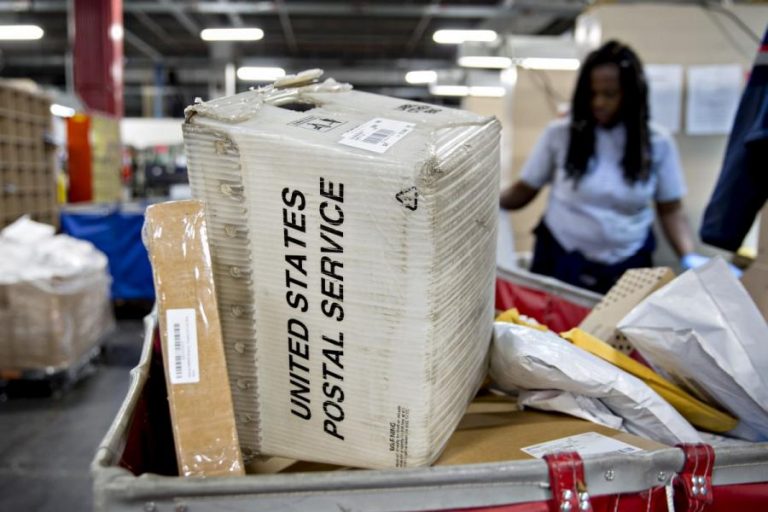
Kasie Brill writes: Cross-border e-commerce is growing exponentially. Consumers can purchase products from all over the world and have them delivered straight to their doors with just the click of a button. In fact, the U.S. Postal Service’s (USPS) international small parcel business increased 232% from 2013 to 2017, when it received nearly half a billion packages.

Out of those half a billion packages, USPS only had critical safety information on 36% of them. In other words, millions of packages reached American consumers with little or no security screening at all. Though most of these packages contained exactly what the customer ordered, counterfeiters have discovered that small parcels are an easy means to distribute fake and often dangerous goods.

Fair Use/Fair Dealing Week 2018 Highlights Balance In The Copyright System

The fifth annual Fair Use/Fair Dealing Week took place February 26–March 2, 2018, growing to 153 participating organizations—as well as numerous individuals—celebrating the important and flexible doctrines of fair use and fair dealing worldwide. This year’s event was organized by the Association of Research Libraries (ARL) and participants included universities, libraries, library associations, and many other organizations, such as Authors Alliance, the Center for Democracy & Technology, the Electronic Frontier Foundation, the R Street Institute, and Re:Create. Sixty ARL member institutions contributed a wide range of resources this year. Fair Use/Fair Dealing Week was observed around the globe by participants in such countries as Australia, Canada, Colombia, Greece, and the United States.

USTR Lighthizer To NAFTA Partners: Step Up Pace Or Lose Window Of Opportunity

United States Trade Representative Robert Lighthizer warned his Mexican and Canadian counterparts today (5 March) that if they don't quickly pick up the pace of the North American Free Trade Agreement (NAFTA) renegotiations, they will face "headwinds" from elections in all three countries. And if they can't progress, the US is prepared to proceed bilaterally.

USPTO To Reveal New Design For Patents This Week

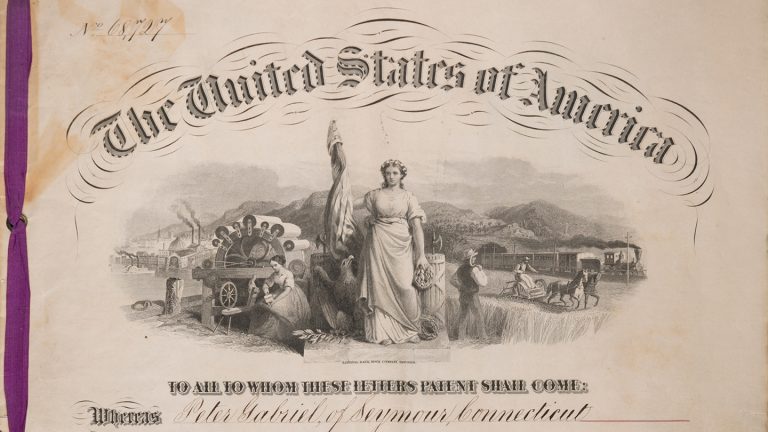
The United States Patent and Trademark Office (USPTO) will make public the new design for patents this week at the South by Southwest (SXSW) Interactive Festival in Austin, Texas. The new design will first be used on patent number 10 million, expected to issue this year. There have fewer than 12 basic design changes to the US patent since President George Washington granted the first patent in 1790, and only two in the last 100 years, USPTO said.

Tough Talk On Transatlantic Privacy, Once Again

The EU Commissioner for Justice, Consumers and Gender Equality, Věra Jourová, ahead of her US visit announced “a tough tone” on remaining gaps in the implementation of the privacy shield, the arrangement that allows to transfers of data of EU citizens to the United States. Speaking before the EU Parliament's Committee on Civil Liberties (LIBE), Jourová said while she had heard the privacy shield was not a priority of the US administration, “it will be a priority, if we make clear that we will suspend the system if it doesn't work,” adding, “My patience is coming to an end.”

Protecting And Promoting Copyright Balance In NAFTA

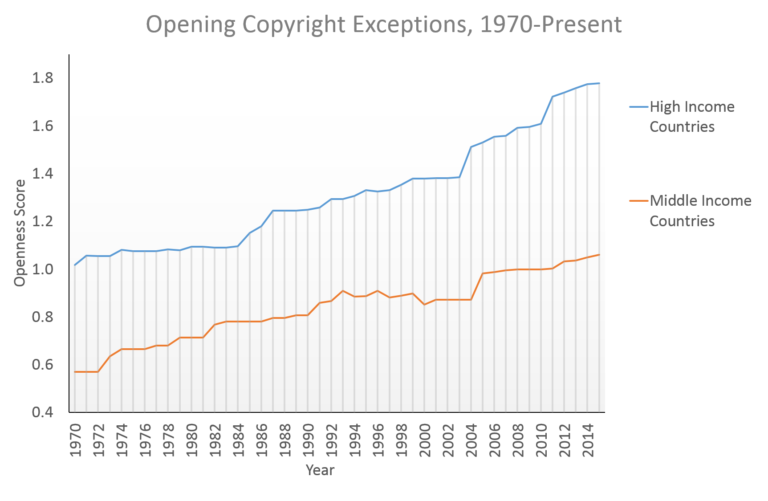
The ongoing NAFTA renegotiation presents a prime opportunity to move the ball on protecting and promoting general public interest copyright exceptions. All three countries have such exceptions to varying degree. And all three are under threat from an agenda to cabin their use through international law. NAFTA negotiators can and should include the best models from prior international agreements that protect and promote the ability of countries to have general exceptions, writes Professor Sean Flynn.

Section 1201 Rulemaking – The Process Is Moving Along

Dave Davis writes: Section 1201 is a curious little section of the US Copyright Act, added by the Digital Millennium Copyright Act (DMCA) of 1998. But the matter covered in that section is of great importance in our digital age and, due to its triennial rulemaking requirement, ‘1201’ exceptions are a topic of considerable discussion every few years. As it turns out, 2018 is one of those years.