Category North America

Special Feature: 5G And Standard Essential Patents In The US

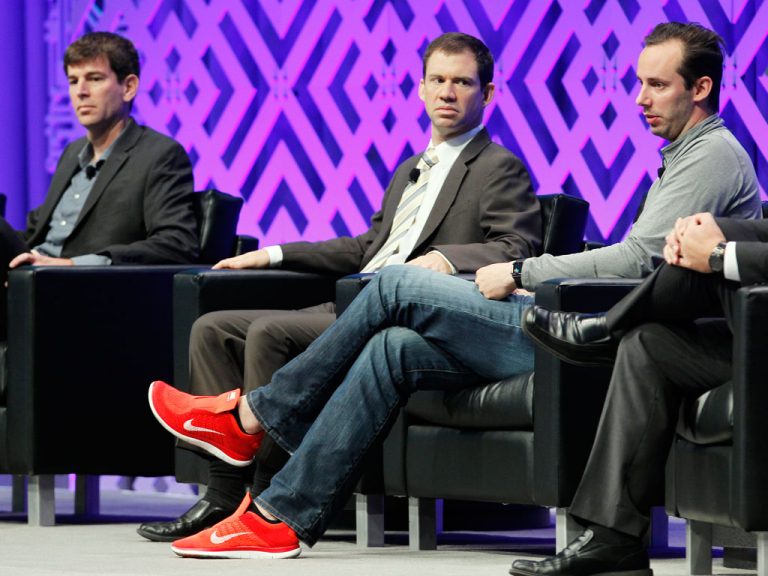
NEW YORK -- A panel at the recent IP Dealmakers Forum including a US Federal Trade Commission official, a former US judge on a key patent case, and a telecommunications industry licensing expert walked through issues and prospects for the coming of the 5G next generation wireless technology. Views differed on points but panellists agreed that changes are needed to the system for standard-essential patents, including a bigger role for standard-setting organisations. Below is an in-depth account of the discussion. The discussion also included the latest state-of-play at the FTC, which currently has its lowest number of commissioners ever.
Must All Foreigners Online Comply With US Copyright Law? (Part 2 of 2)

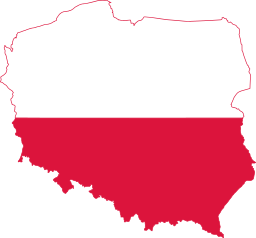
A case now before the DC Circuit Court of Appeals, Spanski Enterprises v. Telewizja Polska, creates a legal dilemma. The court needs to find Telewizja liable for copyright infringement, or else the court will create a roadmap for pirates, enabling them to stream copyrighted works into the US with impunity. But if the court finds Telewizja committed infringement simply because the Polish company put online works that could be accessed in the US, the court will apply US copyright law in an extraterritorial manner that will create problems around the globe.

Must All Foreigners Online Comply With US Copyright Law? (Part 1 of 2)

US copyright law is supposed to apply only within US borders, not to actions done in Poland. But when a company in Poland streamed copyrighted TV shows into the US, that infringed US copyrights, according to a US trial court. This decision will be upheld on appeal, experts widely expect. Such an appellate decision, however, could expand the reach of US copyright law to a problematic extent. It will be tricky to find infringement in this case without also extending US copyright law to any online content posted anywhere on the globe.

US NAFTA Negotiating Objectives For IP? Go Big On Digital IP Protection, Fend Off GIs

The Office of the United States Trade Representative (USTR) has issued a set of negotiating objectives for renegotiating the 1994 North American Free Trade Agreement (NAFTA) that include its hopes for elevating intellectual property in the trade deal. Included in the list: force Canada and Mexico to ratify international treaties, accept US law on IP protection and create conditions for "strong" IP enforcement especially online, and ensure ample protection for products with generic names. Perhaps oddly, there is only one mention of trade, which includes respect for a 2001 text at the World Trade Organization on IP and public health.

Infojustice – US, Canadian & Mexican Law Professors, Academics And Policy Experts: NAFTA Must Include Fair Use, Safe Harbors

WASHINGTON – Today, over seventy international copyright law experts called for NAFTA and other trade negotiators to support a set of balanced copyright principles. The experts urge trade negotiators to support policies like fair use, safe harbor provisions, and other exceptions and limitations that permit and encourage access to knowledge, flourishing creativity, and innovation. Signatories include preeminent intellectual property professors and experts from law schools, think tanks, and public interest organizations in the U.S., Canada, and Mexico, as well as Argentina, Australia, China, Ireland, and Switzerland.

USPTO’s Revised Patent Fee Schedule Raises Price Of IPR Process

The United States Patent and Trademark Office (USPTO) today issued changes to some patent fees, including increases in certain areas, including the cost of using the inter partes review process. Following feedback from users, the office went with some proposed increases, while keeping others at existing levels despite proposals to increase them, it said.

US Congress Members Signal Move To Block Allergan Patent Deal With Tribe

Members of a US congressional subcommittee on intellectual property held a hearing last week that appeared aimed at finding ways to stop companies from “renting” the sovereignty of Native American tribes in order to avoid a process that can lead to the invalidation of patents. Elected officials called a deal between Allergan pharmaceutical company and a northeastern tribe a “sham” and a “mockery”, and signalled the start of the legislative procedure to prevent such deals.

Next Global Congress On IP And The Public Interest

American University Washington College of Law (AUWCL) Program on Information Justice and Intellectual Property has announced the hosting of Fifth Global Congress on Intellectual Property and the Public Interest, from 27-29 September 2018. And it is now actively seeking sponsors, partners and expressions of interest.