Category Africa

Opposition To Kenyan “Anti-Innovation” ICT Bill Grows

A bill introduced in Kenya’s parliament intended to streamline, govern and regulate the country’s information and communications technology (ICT) sector has been met with opposition from different quarters over fears that it could put ICT technicians out of practice and stifle the country’s innovation capacity if passed into law.
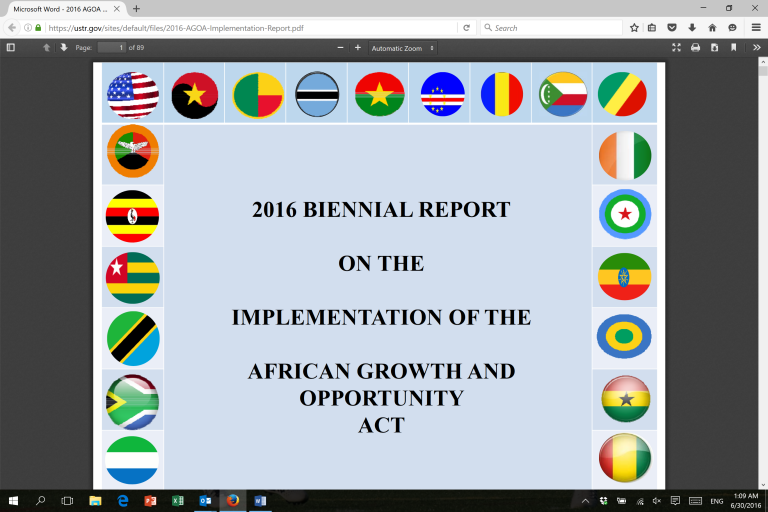

US Sees Weak African IP Protection, But Not Enough To Lose Unilateral Trade Benefits

The Office of the United States Trade Representative (USTR) today (29 June) released its annual report on the eligibility of African nations for unilateral trade benefits offered by the US. While some countries were praised for progress on intellectual property protection, others were found to be weak in this area, but none were removed from eligibility for that reason. Overall, reporting on IP rights varied widely in the report.

ARIPO Reviews Draft Regulations On Implementation Of Arusha Protocol On Plant Varieties

The African Regional Intellectual Property Organization (ARIPO) last week hosted a meeting of experts in Harare, Zimbabwe, to review the Draft Regulations for the Implementation of the Arusha Protocol for the Protection of New Varieties of Plants.

Amid Allegations Of IP Theft By Corporations, Local Kenyan Innovators React

NAIROBI, Kenya - As start-up and innovation centres spring up across Africa, Kenya - which birthed the continent’s tech movement - is emerging as one of its leading innovation nuclei. But concerns are intensifying here that young inventors are losing their innovations to conglomerates, in what is alleged as intellectual property theft or abuse.

Rwanda Releases New Tariff Levels On IP, Signs UPOV 91 Biotech Rules

The government of Rwanda has revised the fees and cost to be paid for the registration of different categories of intellectual property rights. The changes mean lower fees for all types of IP rights, and gives more time to oppose registrations. Rwanda also enacted a law on seeds and plant varieties.

News Reports And Fair Dealing: Moneyweb v Media24

The recent decision involving Moneyweb and Media24 (Moneyweb (Pty) Limited v Media 24 Limited & Another [2016] ZAGPJHC 81) is an important one for copyright lawyers in South Africa because it is the first time that two provisions relating to news reporting of the Copyright Act 1978 (the Act) have been judicially considered, namely, sections 12(1)(c)(i) and 12(8)(a). In fact, it is the first time that the application of the fair-dealing provision, section 12(1), has received any judicial consideration, whether in the context of news reporting or otherwise.

Amid Global Push For Tobacco Plain Packaging, IP And Health Rights Bog Down Africa

CAPE TOWN, South Africa — Plain packaging is considered unattractive among marketers, loss-making for industries, and a healthy life promoter for governments and the public. The potent mix to balance profits, safeguard jobs and cut illnesses has made it a controversial solution to curb smoking. As it grows in popularity around the world, how is plain packaging faring in Africa?

Africa Should Speed Formation Of Pan-African IP Body, UN Report Says

NAIROBI, KENYA -- A recent report by the United Nations Economic Commission for Africa (UNECA) is calling for faster establishment of a Pan-African Intellectual Property Organisation (PAIPO) to bring about what it sees as badly needed IP policy coherence on the continent.

Drawn Out Battle Over Genetic Resources Dampens Africa’s Hopes

Chidi Oguamanam writes: The global South is full of significant, diverse biological and genetic resources. It’s also home to most of the world’s indigenous communities. This is why developing countries are sensitive about protecting their genetic resources and traditional knowledge.

Indigenous communities enjoy a close relationship with nature. Genetic resources are central to producing their traditional knowledge. This drives innovations in agriculture, medicines and conservation. But global intellectual property frameworks – the legal mechanisms for securing knowledge ownership – still haven’t taken this reality into account.