Category ITU/ICANN

Fight Ahead Over Website Owner Data At ICANN Meeting This Week
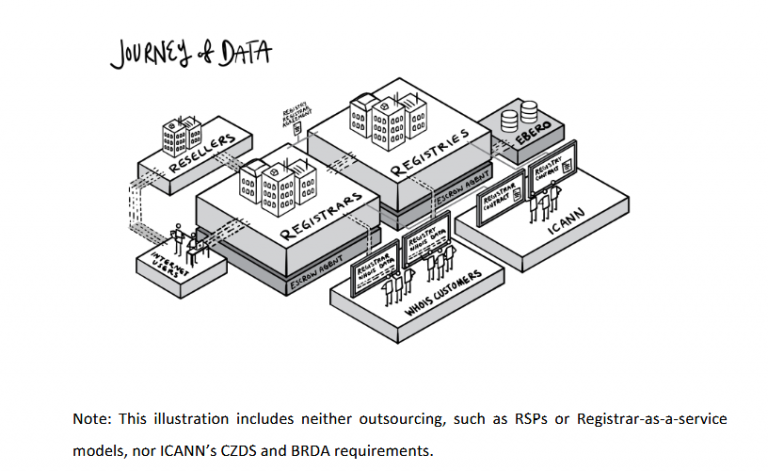
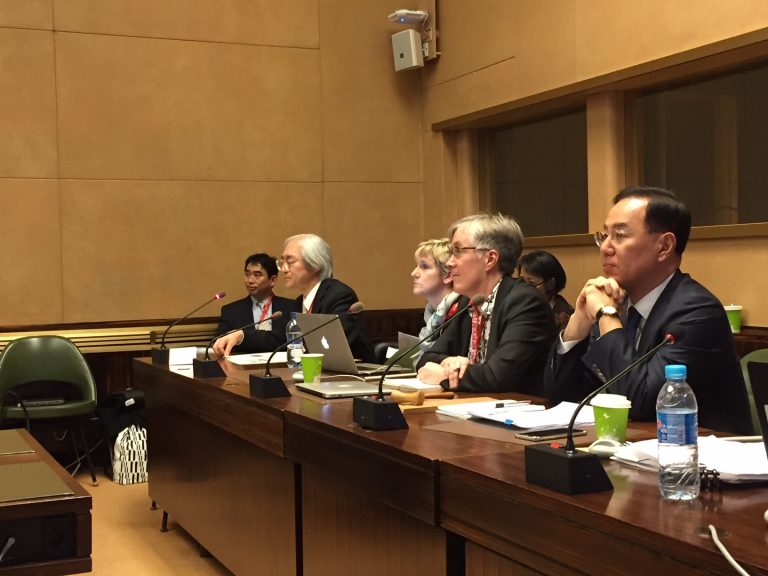
Some of the data collection practices of the Internet Corporation for Assigned Names and Numbers (ICANN), private overseer over the domain name industry, “appear to be excessive, disproportionate, and obtained without the free consent of the individual,” the International Working Group on Data Protection in Telecommunications (IWGDPT) wrote in a paper published on the eve of the 61st ICANN meeting in San Juan, Puerto Rico (9-15 March). During the meeting, controversial discussions about ICANN's just-published interim model for compliance with the European Union General Data Protection Regulation (GDPR) can be expected after ICANN published a “cookbook” for GDPR compliance.


Professor Tells UN, Governments Of Coming “Tsunami” Of Data And Artificial Intelligence

NEW YORK -- Technology is moving so fast it could cause harm to humans even as it brings remarkable advances unless governments act, an Israeli professor and visionary thinker told a gathering of government and United Nations representatives here last week. A hint? In the next five years we are all going to be cyborgs. In fact most of us already are.

US 2019 Budget Proposal Shows Stable Funding For WIPO, WTO, WHO, ITU

While the Trump administration has taken aim overall at US contributions to international organisations since taking office last year, the budget proposal it put forward last week would roughly maintain last year's lower levels for a range of Geneva-based agencies without making further cuts. Others did not fare as well.

Analysis Of The Working Group On Enhanced Cooperation On Public Policy Issues Pertaining To The Internet

Richard Hill writes: The Tunis Agenda calls for enhanced cooperation to address issues related to the Internet and its governance. However, there was no clear agreement on how to implement enhanced cooperation, so a Working Group on Enhanced Cooperation (WGEC) was convened to discuss that matter and to prepare recommendations. A first WGEC group failed to find agreement, so a second group was formed. In 2018, fifteen years later, the digital divide is worse, spam is worse, and security and privacy have become key issues; the fact that ICANN operates under the jurisdiction of the USA is also at times raised. Some are of the view that the evidence shows that current mechanisms are not working.

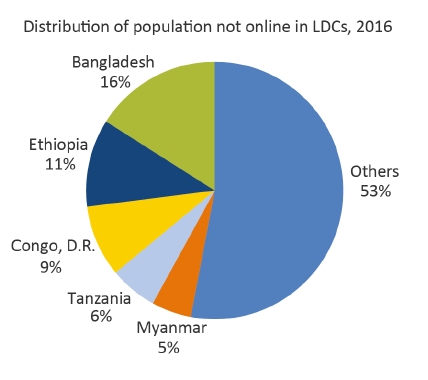
ITU: 4 Of 5 People In LDCs Can Access Mobile Networks, But Are Not Using Internet

A new report by the UN International Telecommunication Union (ITU) shows "great strides" in mobile phone penetration in least-developed countries. However, those countries are well behind developed countries when it comes to internet usage.

Artificial Intelligence Holds Enticing Promise, Needs Framework, Say OECD, Microsoft, IEEE

As artificial intelligence technology spreads its wings, governance issues are emerging, as are international discussions, including a range of activities planned for 2018. One of the panels of the December Internet Governance Forum in Geneva explored the policy questions, as panellists said artificial intelligence is unabatedly spreading to many areas of our lives with promises of economic growth and benefits, but with few regulations to frame it. Issues include ethics, privacy, biases, and lack of transparency.

Top IP-Watch Stories Of 2017: What Do They Tell Us About Multilateral IP Policy?

What IP-Watch stories were readers reading most in 2017, and what does it say about the state of global intellectual property policy? In this article, we look at the most-trafficked stories of last year, and make a few assumptions. Asia, Europe, trade, health. These were the top targets of interest to readers among our offerings. Interestingly, despite all the sound and fury in Washington, our coverage there was not at the top of the list. Even more interestingly, neither was our extensive and world-leading coverage of the World Intellectual Property Organization.

Internet Governance Forum – An Encyclopaedic Endeavour

The 12th Internet Governance Forum has closed its doors and sent home the last of the more than 2,000 die-hard internet governance adepts from 142 countries who stayed until a mere three days before Christmas in the halls of the United Nations in Geneva. Asking the adepts and the critics about what has changed in the forum that started because governments just could not agree on how critical internet infrastructures should be managed during the 2005 UN World Summit on Information Society, the first answer always is just “big”.

With originally 3,000 registered, it is the biggest international internet politics conference. But “big” is not only the size of the meeting, it is also the number of workshops, panels, best practice forums and bi-, pluri- and (nearly) multi-lateral meetings taking place over the five days. So this year Intellectual Property Watch, having participated substantively all week, decided to make an encyclopaedic endeavour to bring you the first IGF dictionary (or to make a dictionary about that encyclopaedic endeavour) in an effort to give credit to the richness of the forum, but highlight some problems, too.

In Break From Past Leadership Role, US Gov Largely Missing From Internet Governance Forum

The United States has been a steadfast supporter of the UN-led Internet Governance Forum since its inception over a decade ago, regularly bringing large and high-level delegations to the Forum. The US must have seen the forum as the lesser evil when governments from many continents pounded the desks during the 2005 World Summit on the Information Society (WSIS) conference in Tunis over the US special role in overseeing the Internet Corporation for Assigned Names and Numbers (ICANN) and thereby the heart of the domain name system, the root zone. But IGF 2017, held this week, saw a dramatic change in that regard.

Friends, Foes Of Big Data Discuss Its Promise For Development, Privacy Issues

Big data and artificial intelligence hold promise for achieving the United Nations Sustainable Development Goals, but risks associated with extensive data collection should not be minimised, according to speakers at this week’s Internet Governance Forum. Of particular concern: privacy issues, the digital divide, the need for raising awareness of internet users, and current or upcoming legislation and guidelines seeking to address challenges associated with big data.