Category Trademarks/Geographical Indications/Domains

Japan Patent Office Invalidates The Word Mark “Bord’or” In Relation To Bordeaux Wines

In a decision in an invalidation trial jointly claimed by INSTITUT NATIONAL DE L’ORIGINE ET DE LA QUALITE and CONSEIL INTERPROFESSIONNEL DU VIN DE BORDEAUX, the Invalidation Board of Japan Patent Office (JPO) ordered the invalidation of trademark registration no. 5737079 for a word mark “Bord’or” in script fonts (see below) in violation of Article 4(1)(vii) of the Trademark Law, writes Masaki Mikami.

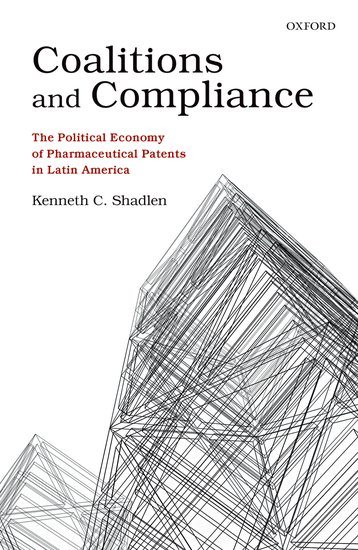
How International IP Policy Reconfigured National Politics: An Interview With Prof. Ken Shadlen

The recently published book Coalitions and Compliance by Professor Ken Shadlen of the London School of Economics examines how international changes can reconfigure domestic politics. Since the late 1980s, developing countries have been subject to intense pressures regarding intellectual property rights. These pressures have been exceptionally controversial in the area of pharmaceuticals. Historically, fearing the economic and social costs of providing private property rights over knowledge, developing countries did not allow drugs to be patented. Now they must do so, an obligation with significant implications for industrial development and public health. This book analyses different forms of compliance with this new imperative in Latin America, comparing the politics of pharmaceutical patenting in Argentina, Brazil, and Mexico. The book focuses on two periods of patent politics: initial conflicts over how to introduce drug patents, and then subsequent conflicts over how these new patent systems function. Intellectual Property Watch recently conducted a Q&A with Prof. Shadlen, which appears below.

US IP Law – A Look At The Year Ahead

In the coming year, one US Supreme Court case promises to dominate developments in America’s IP law. The upcoming decision in Oil States Energy Services v. Greene’s Energy Group could have major ramifications for patents, copyrights, trademarks, and the USPTO. But even as that case steals the limelight, 2018 could bring other significant changes to America’s IP law. Here are some of the key developments to watch for.

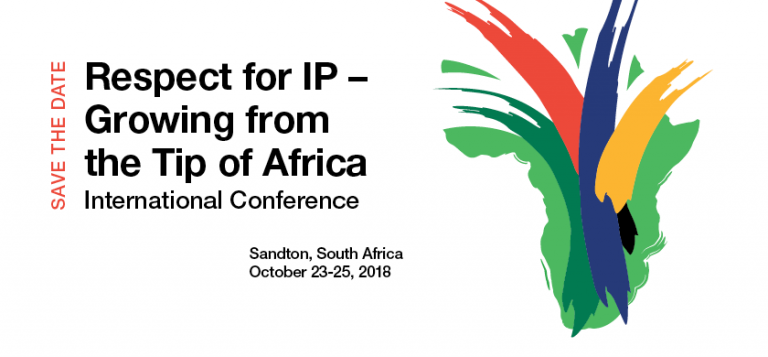
WIPO Respect For IP Conference To Be Held This Year In South Africa

In 2018, the World Intellectual Property Organization and other major international organisations are planning the second international conference on "Respect for IP," referring to raising awareness of and building strategies for enforcement of intellectual property, this time in South Africa.

Top IP-Watch Stories Of 2017: What Do They Tell Us About Multilateral IP Policy?

What IP-Watch stories were readers reading most in 2017, and what does it say about the state of global intellectual property policy? In this article, we look at the most-trafficked stories of last year, and make a few assumptions. Asia, Europe, trade, health. These were the top targets of interest to readers among our offerings. Interestingly, despite all the sound and fury in Washington, our coverage there was not at the top of the list. Even more interestingly, neither was our extensive and world-leading coverage of the World Intellectual Property Organization.

Changes In EU Data Law: The GDPR Requirements And How To Meet Them

Linkilaw writes: Statistics show 69% of SME owners have heard about the General Data Protection Regulation (GDPR) and 70% admitted to being unaware it will come into effect from 25th May 2018. It is important for small business owners to understand what the GDPR is as well as its application. The GDPR is the outcome of four years of constant discussions, investigations, and amendments made by the EU to update its data privacy rules and regulations.The GDPR will replace the Data Protection Directive established in 1995, creating a greater territorial scope and stricter penalties for those states members, and business dealing with Personal Data, who fail to keep and handle data according to the new regulation. The GDPR was finally approved by the EU Parliament on 14 April 2016 but will apply from 25 May 2018, giving a two-year transition period for all EU members states. This is a call for all SME’s: you need to prepare now!

South Africa’s Push For Knowledge-Based Economy Through IP

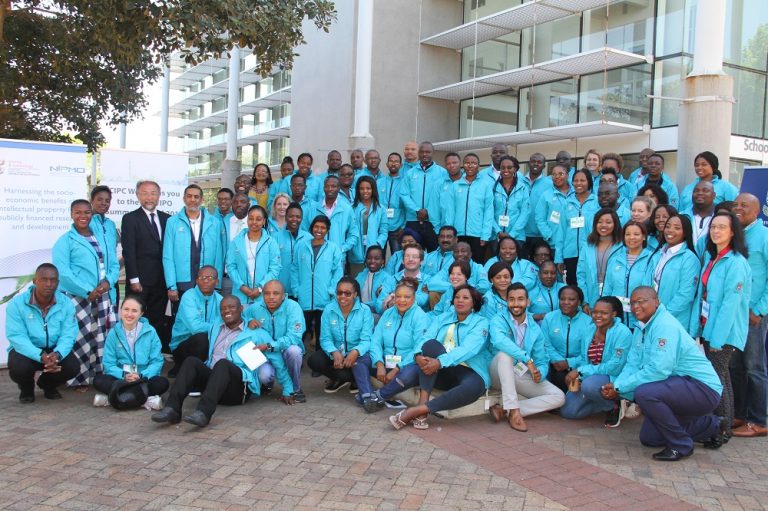
CAPE TOWN, South Africa – “If you want to create a knowledge-based economy and be part of it, be players not observers. There isn’t a stronger backbone than having an understanding of what IP is.” This statement was made by Mmboneni Muofhe, Department of Science and Technology (DST) deputy director general for technology and innovation, at the ninth Intellectual Property Summer School held at the University of the Western Cape (UWC) in December. The meeting brought together students, lawyers, scientists and different professionals drawn from Africa and other parts of the developing world for a ten-day intensive programme in intellectual property.

Internet Governance Forum – An Encyclopaedic Endeavour

The 12th Internet Governance Forum has closed its doors and sent home the last of the more than 2,000 die-hard internet governance adepts from 142 countries who stayed until a mere three days before Christmas in the halls of the United Nations in Geneva. Asking the adepts and the critics about what has changed in the forum that started because governments just could not agree on how critical internet infrastructures should be managed during the 2005 UN World Summit on Information Society, the first answer always is just “big”.

With originally 3,000 registered, it is the biggest international internet politics conference. But “big” is not only the size of the meeting, it is also the number of workshops, panels, best practice forums and bi-, pluri- and (nearly) multi-lateral meetings taking place over the five days. So this year Intellectual Property Watch, having participated substantively all week, decided to make an encyclopaedic endeavour to bring you the first IGF dictionary (or to make a dictionary about that encyclopaedic endeavour) in an effort to give credit to the richness of the forum, but highlight some problems, too.


In Break From Past Leadership Role, US Gov Largely Missing From Internet Governance Forum

The United States has been a steadfast supporter of the UN-led Internet Governance Forum since its inception over a decade ago, regularly bringing large and high-level delegations to the Forum. The US must have seen the forum as the lesser evil when governments from many continents pounded the desks during the 2005 World Summit on the Information Society (WSIS) conference in Tunis over the US special role in overseeing the Internet Corporation for Assigned Names and Numbers (ICANN) and thereby the heart of the domain name system, the root zone. But IGF 2017, held this week, saw a dramatic change in that regard.

Friends, Foes Of Big Data Discuss Its Promise For Development, Privacy Issues

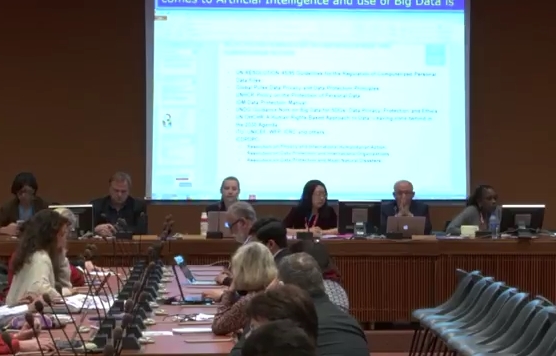
Big data and artificial intelligence hold promise for achieving the United Nations Sustainable Development Goals, but risks associated with extensive data collection should not be minimised, according to speakers at this week’s Internet Governance Forum. Of particular concern: privacy issues, the digital divide, the need for raising awareness of internet users, and current or upcoming legislation and guidelines seeking to address challenges associated with big data.