Category Features

March-in Rights: A Lost Opportunity To Lower US Drug Prices

It appears not just unfair, but absurdly so. The US government paid for research that produced a patented drug, the patents were licensed exclusively to a Japanese firm, and that firm is now committing price discrimination against the US. Astellas Pharma is selling its anti-prostate cancer drug, Xtandi, for over $129,000 per year per patient in the United States – triple the price of the drug in Japan. Alas, this situation is not unusual. Many drugs that were financed by US taxpayers are sold in the US at exorbitant prices, but are much cheaper in other high-income industrialized nations. This differential price problem could be solved easily. However, the US government has consistently refused to exercise its march-in rights in order to lower drug prices.

IP-Watch Guide To 2017 World Health Assembly: Election, Budget, Antibiotics, Cancer, R&D And More

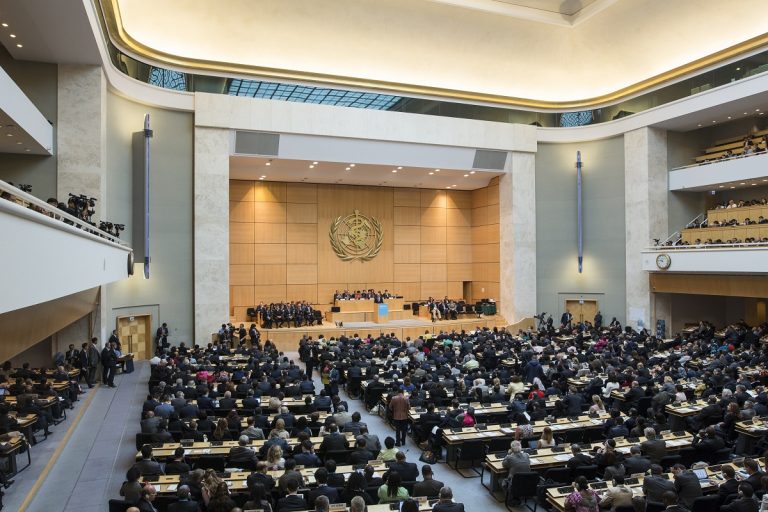
In a few days, the 70th World Health Assembly will open its doors in Geneva with a marathon agenda, and over 4,000 registered delegates. The election of a new director general, the approval of the budget for the next biennium (2018/2019) are set to capture the attention of member states. However, many other subjects require their consideration, such as a resolution on cancer treatment costs, research and development for epidemic diseases, for new antibiotics, for medicines affecting primarily poor populations, access to medicines, and the influenza pandemic preparedness framework.

How The CIA WikiLeaks Disclosure Diverts Attention From Big Picture

The WikiLeaks publication of hacking tools and malware the CIA has allegedly used continues to stir the ire and fear of those concerned about the possible risk of the US government’s backdoor access to private data. But WikiLeaks' publication of alleged CIA-created malware instructions, which the CIA has not confirmed as authentic, diverts attention away from how numerous other state-sponsored agents are aggressively seeking to steal intellectual property and other data, security experts say.

Real IP Issues Surface In A Virtual World

As virtual reality (VR) and augmented reality (AR) technologies emerge, so do legal questions arising from their use. While the issues are still mostly hypothetical, they implicate, among other areas, intellectual property rights, lawyers say.

US Supreme Court Ruling Worries Patent Experts

A recent US Supreme Court patent law decision surprised few observers – other than those steeped in patent law. The high court’s ruling in SCA Hygiene Prods. Aktiebolag v. First Quality Baby Prods stunned and dismayed many patent experts, because the decision will benefit patent trolls and other unscrupulous patent owners, at the expense of companies just trying to make and sell their products. On the positive side, however, the ruling brings US patent law more in line with Europe’s patent law.

The Web Is At A Crossroads – New Standard Enables Copyright Enforcement Violating Users’ Rights

Parminder Jeet Singh writes: The World Wide Web today stands at a crossroads, as its standards body, the World Wide Web Consortium (W3C), considers the demand of big content providers to provide them with the facility to be able to control user devices for ensuring that their content is not copied. This facility is called the Encrypted Media Extension (EME), which enables these companies to put digital rights management (DRM) into the user's browser, whether the user wants it or not, and whether such restrictions are as per the user's local national laws or not.

The Current And Future Scope Of IPR Estoppel

David I. Berl and Christopher A. Suarez write: The estoppel provision of the America Invents Act, 35 U.S.C. 315(e), was touted originally as a check against patent challengers using inter partes review (“IPR”) proceedings to attack patents serially on the same or similar grounds. That provision precludes an IPR petitioner, or the real party in interest or privy of the petitioner, from asserting invalidity challenges in subsequent IPR, district court, or International Trade Commission (“ITC”) proceedings “on any ground that the petitioner raised or reasonably could have raised during” an IPR that resulted “in a final written decision.” Given the frequency of IPR and associated district court challenges, the scope of the AIA’s estoppel provision, with respect to the parties and arguments it estops, has become and will continue to be a critical and frequently contested issue for litigants.

Special Report: Will The Internet Of Things Need New Patenting/Licensing Strategies?

The Internet of Things (IoT), which will connect billions of devices in coming years, may offer incredible opportunities for businesses and consumers but it also raises significant intellectual property issues, IP lawyers, mobile operators and others say. One key question is whether patenting and licensing strategies will have to change to adapt to the myriad standards being developed and patents being sought for IoT products and services, and for the coming rollout of 5G technologies.