Category WHO

WHO Issues Guidelines Against Antibiotic Overuse In Farms And Food Industry

Against the growing threat of a world where bacteria can kill again because they have developed resistance to available antibiotics, and the lack of new promising options in the research pipeline, several international agencies are seeking solutions. The World Health Organization today published a set of recommendations to help stop the routine use of antibiotics to promote growth and prevent disease in healthy animals.
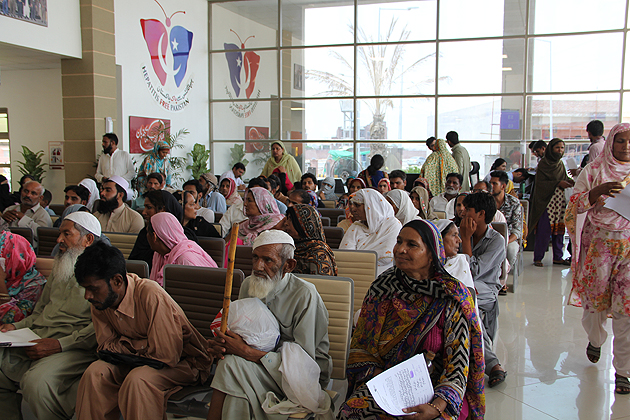
Hepatitis C Buyers’ Clubs Grow Worldwide As A Way To Obtain Affordable Treatment

Hidden amongst the thousands of Facebook pages given over to holiday snaps and gossip are groups of patients who have hepatitis C, a disease that affects more than 70 million worldwide and kills around 400,000 people a year. But importantly, these groups of patients from Russia to Australia have got together to help each other import a relatively new class of drug that is able to cure most of the patients who take it.

New WHO 5-Year Programme Is Out. In The Recipe? SDGs, Access To Medicines, Innovation, Better Health For All

The new leadership of the World Health Organization today issued its draft new programme of work for the next five years. The programme depicts new orientations for the global health actor, starting with the alignment of the programme with the United Nations Sustainable Development Goals and universal health coverage. The organisation also commits to help establish policies promoting access to health products, including generic medicines, innovation, and fair pricing. The WHO is set to help address innovation barriers, and to step up its global leadership, but asks that its members actually fully finance the budget that they approve.

WHO Draft 5-Year Plan Would Focus On Impact & Innovation, Be Discreet On Medicines Access

After the new head of the World Health Organization provided his vision for his tenure of the global health institution this summer, the organisation is working on its next programme of work for the period 2019-2023. A preliminary concept note has been issued for public consideration. The note lays out priorities and new orientations and describes a financially sober, more efficient organisation, focused on measurable impact, set on aligning with the United Nations Sustainable Development Goals, and affirming its role as a multi-stakeholder platform of global governance on health, but stays clear of controversial issues, such as the affordability of medicines.

Consultation On Future Of WHO Pandemic Flu Programme To Look At Seasonal Viruses, Genetic Information

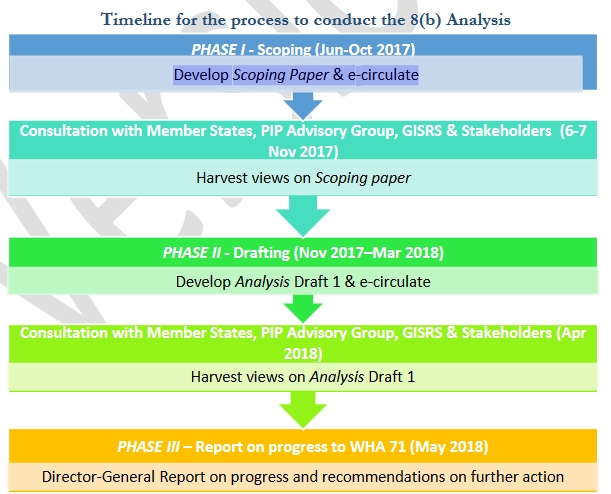
The World Health Organization mechanism to prepare the world for the next influenza pandemic is pondering its future and possible improvements. Among them are its extension to seasonal influenza, and the inclusion of genetic virus information along with biological samples to keep pace with technological developments. Member states and stakeholders (except the media) have been invited by the WHO to a consultation next month to discuss an analysis showing the potential beneficial or deleterious effects of the suggested changes to the system.

World Health Summit: Failing Business Models In AMR And Vaccination

BERLIN -- With antimicrobial resistance (AMR) on the rise worldwide there is no time to lose for developing new antibiotic drugs, experts said during one of the last panels of this year’s World Health Summit in Berlin Tuesday. As in several other rounds during the three-day event, industry representatives underlined that there is an issue with the business model due to high risk and low return of investment for research in this area.

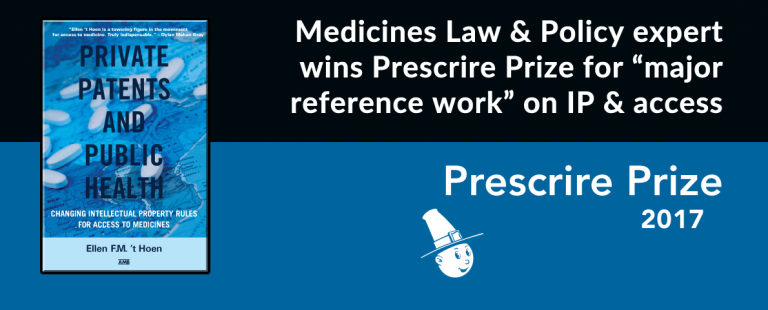
Medicines Law & Policy Expert Wins Prescrire Prize For ‘Major Reference Work’ On Access To Medicines

PARIS -- La Revue Prescrire, a French journal for healthcare professionals, has chosen “Private Patents and Public Health” — a 2016 book written by Ellen ’t Hoen — as one of four winners of its 2017 Prescrire Prize Book Award. Calling it “a major reference work on access to medicines and the patent system,” Prescrire praised ’t Hoen’s book both for its extensive collection of data and examples as well as its readability. (Medicines Law & Policy contributor, Kaitlin Mara was the editor of the book).

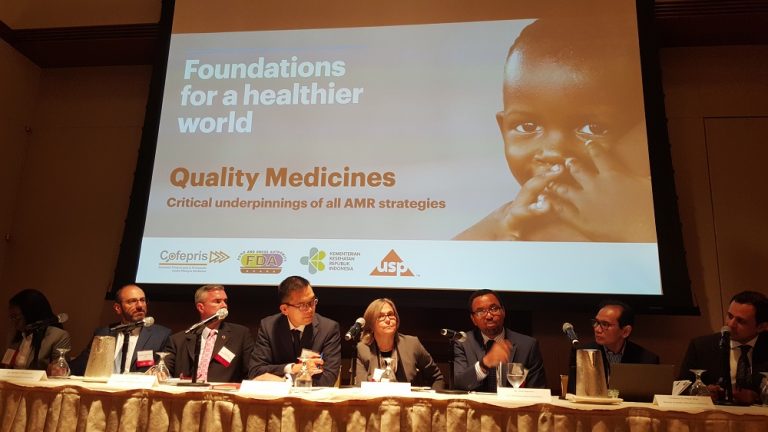
WHO Official On Antimicrobial Resistance: Poor Quality Medicines Entering At “Last Mile” To Patient

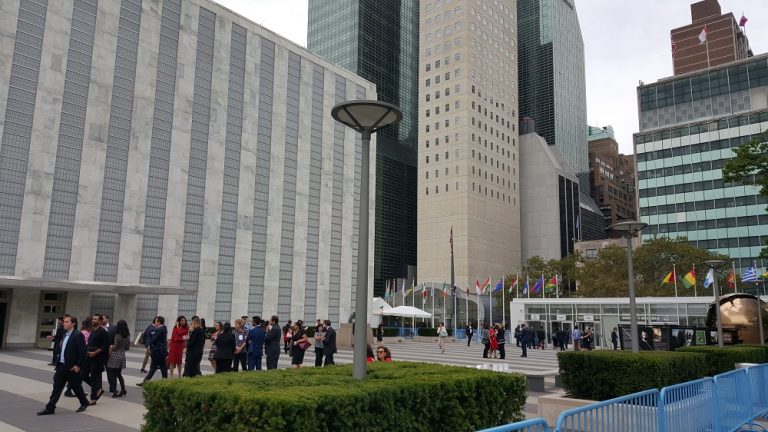
NEW YORK -- At a recent event on the margin of the United Nations General Assembly, a senior World Health Organization official gave an update on global efforts against substandard and falsified medicines in the context of the fight against antimicrobial resistance (AMR). And a key issue is that often after arriving safely in the capitals, something happens just before quality-assured medicines reach the patient, contributing to AMR.