Category Asia/Pacific

TPP Text Is Out, Finally, With Lots Of Bilateral Specialities
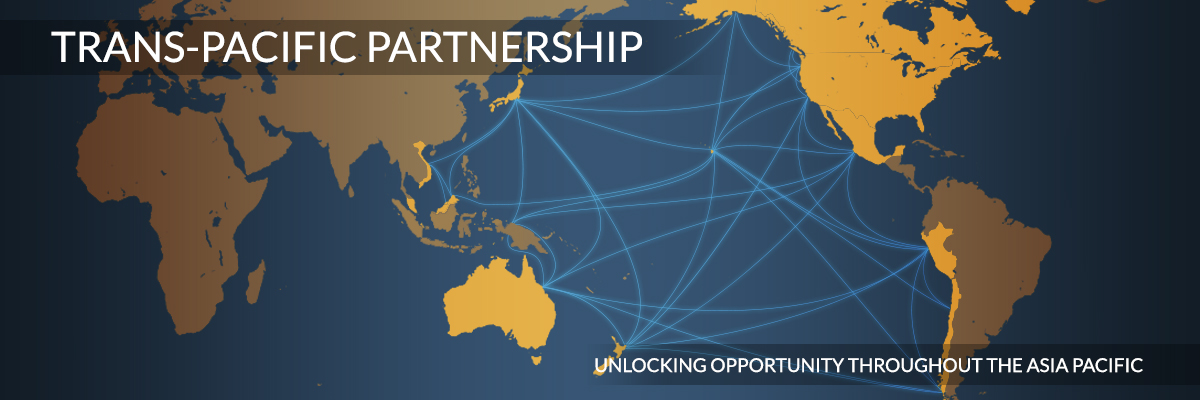
Four weeks after the finalisation of the agreement, the final text of the Trans-Pacific Partnership (TPP) was finally released by the United States and other partners of the first of the regional mega-trade deals. The parties hurried to underline the success of the negotiations, but early reactions were deeply divided.


Russia To Better Protect IP Of Its Innovative Companies Abroad

The Russian government is considering a package of measures aimed at better protecting intellectual property of Russian innovative companies abroad, according to an official spokesman of the Russian Ministry of Communications.

India, US Take Stock Of Work On IP; To Boost Copyright, Trade Secrets

The trade ministers of the United States and India yesterday reviewed work from the past year on a full range of intellectual property issues and made new commitments, as part of their larger bilateral trade policy forum. Among the issues was a commitment to work for access to medicines, increase work on trade secrets, and deepen copyright cooperation in acknowledgement of the two biggest entertainment industries in the world.

Standards Needed For IP Value To Be Recognised By Banks, IP Offices Say

Valuation of intellectual property is of growing importance to small and medium-sized enterprises in getting loans from financial institutions, IP office representatives said at a side event to the World Intellectual Property Organisation General Assembly this month.

International Red Cross ‘Makeathon’ To Help Persons With Disabilities In Rural Areas

The International Committee of the Red Cross (ICRC) will launch in November the Enable Makeathon, a programme aimed at developing affordable solutions for persons with disabilities in rural areas.

Interview With KIPO’s New Commissioner, Choi Donggyou

It has been five months since Choi Donggyou assumed the role of KIPO Commissioner. During the 55th WIPO General Assemblies in Geneva this week, he took time to sit down with Intellectual Property Watch and in a mutually prepared Q&A gave his perspective on a wide array of issues, including the IP policies and projects he plans to focus on throughout his term, his intentions for maintaining close collaborative ties with WIPO, and his thoughts on last May's IP5 Heads of Office meeting in Suzhou, China.

India: Poor Man’s Intellectual Property Is Hijacked

It is a healthy trend that the awareness on GI is on the rise in India. However, the misuse of GI legislation also is rampant. Recent past has witnessed many instances of inappropriate GI Registrations, writes Praveen Raj.

New Geneva Delegates For Canada, Panama

New delegates have arrived to Geneva just in time for the annual Assemblies of the World Intellectual Property Organization and the World Trade Organization trade ministerial. Geneva Delegates Zoraida Rodríguez, Deputy Permanent Representative to the World Intellectual Property Organization and…

Resisting The Law Of Greed

In 2011 in a small court in Ecuador’s Amazon jungle, a judge ordered the American oil giant Chevron to pay US$9 billion dollars in damages for pollution in the region that was caused by drilling activities in the 1970s and 1980s. The company quickly denounced landmark ruling as illegitimate. More than a year before the final ruling had been issued, Chevron had already taken steps to initiate an investor-state dispute against the Government of Ecuador under the terms of a US-Ecuador bilateral investment treaty (BIT). The company seeks to avoid paying the US$9 billion by convincing an international tribunal that the courts of Ecuador are corrupt and that the government is ultimately responsible for any environmental damage and associated health issues experienced by local residents, writes Kyla Tienhaara in Green Agenda.

No Need Of IPRs For Protecting Traditional Knowledge

We should be careful in creating registrable rights on the traditional knowledge (TK) including traditional medicine practices and classifying TK under intellectual property rights, which are private exclusive rights operating like a monopoly in practice. Patents create private spaces in the knowledge arena (though for a short duration), and therefore no private appropriation should be allowed in the realm of TK, writes R.S. Praveen Raj.