Category Bilateral/Regional Negotiations

European Parliament Trade Committee Tries To Defuse TTIP Controversy But Outcome Remains Uncertain

European Commission negotiators should back away from a controversial provision in the Transatlantic Trade and Investment Partnership (TTIP) deal that would allow companies to sue governments in arbitration courts over claimed unequal treatment, the European Parliament International Trade Committee (INTA) said on 28 May. MEPs called instead for publicly appointed, independent judges, public hearings and an appellate mechanism that respects the jurisdiction of EU and national courts, the committee said.

France, Italy, Heavyweights Of Lisbon Appellations Of Origin System; Africa Struggling

A small number of World Intellectual Property Organization members this week are negotiating to expand a treaty to protect geographical indications, products like Champagne. Under the old treaty, which protects appellations of origin, over half of the registrations are in France, and another large amount in Italy. According to an analysis, many of the 28 members of the treaty have zero or very few registrations, raising the question of how the new GI protection will be different if agreed.

WIPO Diplomatic Conference On GIs Starts With 28 Member Governments

Last-ditch efforts by a range of World Intellectual Property Organization members to join treaty negotiations at WIPO this week failed, as the 28 members of the treaty rejected a proposal to allow non-members. As a result, WIPO's biggest-paying member called into question the future legitimacy of the UN organisation.

Divide And Conquer: The New US Strategy To Disentangle The TPP Negotiations

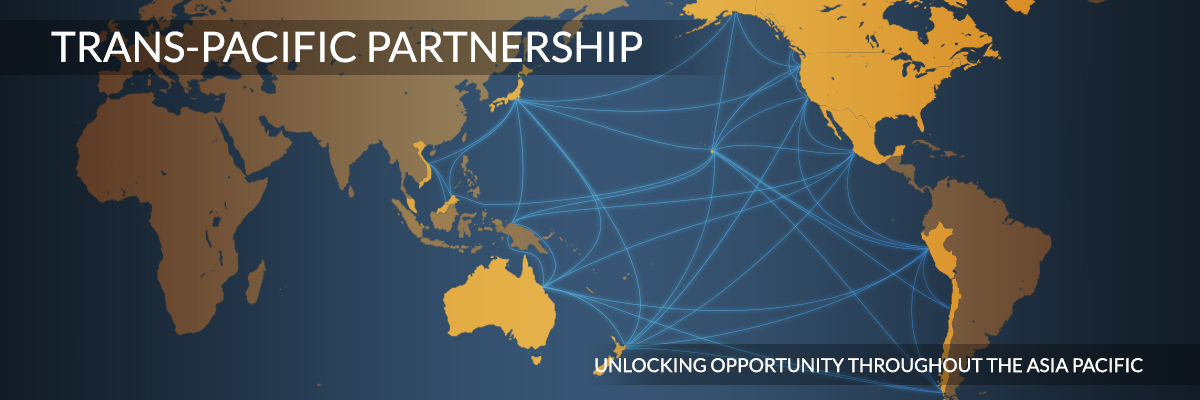
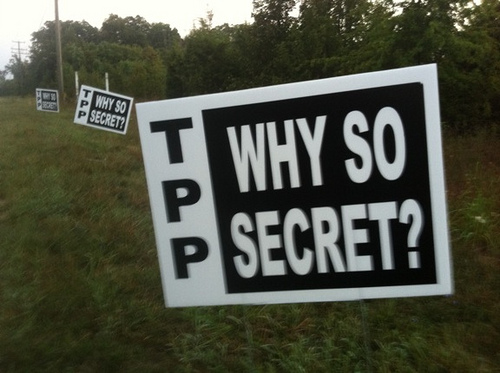
Burcu Kilic & Pablo Viollier write: Political leaders in Washington and other Trans-Pacific Partnership (TPP) negotiating countries have set the end of May as the latest deadline for completion of the talks. The negotiations have already missed several such deadlines, so who really knows? No one. But there is something we all know: TPP raises significant concerns because negotiations are being held behind closed doors with details kept secret even from the legislatures in TPP countries.

Industries Duelling For Attention Over GIs In Trade Deals

The trade promotion authority (TPA), or fast-track, legislation proposed by three senators last week in the US Congress contains provisions that would reinforce the US position on limiting geographical indications in trade deals. At the same time, European-led industry groups held an event in Washington to highlight the advantages of GIs in trade deals.

Update On Yale/IP-Watch Effort To Open TPP Texts

Intellectual Property Watch has been working for several years to obtain more details about the intellectual property aspects of the Trans-Pacific Partnership (TPP) agreement negotiations through a Freedom of Information Act (FOIA) request, and a subsequent lawsuit to enforce that request, which is being led by a team at the Media Freedom and Information Access Clinic at Yale Law School (MFIA). Today MFIA, a program of Yale's Information Society Project and Abrams Institute, released an update on the case.

Wave Of Protests Against TTIP, CETA, TISA

A wave of protest marches and information events against the Transatlantic Trade and Investment Partnership (TTIP), the Canada-EU Trade Agreement (CETA), and the Trade in Services Agreement (TISA) yesterday swept across Europe, the US, Canada and number of other countries. On the eve of the 9th TTIP negotiation round set for New York (20-24 April), thousands took to the streets in the European capitals of London, Brussels and Helsinki.

EU, US Issue Joint Statement On Information Society

The European Union and the United States today held the 13th bilateral Information Society Dialogue and issued a statement highlighting issues discussed and agreed.

The two government entities covered topics such as the EU Digital Single Market, digital skills, open internet, the data-driven economy, internet governance, the United Nations review of the 2003-2005 World Summit on the Information Society (WSIS), and cooperation on international telecommunications policy.

Don’t Keep The Trans-Pacific Partnership Talks Secret

[From the New York Times Opinion pages, by Margot Kaminski:] COLUMBUS, Ohio — WHEN WikiLeaks recently released a chapter of the Trans-Pacific Partnership Agreement, critics and proponents of the deal resumed wrestling over its complicated contents. But a cover page of the leaked document points to a different problem: It announces that the draft text is classified by the United States government. Even if current negotiations over the trade agreement end with no deal, the draft chapter will still remain classified for four years as national security information. The initial version of an agreement projected by the government to affect millions of Americans will remain a secret until long after meaningful public debate is possible. [Note: article mentions a US FOIA case by IP-Watch]

The Shaky Rationale For TPP’s Copyright Term

The Trans-Pacific Partnership (TPP) is supposed to be a free trade agreement among 12 Pacific Rim nations. But the TPP also includes some contentious intellectual property provisions, including a requirement that all member states have a minimum copyright term of life plus 70 years – thus forcing six nations to increase their copyright terms by 20 years. This copyright term extension is strongly criticised by some experts, who claim it is antithetical to the goals of copyright law. Moreover, this copyright term extension runs counter to the stance of the US Copyright Office, which has been trying to weaken the current US copyright term of life-plus-70. [Note: Part 2 of 2 articles]