Category IP Law

US Court Strikes Down Bar On Scandalous Trademarks

Yet another part of US trademark law is dead. On Friday, a US appellate court struck down a statutory provision that prohibited the registration of immoral or scandalous marks. The decision was almost inevitable, after a recent Supreme Court ruling applying the US Constitution’s free speech guarantees to trademark law. And it is likely to be followed by further successful court challenges to America’s trademark law.
Obviousness In The Wake Of Arendi

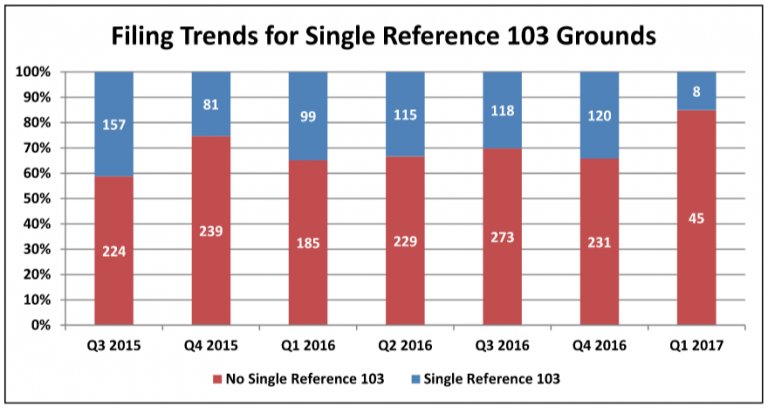
Since the U.S. Court of Appeals for the Federal Circuit issued its opinion in Arendi S.A.R.L. v. Apple Inc. last August,[1] many patent commentators have asserted that the decision marked a significant change in the analysis of obviousness under 35 U.S.C. § 103, especially as a weakening of single-reference obviousness grounds. Notwithstanding this decision, petitioners and the Patent Trial and Appeal Board have continued to rely on single-reference obviousness to assert and find that claims are obvious, write Amy Simpson and Kyle Canavera.

Must All Foreigners Online Comply With US Copyright Law? (Part 2 of 2)

A case now before the DC Circuit Court of Appeals, Spanski Enterprises v. Telewizja Polska, creates a legal dilemma. The court needs to find Telewizja liable for copyright infringement, or else the court will create a roadmap for pirates, enabling them to stream copyrighted works into the US with impunity. But if the court finds Telewizja committed infringement simply because the Polish company put online works that could be accessed in the US, the court will apply US copyright law in an extraterritorial manner that will create problems around the globe.

Must All Foreigners Online Comply With US Copyright Law? (Part 1 of 2)

US copyright law is supposed to apply only within US borders, not to actions done in Poland. But when a company in Poland streamed copyrighted TV shows into the US, that infringed US copyrights, according to a US trial court. This decision will be upheld on appeal, experts widely expect. Such an appellate decision, however, could expand the reach of US copyright law to a problematic extent. It will be tricky to find infringement in this case without also extending US copyright law to any online content posted anywhere on the globe.

WTO Dispute Panel Set For Qatar IP Case; Appellate Body Appointments Still Stuck

A World Trade Organization dispute settlement panel today was established on request of Qatar, which is challenging measures by the United Arab Emirates (UAE) taken in the name of anti-terrorism but which Qatar says unfairly violate its intellectual property rights and other WTO rules. Separately, also at today's WTO Dispute Settlement Body meeting, members continued to be at odds over a closely watched disagreement on appointing new Appellate Body members.

USPTO’s Revised Patent Fee Schedule Raises Price Of IPR Process

The United States Patent and Trademark Office (USPTO) today issued changes to some patent fees, including increases in certain areas, including the cost of using the inter partes review process. Following feedback from users, the office went with some proposed increases, while keeping others at existing levels despite proposals to increase them, it said.

US Congress Members Signal Move To Block Allergan Patent Deal With Tribe

Members of a US congressional subcommittee on intellectual property held a hearing last week that appeared aimed at finding ways to stop companies from “renting” the sovereignty of Native American tribes in order to avoid a process that can lead to the invalidation of patents. Elected officials called a deal between Allergan pharmaceutical company and a northeastern tribe a “sham” and a “mockery”, and signalled the start of the legislative procedure to prevent such deals.