Category IP Law

WTO Panel On Australia’s Tobacco Plain Packaging: A Fact Dependent Analysis Of TRIPS Art 20

The WTO Panel’s long-awaited Reports in the four complaints against Australia’s tobacco plain packaging measures were circulated on 28 June 2018, more than 4 years since Panel establishment. Australia’s victory was absolute. It successfully defended its measures against every claim. Yet closer analysis of the Panel’s reasoning regarding specific provisions such as Article 20 of the TRIPS Agreement may cause some concern for policy-makers given how much the Panel’s conclusions relied on its assessment of the facts and evidence before it.


Australian Tobacco Plain Packaging Upheld In Decision At WTO

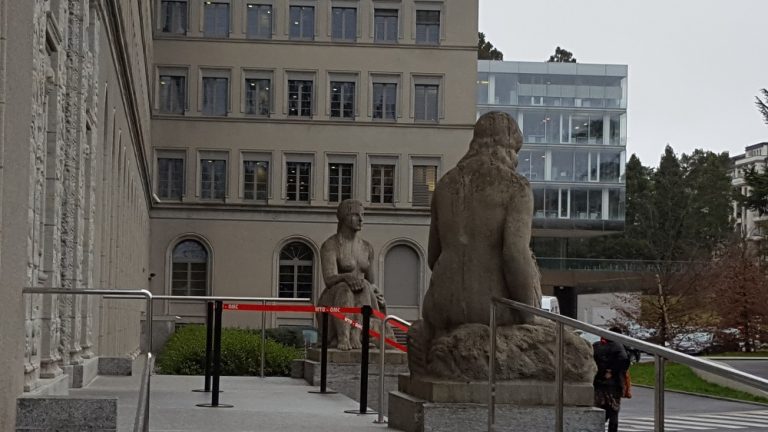
A World Trade Organization dispute settlement panel has ruled that Australia's law requiring tobacco products be sold in plain packages in the interest of public health does not violate the country's obligations at the global trade body. In Australia and increasingly in other countries, tobacco must be sold with no trademarks or marketing visible other than name. The landmark dispute was seen by some as at the nexus of economic and health interests for the WTO.

On Questionable Legal Basis, US Court Expands Range Of Patentable Inventions

For more than a decade, the United States has been making it harder to obtain patents. A series of court rulings have steadily restricted the types of inventions that are patent-eligible. The tide, however, may be now turning. The Federal Circuit’s recent decision in Vanda Pharmaceuticals v. West-Ward Pharmaceuticals has opened the way to many future patents on biotech and personalized medicine. The ruling is a big step forward for the biotech and medical industries, and perhaps for patients seeking better medical care. But there’s a catch. Vanda could be overturned because it conflicts with the US Supreme Court’s 2012 decision in Mayo Collaborative Services v. Prometheus Laboratories.

Rethinking Article III Standing In IPR Appeals At The Federal Circuit (US)

If the Federal Circuit will not correct its misplaced jurisprudence, then it is time for the Supreme Court to correct course, and bring into line the Federal Circuit’s IPR standing to appeal jurisprudence, with the Supreme Court’s (and other Circuits’) more forgiving law of allowing petitioners whose petitions are denied, to challenge such denials, particularly when Congress has set forth reasonable conditions, like Section 319, upon which such challenge is to occur, write Charles Macedo, Chandler Sturm, and James Howard.

In Defense Of Fair Use

Copyright law, to be sustainable, calls for a balance. Under copyright law, creators receive exclusive rights to allow or prevent others from making copies of their works for a limited time as an incentive to create. Users receive benefits from the results of the creator’s labor, perhaps through watching, reading or listening to those results. Users may also benefit pursuant to a license to use the works in other ways. Eventually the works fall into the public domain, allowing further reuse by everyone. Recent litigation involving a graffiti artist and a purveyor of sportswear shows how sometimes a flexible mechanism for balancing the copyright entitlements of creators and users makes sense, writes Roy Kaufman.

Draft Broadcast Treaty Takes Restrictive Approach To Limitations And Exceptions

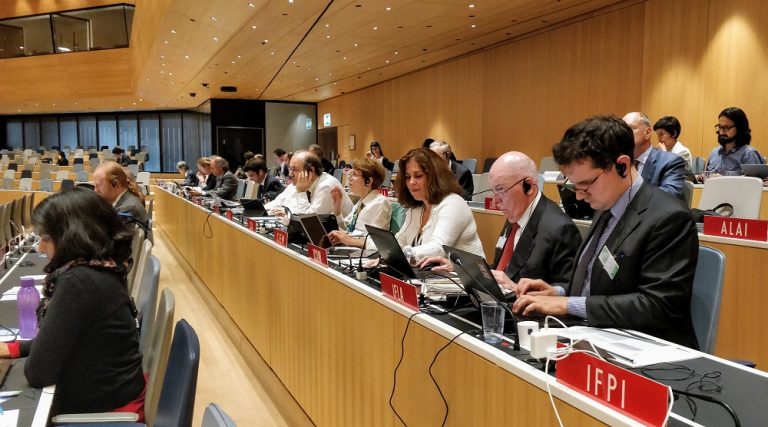
Sean Flynn writes: At this week’s meeting of the World Intellectual Property Organization Standing Committee on Copyright and Related Rights, there was renewed attention to the limitations and exceptions provisions of a proposed treaty for broadcast organizations. Unfortunately, the result of that attention was to make the current draft more restrictive for the adoption of exceptions than prior drafts, and more restrictive than are present copyright treaties or the than the Rome Convention the broadcast treaty seeks to update.

Five Years After The Indian Supreme Court’s Novartis Verdict

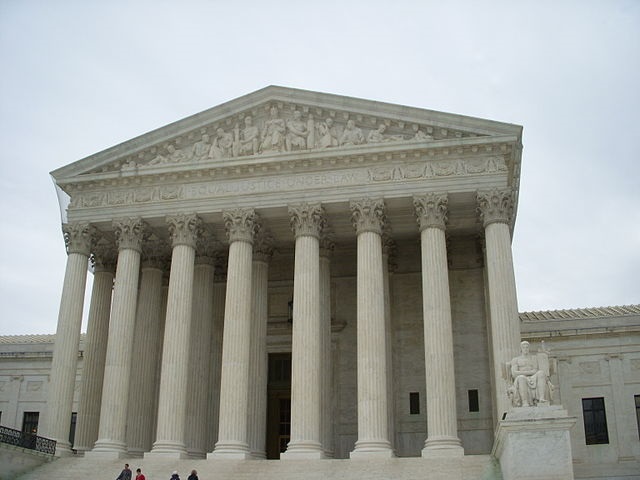
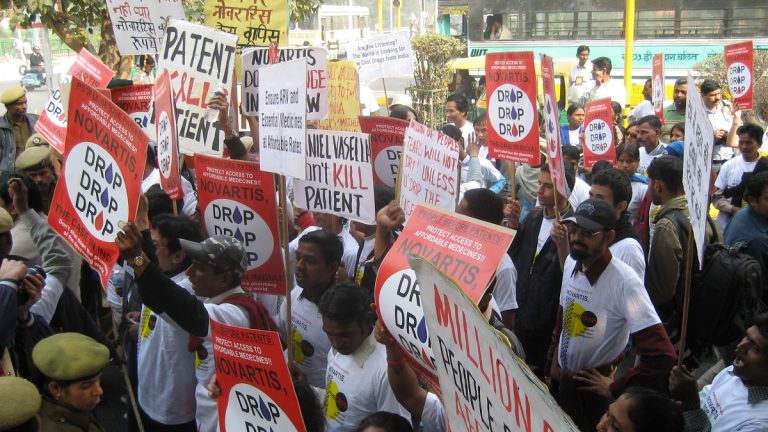
On 1 April 2013, in a packed room inside India’s Supreme Court, a magnificent building in Indo-British architectural style, two judges delivered a verdict that impacted the national and global conversation about patents and patients. India’s apex court delivered a 112-page landmark judgement which dismissed Swiss pharma giant Novartis AG’s appeal for a patent for its life-saving cancer drug marketed under brand name Glivec in most parts of the world. The Novartis case triggered a hugely polarising discourse around the world about a key feature of India’s patent regime.

The Patent Paradox In Brazil And Its Implications For Access To Medicines

Brazil is frequently pointed to as one of the countries in which fewer pharmaceutical patents are granted. The fact that there is a low number of patents granted could lead to the conclusion that medicines can be bought under competition and that the prices would be low. However, many medicines in Brazil are bought exclusively from one producer and usually at high prices. The situation of few granted patents, but many purchases under exclusivity due to absence of competition (which can lead to higher prices), is what we are calling the ‘patent paradox in Brazil’. In the absence of granted patents, what are the factors that lead to the situation of no competition and high prices in Brazil? This is the question that we, at the accessibsa: Innovation & Access to Medicines in India, Brazil & South Africa, aim to answer with a study currently being conducted at the Department of Medicines Policy and Pharmaceutical Services (NAF) of the Sergio Arouca National School of Public Health – ENSP/Fiocruz.

Brazilian Superior Court Of Justice Stops Patent Term Extension Attempts

Pedro Marcos Nunes Barbosa writes: In April 2018, the Brazilian Superior Court of Justice (STJ) ruled on a controversial patent term extension scheme, for the third time since Brazil adopted TRIPS compliant legislation in 1996. The first ruling on this topic, upheld by the STJ, was decided, unanimously, in the year 2009 (docket REsp 960.728, Justice Andrighi). In that case, a famous agrochemical multinational company sought an exotic interpretation of the impacts brought by the minimum deadline granted to a patent, since the WTO’s annex treaty imposed the uniform extension of 20 years. In other words, although the agrochemical company had obtained its exclusivity right in a pre-TRIPS context (where Brazilian Law guaranteed a 15 years property right), but unsatisfied, after the Agreement was implemented, the plaintiff requested a judicial pass for a five year extra period of competition absence.