Category IP Law

Experts Assess Coming Changes In US Courts And Patentability

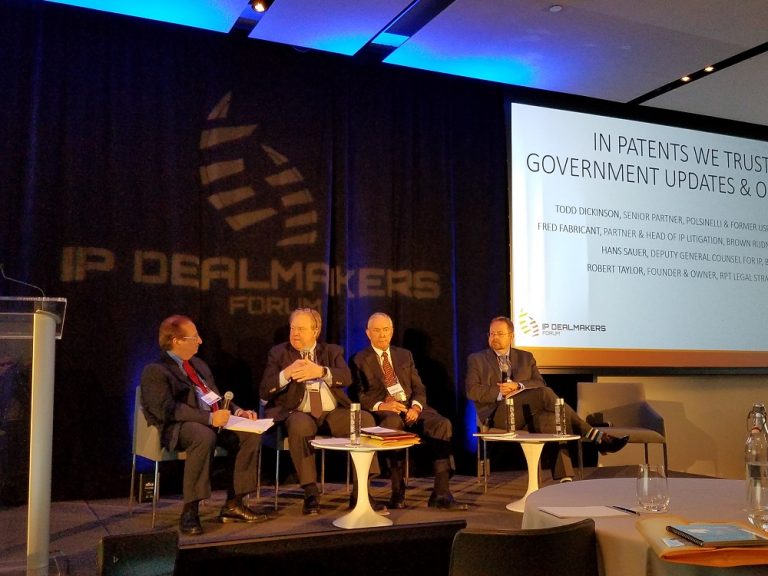
NEW YORK -- A panel of legal and government experts this week discussed trends in courts in the United States on patent cases and changes underway at the US Patent and Trademark Office. One conclusion? There may be a real shift in what is seen as patentable in the US, but it may take an act of Congress. [Note: part 1 of 2. The second part will address this week's changes in the US Congress.]

USPTO Solicitor/Deputy General Counsel Leaves For DC Law Firm

Nathan Kelley has stepped down from his role as solicitor and deputy general counsel at the United States Patent and Trademark Office (USPTO) to join the Perkins Coie law firm in Washington, DC. Kelley also had served as chief administrative patent judge in charge of the Patent Trial and Appeal Board (PTAB).

USPTO Director: It’s A New Day At The PTAB! Is It A New Day For Low-Quality Patents?

United States Patent and Trademark Office Director Andrei Iancu yesterday proclaimed what industry patent attorneys may have wanted to hear, that the recently implemented system for challenging the quality of patents in the United States could be reined in under his leadership.

Research Group Identifies Over-Patenting Of Pharmaceuticals In India, Calls For Patent Reform

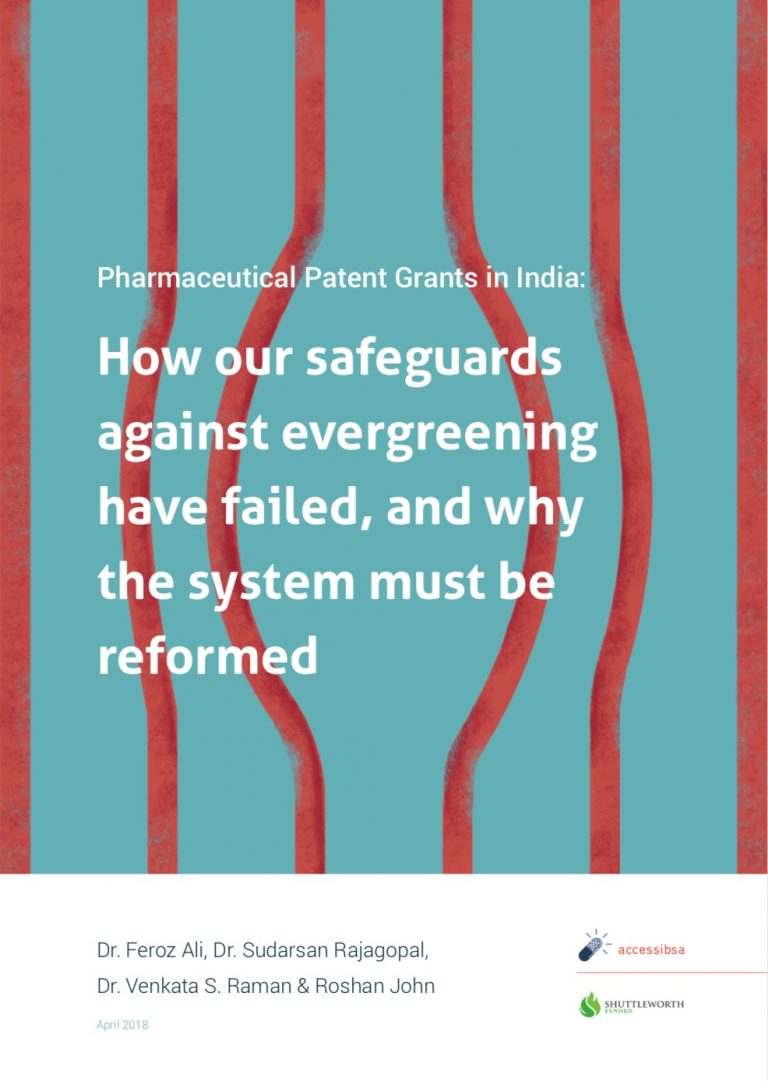
The tricontinental research group “accessibsa” has found that while the Indian Patent Office rejects 40 percent of pharmaceutical patent applications, it should be rejecting 90 percent of applications to comply with Indian patent law, according to the results of its recent study of Indian patent data.

US Music Modernization Act Becomes “The Law Of The Land”; A Boost For Songwriter Compensation

The Music Modernization Act, legislation that will transform the music licensing framework in the United States, was signed into law by President Donald Trump during a ceremony at the White House on 11 October that included several artists such as Sam Moore from Sam & Dave, Kid Rock, Mike Love of the Beach Boys and Jeff Baxter of the Doobie Brothers and Steely Dan, among others.

Trade Agreements Making Rules In New Technologies, Territoriality An Issue For IP In Digital Age

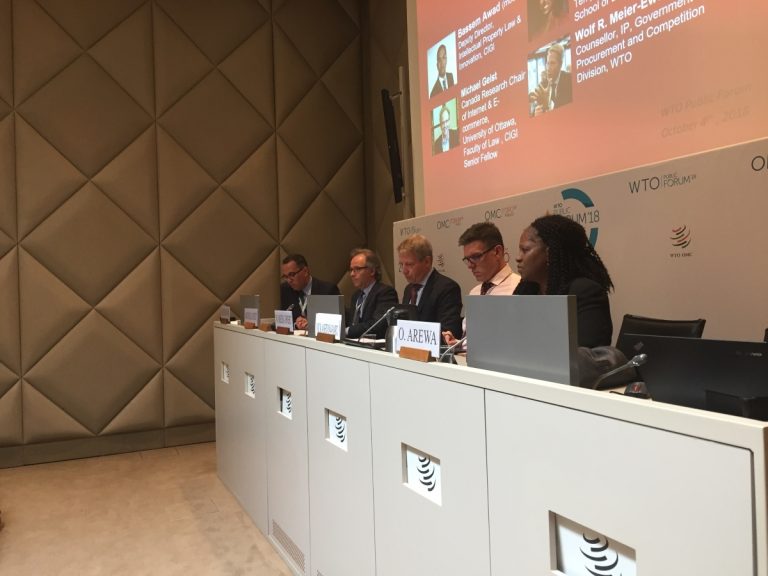
As new technologies have pervaded society, with more to come, policymaking has become a difficult exercise. Rules established before those game-changing technologies might be outdated. A session at the World Trade Organization Public Forum last week looked at how intellectual property rules are faring in the time of digital technologies. Speakers remarked on the role of regional trade agreements in norm-setting, and the growing issue of the territoriality of rights for copyright.

Alternate Dispute Resolution For IP Gains Momentum, Panellists Say At WIPO

Protecting an invention or a creation with intellectual property rights is only truly effective if inventors and creators can enforce those rights. Small and medium sized enterprises find it difficult and costly to go to court to sue potential infringers of their IP rights, and most time, just renounce, according to speakers at a panel on the side of the World Intellectual Property Organization General Assemblies this week. A much cheaper and quicker route than going to court is to seek dispute resolution through a dedicated service, the panellists said.

Interview With The President Of Brazil’s Industrial Property Institute

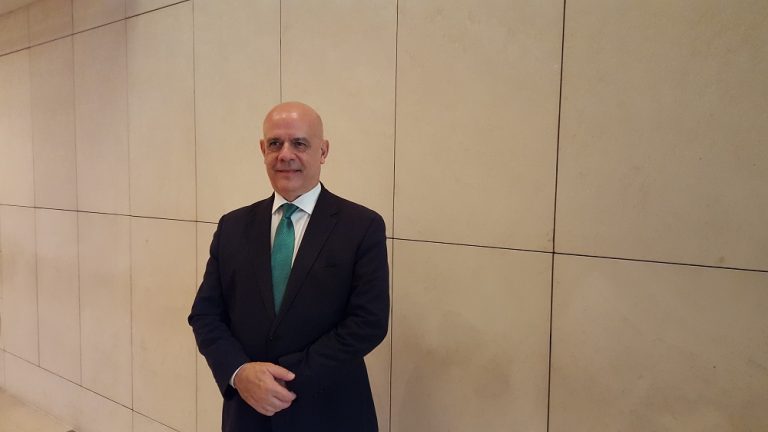
Luiz Otávio Pimentel is president of the National Institute of Industrial Property (INPI) of Brazil. In Geneva this week for the annual World Intellectual Property Organization General Assemblies he took time to sit down with Intellectual Property Watch’s William New. INPI is part of the Ministry of Industry, Foreign Trade and Services. On a breaking issue, Pimentel talked about the case in Brazil involving sofosbuvir, marketed as Sovaldi, Gilead’s effective medicine against hepatitis C that has been known for its exorbitant prices.

Why Follow-On Pharmaceutical Innovations Should Be Eligible For Patent Protection

Christopher M. Holman writes: Despite the important role of intellectual property rights in incentivizing innovation, the patenting of pharmaceutical innovation is frequently accused of impeding access to medicine. Criticism of the prevailing patent regime has focused in particular on patents directed towards follow-on pharmaceutical innovation, i.e., innovation that seeks to improve upon existing pharmaceuticals and their use in treating patients. Patents on follow-on innovation are often derided as “secondary” patents, with the implication that the underlying inventions are somehow lesser in nature than the subject matter claimed in “primary” patents, i.e., the drug active ingredient per se. While implicitly acknowledging the legitimacy of primary patents, critics of so-called secondary patents contend that patents on follow-on innovation allow drug innovators to “evergreen” their products, i.e., to extend the period of patent exclusivity beyond the expiration of any original patent on the drug active ingredient, and in doing so contribute to the high cost of drugs, thereby limiting the ability of patients to access the drugs upon which they have come to rely.

South Africa: Copyright Amendment Bill Could Be Finished Next Month

CAPE TOWN – The South Africa Parliament’s Portfolio Committee of Trade and Industry is expected to finalise the long-awaited Copyright Amendment Bill next month. But one more round of public comments is being sought in the meantime, with a deadline of this week.