US Issues Updated Antitrust Guidelines For Licensing Of IP
The United States Department of Justice and Federal Trade Commission today released updated antitrust guidelines for the licensing of intellectual property.

Original news and analysis on international IP policy
The United States Department of Justice and Federal Trade Commission today released updated antitrust guidelines for the licensing of intellectual property.

CAPE TOWN, South Africa – From establishing training schemes, exchange expertise, sharing research, and helping members acquire and develop technology related to intellectual property and shape copyright associated rights, the African Regional Intellectual Property Organization (ARIPO) has set targets for implementation in 2017.

Climate change is prompting the need for new technologies to address the consequences of the weather changing patterns. A book authored by a number of scholars provides an introduction to the interactions of climate change with the global intellectual property, innovation, human rights and international trade systems.

When Gilead brought its new antiviral medicine – Sovaldi – for the treatment of Hepatitis C to the US market for USD 84,000, it triggered a storm of protest. Demand for this revolutionary treatment was so high that the price (despite reductions) became an enormous burden on the American healthcare system. Although the product is cheaper in Switzerland at CHF 48 307, treatment is rationed for reasons of cost.

The book Antitrust Issues in Intellectual Property Law, edited by Bradford Lyerla and authored by several lawyers, is about the intersection of IP law and antitrust law and collects case law from 2015 and 20152016??, dealing with the issue.
The United Nations has established a “technology bank” for least-developed countries that aims to strengthen the science, technology and innovation capacity of LDCs that includes better management of intellectual property rights.

Hundreds of thousands of people visited articles on Intellectual Property Watch last year, and we published nearly 1,000 original articles. The year’s most-visited articles reflected a mix of new ideas and policies worldwide and some recurring issues, with especially heavy attention on stories involving India.

One of the key questions around the impact of patents on health and innovation is what is the appropriate level of protection for companies innovating, says Dr. Marie-Paul Kieny, assistant director-general, Health Systems and Innovation, at the World Health Organization.
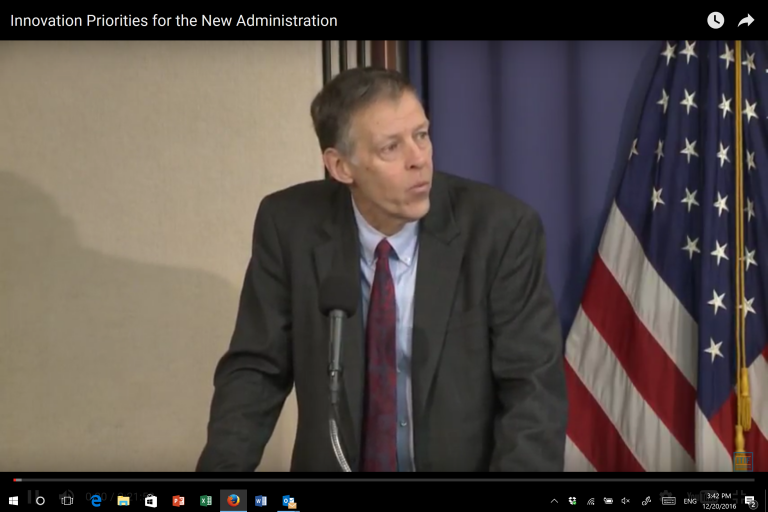
A major shift is underway in Washington that is expected to have ramifications for global trade, innovation, and intellectual property enforcement, as Donald Trump steps into the United States presidency. IP-Watch caught up with Rob Atkinson, president of the Information Technology & Innovation Foundation to get his view on what's to come. Among the predictions: the Washington Consensus on trade gets turned on its head, enforcement will rise including at multilateral level, the US will have many new ideas but iPhones will not be made in the US, and a much-needed "reset" of the US policy on China will bring greater mutual respect - if done right.
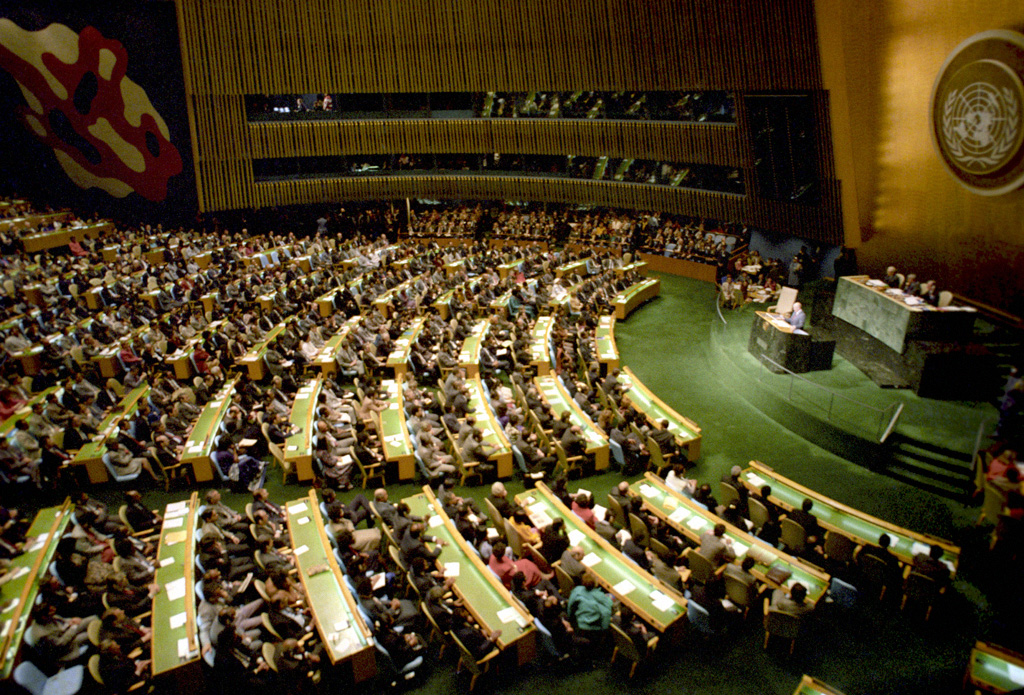
The United Nations General Assembly this month is considering a resolution committing to elevate health issues to the highest levels of foreign policy. The resolution includes references and commitments related to dozens of existing instruments and tools aimed at improving health, including a full range of those on access to medicines, such as patent flexibilities under trade rules, and the recent report of the UN Secretary-General’s High-Level Panel on access to medicines and innovation.