Category Information and Communications Technology/ Broadcasting

Dissecting The “Internet Freedom” Agenda

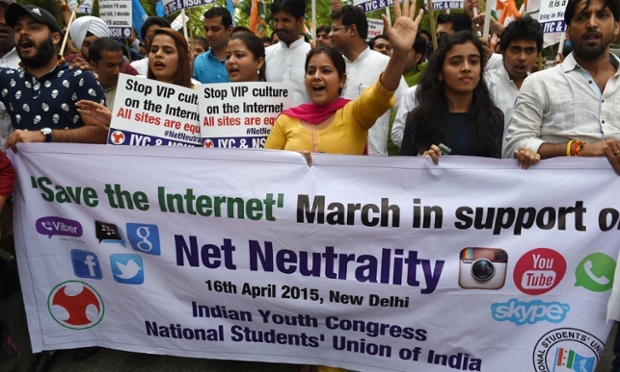
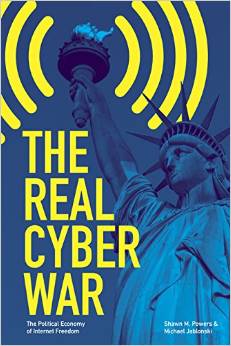
Both radical civil society organizations and mainstream defenders of the status quo agree that the free and open internet is threatened: see for example the Delhi Declaration, Bob Hinden’s 2014 Year End Thoughts, and Kathy Brown’s March 2015 statement at a UNESCO conference. The threats include government censorship and mass surveillance, but also the failure of governments to control rampant industry concentration and commercial exploitation of personal data, which increasingly takes the form of providing “free” services in exchange for personal information that is resold at a profit, or used to provide targeted advertising, also at a profit, Richard Hill writes in a review of the new book, The Real Cyber War: The Political Economy of Internet Freedom.


Philanthropies And Expression: An Interview With Ford Foundation President Darren Walker

Darren Walker is president of the Ford Foundation, one of the largest and historically most influential private philanthropies in the United States, dedicated to human welfare worldwide. Among its areas of focus are programs on freedom of expression and internet rights, extremely timely given current national and global events. Ford, along with four other leading foundations, and leaders from government, business and the technology community recently announced NetGain, a partnership to “spark the next generation of innovation for social change and progress.” Intellectual Property Watch’s William New recently interviewed Darren Walker on his vision for the foundation, internet governance, and the world at large.

Largest Internet Exchange Point Announces Complaint Against Snooping

MUNICH - It was a big day for counter-surveillance yesterday. Decix, the largest internet traffic exchange point (IXP) worldwide, announced it has had it with the snoops. Meanwhile, the Inquiry Committee came to the conclusion that the BND had withheld information from its oversight bodies on how broad the tapping really was. Separately, a two-part report presented to the LIBE Committee of the Parliament in Brussels focused on potential countermeasures to the "fact" of mass surveillance by intelligence agencies. And a resolution on mass surveillance was passed by the Parliamentary Assembly of the Council of Europe (CoE).

WIPO: The Future Of Music In A Changing Environment

What lies ahead for music in the digital economy was the subject of a roundtable today at the World Intellectual Property Organization. Inaugurating a photo exhibition on the same theme, the United States ambassador stressed the importance of copyright. The roundtable took place on 21 April and was one of the events organised by WIPO celebrating the upcoming World IP Day on 26 April.

Update On Yale/IP-Watch Effort To Open TPP Texts

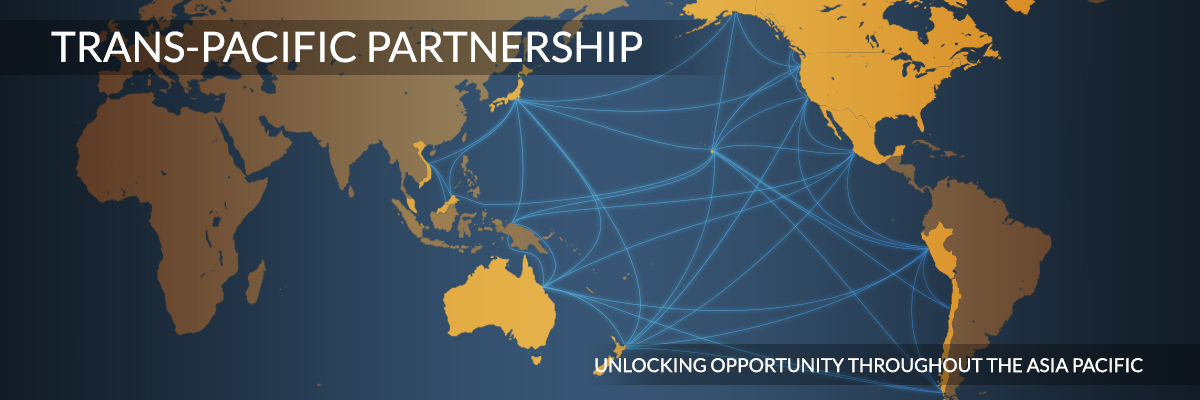
Intellectual Property Watch has been working for several years to obtain more details about the intellectual property aspects of the Trans-Pacific Partnership (TPP) agreement negotiations through a Freedom of Information Act (FOIA) request, and a subsequent lawsuit to enforce that request, which is being led by a team at the Media Freedom and Information Access Clinic at Yale Law School (MFIA). Today MFIA, a program of Yale's Information Society Project and Abrams Institute, released an update on the case.

Can The Internet Be Saved Without Harming Democracy?

[From The Guardian-] Citizens of the internet: here is some welcome news. Your downtrodden digital rights might be getting a well-overdue booster shot. But it comes with some warnings.

Last week in the Hague, a high-level group of 29 internet policymakers and influencers – including prominent ex-US and UK security and intelligence officials Michael Chertoff, Joseph Nye, Melissa Hathaway and David Omand – issued a clarion call for the protection and promotion of human rights online. Self-styled the Global Commission on Internet Governance, the group made this call as part of the broader objective of restoring trust and confidence in the internet.

EU, US Issue Joint Statement On Information Society

The European Union and the United States today held the 13th bilateral Information Society Dialogue and issued a statement highlighting issues discussed and agreed.

The two government entities covered topics such as the EU Digital Single Market, digital skills, open internet, the data-driven economy, internet governance, the United Nations review of the 2003-2005 World Summit on the Information Society (WSIS), and cooperation on international telecommunications policy.

The Shaky Rationale For TPP’s Copyright Term

The Trans-Pacific Partnership (TPP) is supposed to be a free trade agreement among 12 Pacific Rim nations. But the TPP also includes some contentious intellectual property provisions, including a requirement that all member states have a minimum copyright term of life plus 70 years – thus forcing six nations to increase their copyright terms by 20 years. This copyright term extension is strongly criticised by some experts, who claim it is antithetical to the goals of copyright law. Moreover, this copyright term extension runs counter to the stance of the US Copyright Office, which has been trying to weaken the current US copyright term of life-plus-70. [Note: Part 2 of 2 articles]