Category Information and Communications Technology/ Broadcasting

Brazil’s Internet Legal Framework Regulation And Draft Bill For Privacy Law Public Consultation

On 28 January 2015, the Brazilian Ministry of Justice launched public consultations involving two key pieces of legislation, namely: the decree that will regulate the Marco Civil da Internet or the Brazilian Civil Rights Framework for the Internet (the "Internet Legal Framework"); and the Draft Bill for the Protection of Personal Data ("Draft Bill"). A consultation period is being conducted in relation to these two laws via online platforms set up by the government.


The Role Of Social Media In M&A Transactions

Despite the ever-increasing use of social media by businesses, social media assets are often overlooked in merger and acquisition (M&A) transactions. When addressing a company’s assets in a purchase agreement, social media assets tend to be explicitly addressed only very briefly, or not at all. It is important to address such assets explicitly, as they do not always constitute intellectual property rights covered by IP representations and warranties.

The Challenge Of Complying (Or Not) With Communication Laws Online

Is it possible to fully comply with all the laws surrounding online communication? Michel Jaccard, founder of id est avocats says, “The answer is, ‘no.’” Speaking last week at the Club Suisse de la Presse, Jaccard made the case that when it comes to the online world, we should look beyond legal compliance and start thinking more strategically.

The Year Ahead In Internet Governance: Of Competing Institutions, IANA Transition, And A New Crypto War

For many years Electronic Frontier Foundation Policy Analyst Jeremy Malcolm has been predicting the next year would be the pivotal year for the UN-led Internet Governance Forum (IGF). With the NetMundial Initiative being constructed these coming months and governments having not yet agreed to prolong the IGF mandate, the decade-old forum might be challenged to either move or become just one of many internet governance conference venues. And while some hope the future oversight over the internet’s underlying IANA function could become an experiment in shared global governance, others point out that more and more of the interesting questions of internet politics are decided elsewhere: national governments, trade negotiators, big data giants and cyberdominance strategists.

The Copyright Manifesto: How The EU Should Support Innovation And Creativity Through Copyright Reform

Teresa Hackett writes: “Copyright divide in numbers”, the graph on the first page of the newly launched ‘The Copyright Manifesto. How the European Union should Support Innovation and Creativity through Copyright Reform’ tells a story. In an illustration of the results of the European Union’s (EU) 2014 consultation on copyright, publishers, authors and collective management organizations express strong support for the current system, while end users and institutional users (such as libraries) are strongly in favour of copyright reform. So if copyright is supposed to benefit everyone, the copyright system sure isn’t working for everyone.

Year Ahead: Copyright Reform, EPO Governance, Trade Secrets Among Top European IP Issues In 2015

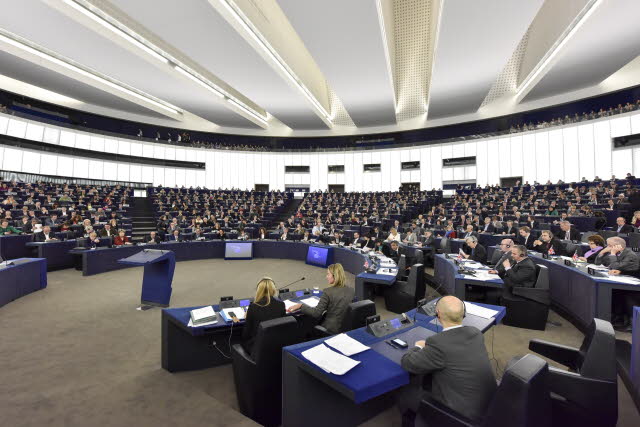
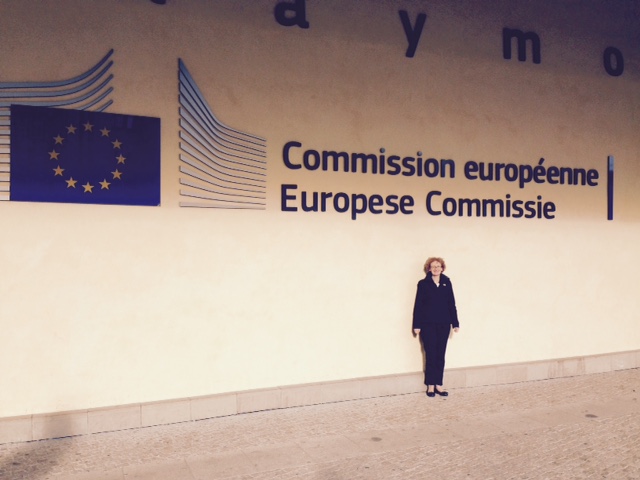
Review, and possibly reform, of the European Union copyright system tops the list of “hot” European intellectual property issues this year. The new European Commission has made modernising copyright rules a major priority, while fresh debate has broken out over the need for levies on digital copying devices to remunerate rights holders.

Meanwhile ongoing unrest between European Patent Office (EPO) staff and management looks likely to continue, as do efforts to finalise the unitary European patent and Unified Patent Court. EU legislation to protect trade secrets could be adopted and trademark law updated. In addition, several important IP-related decisions are expected from the European Court of Justice (ECJ).