Category Information and Communications Technology/ Broadcasting

WIPO Copyright Committee Hears Case For Exceptions For Museums

Museums usually gather heterogeneous objects, coming in various forms, and engage in different activities in relation to those objects. With the advance of information technologies, museums have to adapt and consider the digitisation of their collections, which brings copyright questions, according to a study presented yesterday at the World Intellectual Property Organization.


European Commission Unveils First Copyright Reform Proposals To Mixed Review

The European Commission's long-awaited effort to reform Europe's copyright system includes a proposal for cross-border portability of online content services and an action plan for updating copyright rules. The proposals are the first in its Digital Single Market strategy, the EC said. The announcement prompted mixed reviews from internet service provider and consumer groups and one EU lawmaker but a warmer reception from rights holders.

Big Rights Holders Favour Status Quo In EU Copyright Over Reform

BERLIN - Big rights holders and their attorneys do not yearn for a reform of European Union copyright. Participants in last week‘s Pan-European Intellectual Property Summit in Berlin discussed concerns about the potential extension of the rules of origin to the internet, the CabSat directive and successful litigation against intermediaries in enforcing copyright.

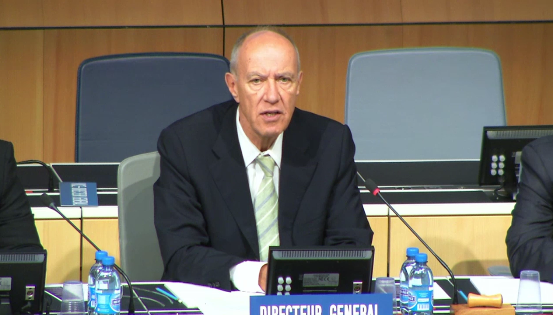
Interim WIPO Copyright Head Steps In As Members Resume Talks On Broadcasting Treaty, Exceptions

The World Intellectual Property Organization committee on copyright opened today with an agenda of a potential treaty to protect broadcasting organisations against piracy, and copyright limitations and exceptions for libraries, archives, educational and research institutions, as well as for persons with disabilities other than visual impairment.

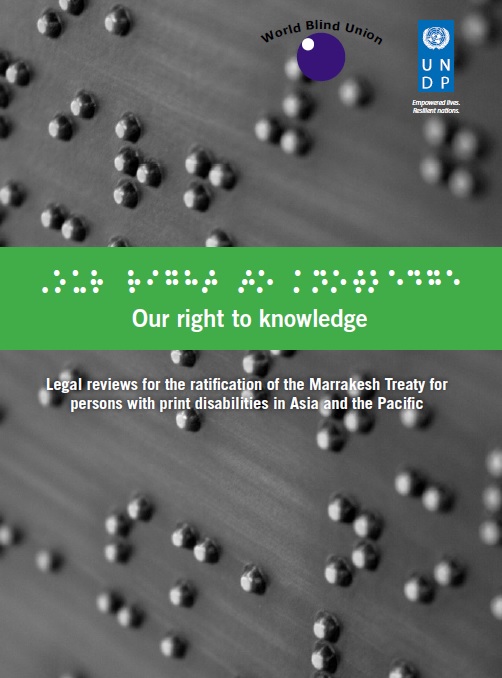
New UNDP-Blind Union Report Helps Asia-Pacific Nations Ratify Marrakesh Treaty

The United Nations Development Programme joined forces with the World Blind Union to prepare a new report aimed at facilitating Asia-Pacific countries’ ratification of a treaty designed to help visually-impaired people access special format books.

New Proposal At WIPO SCCR To Explore Use Of Copyrighted Works In Digital Environment

Latin American and Caribbean countries have tabled a new proposal for next week’s meeting of the World Intellectual Property Organization committee on copyright. The proposal calls for analysing copyright related to the digital environment.

European Court Of Human Rights Finds Turkey Violated Freedom Of Expression In YouTube Blocking

Ten sites allegedly disrespectful to Kemal Attaturk, founder of modern Turkey, were enough for the courts in Turkey to ban a whole platform - YouTube - from 2008 until the end of 2010. But a ruling of the European Court of Human Rights today declared the blanket blocking a violation of the right to receive and impart information freely, protected under Article 10 of the European Convention on Human Rights.

At WIPO, Former South Africa Judge Calls For Balance In IP Rights Enforcement

Alongside this week's meeting of the World Intellectual Property Organization committee on enforcement, an event featured a former South African Supreme Court judge presenting his views on IP enforcement. There is a need to go for the “big fish,” he said, and to bring balance in sanctions and enforcement procedures. He also described courts as finding that exceptions to copyright are a public right.

TPP Article 14.17 & Free Software: No Harm, No Foul

[Software Freedom Law Center, Link (CC-BY-SA)] The first official public release of the text of the Trans-Pacific Partnership Trade Agreement (known universally as the TPP) on November 5, 2015 generated much heated speculation. The ideal of “open agreements, openly arrived at” remains regrettably unattainable in international affairs. “Fast track” trade negotiating authority in the US means that parties excluded from the negotiating process have a short time in which to mobilize for or against the treaty as a whole in light of their specific concerns. The premium on speed of response to a very lengthy and complex legal document—and the presence of intense public attention—guarantees that hasty judgment and occasional self-promotion will always outrun professional analysis; this is one of the inherent defects of secret legislation.