Category Human Rights

Momentum-Building: An Interview With Ruth Dreifuss On High-Level Panel On Access To Medicines

Former Swiss President Ruth Dreifuss, co-chair of the United Nations Secretary General’s High-Level Panel on Access to Medicines, participated in a Geneva event on rare diseases earlier this month. She agreed to answer Intellectual Property Watch’s Catherine Saez about the High-Level Panel report, in particular how it was received by the international community, her take on criticisms that have been voiced, and the importance that the report be discussed at the international level such as the World Health Assembly.
US Federal Court Bars Online Publication Of Copyrighted Standards Incorporated Into Laws

In a case pitting standards development organisations against internet content aggregators, a United States federal court ruled that Public.Resource.Org breached copyright by posting unauthorised copies of standards incorporated into government education regulations. Public Resource has appealed.

When Machines Create Intellectual Property, Who Owns What?

The concept of machines that can think and create in ways that are indistinguishable from humans has been the stuff of science fiction for decades. Now, following major advances in artificial intelligence (AI), intellectual property created by machines without human input is fast becoming a reality. The development thus begs the question among legal scholars, legislative bodies, and judiciary branches of governments worldwide of who owns the intellectual property that humans did not create.

European Parliament Demands Transparency In Expert Groups, Protection For Whistleblowers

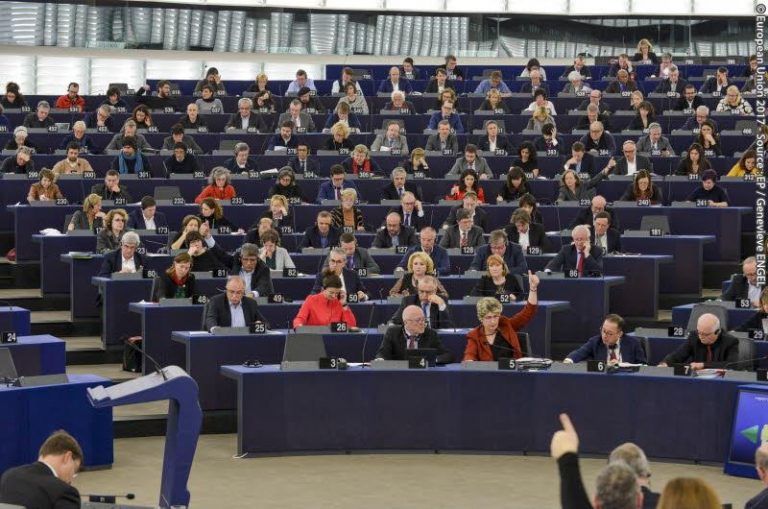
The European Commission is reforming the way it populates its "expert groups" which has been criticized as unbalanced and non-transparent for years. But the European Parliament is not satisfied. In a report on its own initiative passed in Strasbourg today practically unanimously (663 in favour, 16 against, 13 abstentions), the Parliament requested the Commission make public how it decides the composition of expert groups and explain which interest groups are to be represented and how geographical and political interests will be balanced.

Hepatitis C Patent Challenges In India, Argentina To Allow Generic Production

Resistance to high prices for hepatitis C drugs is ongoing as five new challenges against patents have been filed in India and Argentina, according to sources. Those challenges aim at allowing the production and distribution of affordable generic versions of new hepatitis C medicines (direct-acting antivirals).

Patentability Of Some Biotech Uncertain In Europe As Examination, Opposition Suspended

The patentability of plants or animals that have been obtained by natural occurrence such as selection and crossing has been a recurrent issue discussed at the European Patent Office (EPO). A recent notice from the European Commission challenged a ruling by the EPO Enlarged Board of Appeal on such patents, prompting yet more discussions in the organisation. In the meantime, all examination and opposition on such patents have been halted at the EPO. Industry is concerned that the EPO ruling might be questioned, and warns of effects on innovation, harm to applicants. Civil society is concerned about a non-transparent process.

Confidential Draft Of WHO Cancer Resolution Shows Remaining Issues IP-Related

The latest version of a draft resolution on addressing the global rise of cancer negotiated last week at the World Health Organization shows that remaining points are intellectual property-related, but there seems to be agreement on referencing trade flexibilities in the text, even from the United States, and a common goal of lowering prices of treatment. WHO members tried to reach common language during the Executive Board in January but time ran out and discussions are expected to continue until the annual World Health Assembly in May.

UN High-Level Panel, Medicines Access Find Foothold At World Health Assembly In May

World Health Organization member states seeking solutions for ensuring medicines access have been looking for ways to get a recent controversial report from the UN headquarters on the WHO agenda. The Executive Board this week heard concerns and left open the possibility that it will come up at the annual World Health Assembly in May.

EU Adoption Of Marrakesh Treaty For Blind Readers Imminent After Years Of Delay?

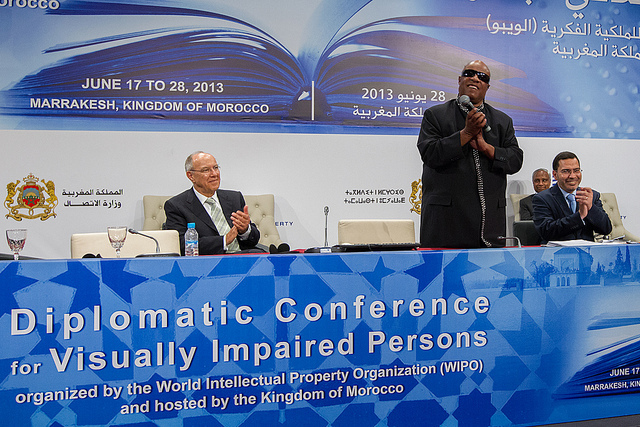
The European Parliament Legal Committee this week did not bother to further discuss the ratification of the Marrakesh Treaty on copyright exceptions for print disabled persons. Instead, Rapporteur Max Andersson declared that he favoured putting the file to a vote right away. Andersson told Intellectual Property Watch that the parliament would adopt the report in March or latest April.