Category Health & IP

WHO: Developing Countries Need Smart IP Systems For Local Medicines Production

The World Health Organization has released a report on the role of intellectual property in local production of medicines in developing countries. According to the report, the way countries design their intellectual property system is key in the development of local innovation and production. However, health outcomes will depend on the accessibility and affordability of good-quality essential medicines.

Biotherapeutic Medicines, A New Frontier, Face Regulatory Issues

Biotherapeutic medicines, engineered by living organisms, have opened a promising path to treat major diseases. Near copies of these medicines, called biosimilars, are slowly coming to market, as the originator products become free of intellectual property rights or data protection.

However, some regulatory issues are left to be addressed, in particular in developing countries, according to the pharmaceutical industry and the World Health Organization. For patients, information on those products and their affordability are key, said a patient group representative.

Special Report: India Rocked By Report Of Secret Assurance To US Industry On IP

That the Indian government has been under pressure from the United States to change its patent regime is no secret among those who follow the public discourse on intellectual property rights. Now, a new controversy about India’s alleged private assurance to the US-India Business Council (USIBC) and other lobby groups that it would not invoke compulsory licensing for commercial purposes seeks to add fuel to fiery speculation about a shift in India’s policy on IPR.

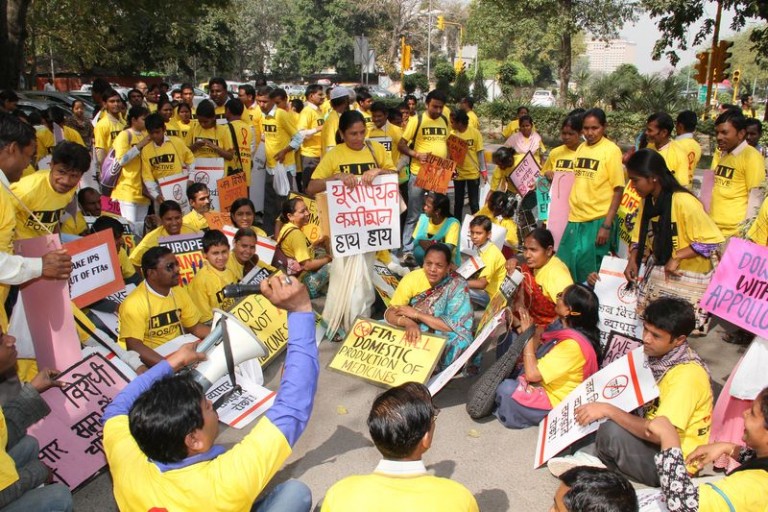
Asian Voices On Access to Medicines: Scrap TRIPS, Voluntary Licences Not Working, FTA Threats

Speakers from Asian civil society provided recommendations to the public hearing of the United Nations Secretary General’s High-Level Panel on Access to Medicines held yesterday. They underlined the unaffordability of medicines in their countries, the inefficiency of current mechanisms such as voluntary licensing, and the pressure applied by pharmaceutical companies and the United States and Europe to prevent the use of compulsory licences. One speaker warned against the expert advice given by the World Intellectual Property Organization to least-developed countries, while others pointed to stringent intellectual property measures in free-trade agreements.

Ukraine To Amend Customs Code, Ratify Amendments To TRIPS

The Ukrainian Parliament is currently drafting an amended Customs Code to introduce a number of changes to the country’s intellectual property legislation. Moreover, in mid-March, local lawmakers authorised Ukraine’s President Petro Poroshenko to ratify the protocol amending the TRIPS agreement which enables increased exports of pharmaceuticals produced under compulsory licences to countries which are not capable of manufacturing them locally.

China’s Pharmaceutical Sector And The IP Puzzle

Despite impressive growth, the pharmaceutical sector in China still relies on generic drug production since the majority of domestic companies cannot compete with country-based foreign corporations. Currently, following WTO pressure to oblige China to comply with IP regulations, more and more patented drugs are entering the market. Unfortunately, in spite of a newly introduced IP friendly bill, a puzzling situation persists, writes Pietro Dionisio.