Category Health & IP

Amid Global Push For Tobacco Plain Packaging, IP And Health Rights Bog Down Africa

CAPE TOWN, South Africa — Plain packaging is considered unattractive among marketers, loss-making for industries, and a healthy life promoter for governments and the public. The potent mix to balance profits, safeguard jobs and cut illnesses has made it a controversial solution to curb smoking. As it grows in popularity around the world, how is plain packaging faring in Africa?

Innovation And Access: Fission Or Fusion? Interview with David Taylor, Professor of Pharmaceutical and Public Health Policy, University College London, UK

In the light of the UN High-Level Panel on Access to Medicines, this series of sponsored articles challenges experts to give their views on the policies that best support the development of solutions to societies’ greatest challenges and how enabling policy environments, including IP systems, influence the development and flow of new technologies and services in different sectors, fields of technology, and jurisdictions. The views expressed in the articles are those of the authors. Below is an interview with David Taylor, Professor of Pharmaceutical and Public Health Policy, University College London, UK.

Biggest World Health Assembly Ever Kicks Off Next Week With A Loaded Agenda

Next week the annual assembly of World Health Organization member states will take place with a heavy agenda and its largest attendance ever. The lack of new antibiotics to address bacterial resistance, global shortages of vaccines and medicines, the fight against substandard drugs, and a framework to guard against undue influence of outside actors on the work of the WHO are part of a picture where there is an increasing blur between developed and developing countries in terms of access to medicines. And then there is the matter of electing a new WHO director general.

EU Eyes Revamp Of Policy To Speed Drug Approvals In Developing Countries

Article 58, a process introduced by the European Commission to help speed up the time low and middle-income countries take to approve new drugs, could be in for a massive overhaul. A revamp has been proposed because it is underused - just a handful of products have gone through the Article 58 process since its launch in 2004. The most recent is an antiseptic chlorhexidine gel that prevents new-born umbilical cord infections in developing countries. A joint project between GSK and Save the Children, it was approved late last month.

Public Health Advocates Urge WHO Action On Alternative R&D Financing

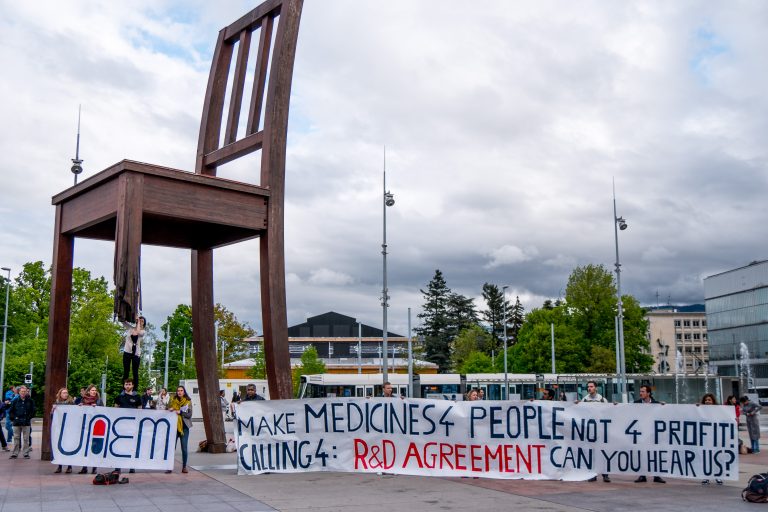
Public health advocates last week told World Health Organization delegates they must act quickly to save the lives of poor populations suffering from less common diseases for which there is no research and development funding. Nongovernmental organisations showed up to a WHO meeting on the issue to urge on delegates, even holding a public demonstration in front of the UN, but there was concern afterward at the little progress made.

As Patients Wait, WHO Members Chip Away At Decision On Medical R&D Funding

A number of World Health Organization member states attended a meeting last week aimed finding ways to sustainably finance research and development for medical products, especially those for poor populations lacking means to pay high prices. According to the outcome document and a WHO official, they heard many viewpoints from experts and made progress but much was left for the World Health Assembly later this month.

MSF Issues In-Depth Report On R&D And Drug Prices

Médecins Sans Frontières (MSF, Doctor Without Borders) today announced a report detailing what it calls failings in the current system for developing new drugs in ways that all patients can afford and access, and providing proposed policy options for addressing the problems.

Special Report: The Battle For Biosimilars In India

[story updated] Biosimilar drugs hold out big opportunities for India’s drug companies. But the future is fraught with challenges. One key challenge is regulations.

What does this mean for countries like India, an emerging market for biosimilars? How will the evolving global regulatory environment on biosimilars impact patients?

Last month, both these questions came to the fore as the battle over biosimilars moved centre stage in this country in the wake of an interim order by the Delhi High Court, and then another decision by a Division Bench of the same court which took a different view.