Category Health & IP

New Alliance To Hold UN And Others Accountable For Antimicrobial Resistance Commitments

A new international alliance to support the United Nations Resolution on Antimicrobial Resistance was launched this week. The Conscience of Antimicrobial Resistance Accountability (CARA) aims to bring together organisations committing to reporting on mutually agreed upon indicators in countries around the world, and to hold the UN and other stakeholders accountable to their commitments.
Access To Medicine Index Finds Progress In Pharma’s Efforts

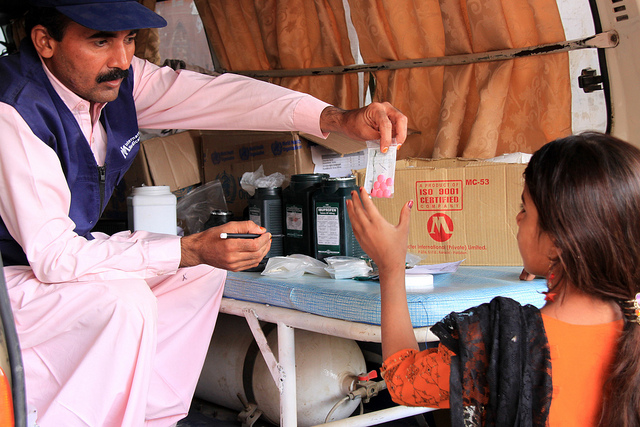
The Access to Medicine Index 2016 was published today, analysing the top 20 research-based pharmaceutical companies. The index looks at how those companies make medicines, vaccines and diagnostics more accessible in low- and middle-income countries. The index found progress in companies' efforts to improve access but little support for flexibilities enshrined in international trade rules.

WTO Members Discuss UN High-Level Report On Medicines Access That WHO Declined To Discuss

The World Trade Organization intellectual property committee this week discussed the report of United Nations Secretary General’s High-Level Panel on access to medicines which offered recommendations regarding the use of intellectual property in international trade. Developing countries taking the floor accentuated the use of flexibilities under trade rules, and the World Health Organization gave an overview of how its activities follow the panel's recommendations, and its future projects. Civil society meanwhile criticised the WHO’s decision to dismiss a request by some developing countries to include discussions on the UN report at the next Executive Board Meeting.

Six Candidates For WHO Director General Lay Out Their Views

Funding, universal health, multisectoral work and access to medicines were among the issues addressed at the recent candidates' forum of the World Health Organization in Geneva as part of the process to choose the next director general of the UN health agency. Candidates spoke on how to fund the organisation in its quest for universal health care and response to emergencies.

Lancet Report On Essential Medicines Takes Aim At Access, Affordability

A much-anticipated report on progress in global access to essential medicines released today has found that change is needed to the system of paying for research and development, including moving beyond sole reliance on patents to cover R&D costs. It calls for a global R&D policy framework, a possible patent pool for essential medicines, addresses financing issues, and claims to have developed a new cost model. Meanwhile, comments ranged from two ministers from the Netherlands said the system is broken while a leading industry executive criticised it for questioning the patent system.

East African Nations Agree Declaration Promoting Regional Pharma Sector Investment

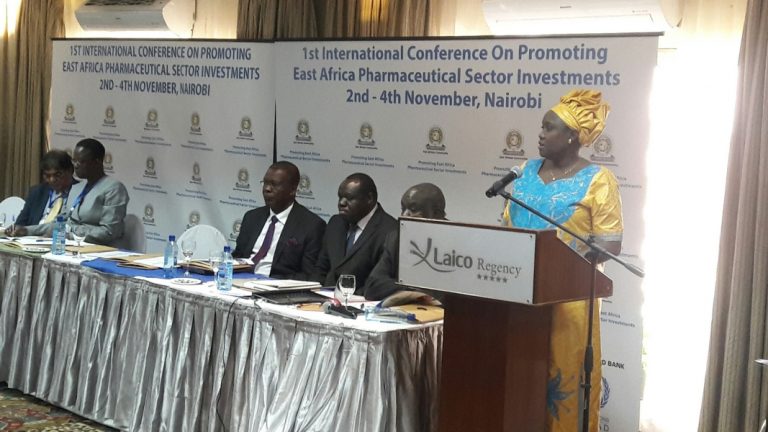
Senior officials from East African nations last week agreed on a declaration on promoting investment in the region's pharmaceutical sector, spelling out terms aimed at boosting investment in ways that are locally relevant and responsible. The declaration includes: steps to standardise and improve product quality and registration, boosting government procurement of local products, setting up research centres, adopting domestic laws on intellectual property and international trade flexibilities to IP, actions against counterfeit and substandard medical products, and increasing exports. The meeting comes as local pharmaceutical production is seen to be in decline in the region.

Indian Generic Pharma Warns Against Government Caving To US Pressure On Data Exclusivity

The Indian Drug Technical Advisory Board meeting on 7 November is expected to discuss a measure that could lead to opening the way to a 10-year data exclusivity period for originator pharmaceutical companies in India, according to the Indian Pharmaceutical Alliance. The alliance submitted a letter to the advisory board to warn against consequences on public health of data exclusivity if the Indian government “succumbs to” pressure by the United States.

Navigating Fragmented Laws And Systems Around Tobacco Packaging Lawsuits

Sitting between different rights, powers and principles at the intersection of differing legal regimes is the case of Philip Morris v Uruguay. The case, which concerns Uruguayan regulations that impose enlarged graphic health warning requirements on tobacco packaging and reduce the varieties of a tobacco brand that can be sold, has since its decision in July this year by an investor-state arbitration tribunal, has caused much discussion among legal practitioners and academia and attracted broader public attention.

WIPO Members Divided On IP Agency’s Role In Implementation Of UN Sustainable Development Goals

Countries of the world decided in 2015 to launch an ambitious agenda to end poverty, protect the planet, and ensure prosperity for all by 2030. What should be the role of the UN World Intellectual Property Organization in the attainment of the adopted United Nations Sustainable Development Goals? This question, discussed at the WIPO Committee on Development and IP, is dividing countries, as developed countries argue that only a few goals apply to the work of WIPO, and others argue that there should be no ‘cherrypicking’ as all the goals in one way or another do apply to WIPO's work as a UN agency.