US Issues Updated Antitrust Guidelines For Licensing Of IP
The United States Department of Justice and Federal Trade Commission today released updated antitrust guidelines for the licensing of intellectual property.

Original news and analysis on international IP policy
The United States Department of Justice and Federal Trade Commission today released updated antitrust guidelines for the licensing of intellectual property.
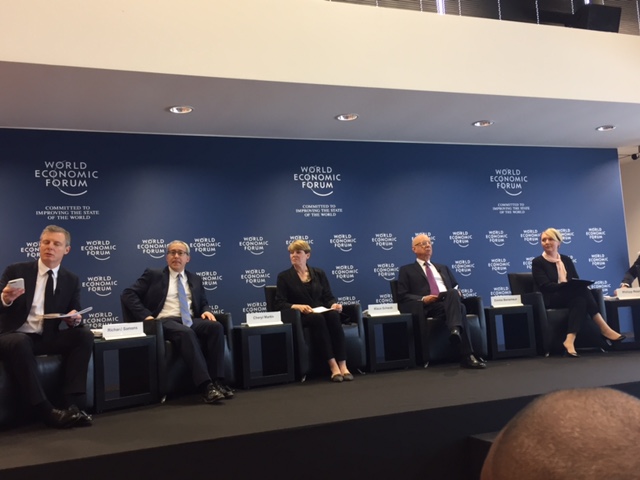
Days away from the opening of the annual World Economic Forum in Davos, the founder of the forum described the main themes of the upcoming event, and underlined the role of social responsibility for business leaders.

When Gilead brought its new antiviral medicine – Sovaldi – for the treatment of Hepatitis C to the US market for USD 84,000, it triggered a storm of protest. Demand for this revolutionary treatment was so high that the price (despite reductions) became an enormous burden on the American healthcare system. Although the product is cheaper in Switzerland at CHF 48 307, treatment is rationed for reasons of cost.

Few were surprised when, earlier this month, the US Supreme Court agreed to hear the appeal in Impression Products, Inc. v. Lexmark International. The case presents two important patent law issues, and the lower court’s ruling on these issues conflicts with Supreme Court precedents, according to many experts.

Blockchain platforms could help solve some copyright ownership issues for content sharing. But whether the technology lives up to its promise remains to be seen.
After licensing negotiations between German university libraries and Elsevier failed at the beginning of the month, over 60 university libraries in Germany are preparing to be cut off from hundreds of journals of the British-Dutch publisher, after a standoff over pricing and access.
A new study by intellectual property trade associations analysed the correlation between trademarks and their economic impact on several Latin American countries. The study found that trademark registration is growing in the region and promotes economic growth.

The European Commission and the Canadian government today and tomorrow are hosting a first meeting for talks on a new multilateral investment court. Such a court could, the European Commission explained in an announcement, become the follow-up mechanism for the existing investor-state dispute settlement (ISDS) provisions that are part of 3,200 bilateral and multilateral free trade agreements around the world.
A new study by the United Nations Conference on Trade and Development (UNCTAD) finds that geographical indications could open the way to lucrative export markets for least-developed countries. The study calls for UN agencies to support those countries in their effort to develop GIs and diversify their exports, but warns about the need for capacity building and financial help, and raises biodiversity concerns of GI intensification.

Imagine your company just acquired its competitor for $100 million. Now imagine the company’s most important asset – its proprietary software – is subject to third-party license conditions that require the proprietary software to be distributed free of charge or in source code form. Or, imagine these license conditions are discovered late in the diligence process, and the cost to replace the offending third-party software will costs tens of thousands of dollars and take months to remediate. Both scenarios exemplify the acute, distinct and often overlooked risks inherent to the commercial use of open source software. An effective tech M&A attorney must appreciate these risks and be prepared to take the steps necessary to mitigate or eliminate them.