Category Trademarks/Geographical Indications/Domains

US Generic-Named Food Industries Cry For US Government Help Against ‘Relentlessly Aggressive’ EU

Something that was unimaginable just a few years ago: What if Americans could not buy ordinary bologna, feta or parmesan cheese? Or worse, make them and export them under those names? The industry group in the United States representing a range of products like those today called on the US government to help them defend their products and their jobs against what they called "purposeful," "relentless" and "aggressive" efforts by Europe to promote adoption of geographical indications (products named for places and with particular characteristics) to the detriment of the US common-named goods.
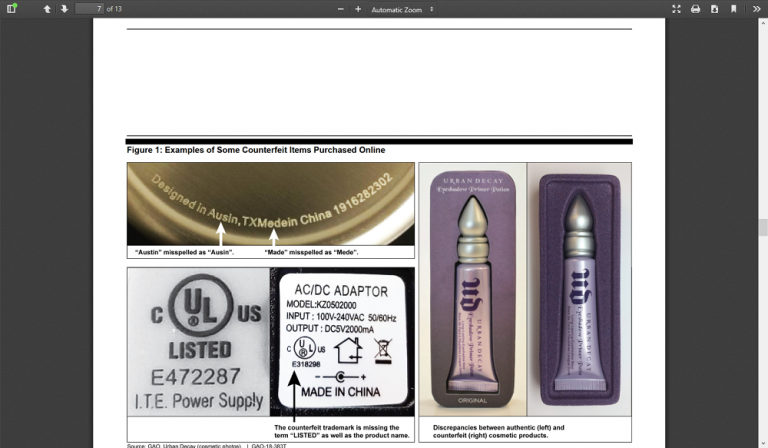
‘Mede In China’: US Customs May Bring In Rights-Holders To Help Stop Counterfeiters

The United States Customs and Border Patrol (CBP) this week said it is considering sharing more information with the intellectual property rights holders about possible counterfeit goods entering the US, in order to improve prevention. But CBP said it is still unclear whether changes in the law will be required to allow it to do this.

What We Know – And What We Don’t – About Counterfeit Goods And Small Parcels

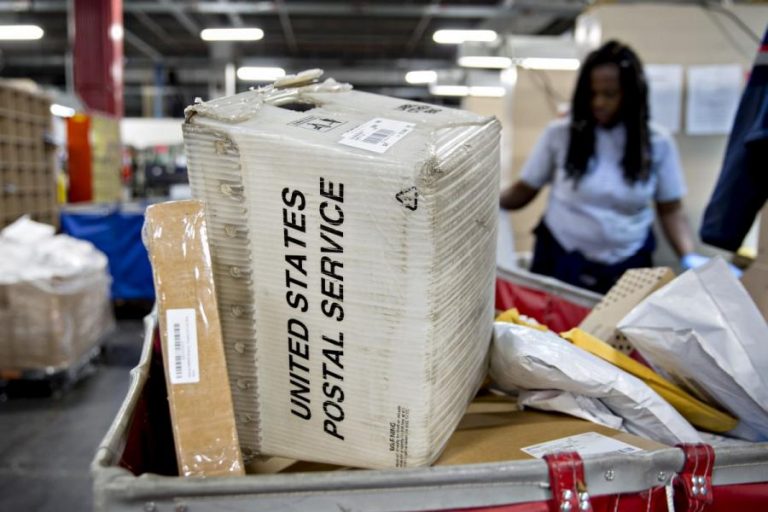
Kasie Brill writes: Cross-border e-commerce is growing exponentially. Consumers can purchase products from all over the world and have them delivered straight to their doors with just the click of a button. In fact, the U.S. Postal Service’s (USPS) international small parcel business increased 232% from 2013 to 2017, when it received nearly half a billion packages.

Out of those half a billion packages, USPS only had critical safety information on 36% of them. In other words, millions of packages reached American consumers with little or no security screening at all. Though most of these packages contained exactly what the customer ordered, counterfeiters have discovered that small parcels are an easy means to distribute fake and often dangerous goods.

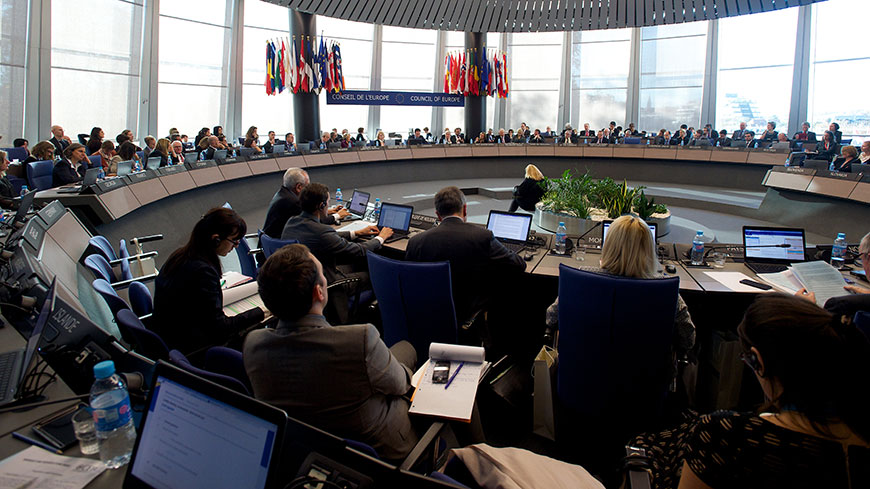
Council Of Europe Agrees New Guidelines On Media Pluralism, Transparency Of Media Ownership

The Strasbourg, France-based Council of Europe today adopted a recommendation containing a range of guidelines aimed at managing the effects of modern technology on the media sector and media pluralism. The recommendation sets out a comprehensive framework of guidelines for a "pluralist, transparent and participatory" media environment, online and offline.

Council Of Europe Adopts Guidelines On Role Of Internet Intermediaries

The Council of Europe today adopted a set of recommendations containing some 60 detailed obligations and suggestions for governments to ensure internet intermediaries, such as search engines and social media, uphold human rights and fundamental freedoms online.

UN Rapporteur For Privacy Rebuffed On Surveillance Oversight Negotiations

The United States, China and the European Union were unanimous yesterday in their rejection of international consultations for a possible legal instrument on government-led surveillance and privacy. During the 19th meeting of the 37th session of the UN Human Rights Council in Geneva, they called a possible legal instrument against uncontrolled cross-border surveillance proposed by the UN Special Rapporteur on Privacy, Joseph Cannataci, “unnecessary.” But Cannataci responded that the problems cannot be ignored.

USTR Lighthizer To NAFTA Partners: Step Up Pace Or Lose Window Of Opportunity

United States Trade Representative Robert Lighthizer warned his Mexican and Canadian counterparts today (5 March) that if they don't quickly pick up the pace of the North American Free Trade Agreement (NAFTA) renegotiations, they will face "headwinds" from elections in all three countries. And if they can't progress, the US is prepared to proceed bilaterally.

Tough Talk On Transatlantic Privacy, Once Again

The EU Commissioner for Justice, Consumers and Gender Equality, Věra Jourová, ahead of her US visit announced “a tough tone” on remaining gaps in the implementation of the privacy shield, the arrangement that allows to transfers of data of EU citizens to the United States. Speaking before the EU Parliament's Committee on Civil Liberties (LIBE), Jourová said while she had heard the privacy shield was not a priority of the US administration, “it will be a priority, if we make clear that we will suspend the system if it doesn't work,” adding, “My patience is coming to an end.”

WTO TRIPS Council Looks At IP And The Public Interest, Importance Of Research Exemption

A relatively new topic of discussion at the World Trade Organization committee on intellectual property is the relationship between intellectual property and the public interest. This week, WTO delegates discussed the application and benefits of a regulatory exception to IP rights allowing earlier entry of generics to the market, known as the Bolar exception. The committee also heard about a request from least-developed countries (LDCs) to improve technology transfer measures that developed countries have the obligation to provide under WTO rules.

WTO TRIPS Council: For Some, IP-Intensive Industries Are Engine Of Economy. For Others, IP Alone Is Not Sufficient

The World Trade Organization committee on intellectual property met this week and gave an opportunity to WTO members to discuss the value of intellectual property for micro, small and medium sized enterprises (MSMEs), and its importance for IP-intensive industries. Several members, such as the European Union on behalf of its members presented data to illustrate the importance of IP for MSMEs. Meanwhile, India and South Africa remarked that IP is only one factor to promote innovation, but are not a sufficient ingredient.