Category Trademarks/Geographical Indications/Domains

JPO Refused To Register Wordmark “ROMEO GIGLI” Due To Lack Of Consent From Italian Fashion Designer

In a recent decision, the Appeal Board of Japan Patent Office (JPO) refused to register trademark application no. 2015- 100245 for a red-colored word mark “ROMEO GIGLI” in gothic script (see below) designating goods of Class 24 and 25 on the grounds that applicant failed to obtain a consent from Italian fashion designer, Romeo Gigli, based on Article 4(1)(viii) of the Trademark Law, writes Masaki Mikami.

Moving Landscape In The IP World – Organisations, Industry, Law Firms

The end of 2017 and start of 2018 brought a lot of changes in the global intellectual property arena. The World Health Organization underwent major changes in its leadership following a new head elected in May, UNAIDS has a new deputy executive director, the World Intellectual Property Organization is seeking a new leader of its Global Challenges division, and the Board of the Internet Corporation for Assigned Names and Numbers decided on a number of appointments. The European Patent Office elected a new president, and the industry world also saw its share of changes. The International Federation of Pharmaceutical Manufacturers and Associations welcomed some new faces, and the head of the Federation of the European Sporting Goods Industry is changing. Law firms saw a high level of revolving chair movements, and promotions of attorneys to partners.

Year Ahead: Copyright, Unified Patent Court Remain High On EU Priority List

Plans to update European Union copyright rules advanced in 2017 but remain contentious heading into the new year. The proposal for a directive on copyright in the digital single market is the subject of intense debate between the EU Presidency and the European Parliament, with no clear end in sight to the negotiations. Several issues, including a possible “ancillary right” for news publishers and a plan to force online platforms to filter all uploads to combat copyright infringement, remain unresolved.

Other copyright matters, such as a regulation on broadcasting and a review of the EU database directive, are in the works. On the patent side, a pressing question is whether – and when – the EU unified patent and patent court (UPC) might finally launch.

Several EU comprehensive trade agreements, which include provisions on intellectual property rights, are under negotiation.

Cases to watch in the European Court of Justice include a referral from the Netherlands on the issue of whether the taste of cheese can be copyrighted.

USTR Notorious Markets: Online Ads Still Funding IP Infringement; Alibaba Fires Back About Report

The Office of the United States Trade Representative today released its annual list of the worst outlaw online and physical markets around the world, citing a range of major sources of problems in every part of the world. The list this year highlights new technologies, identifies online advertising as a large revenue source for counterfeiters, and includes Chinese online market Taobao, owned by internet giant Alibaba, for the second year in a row, leading the company to claim bias and politics are at play.

Morrison & Foerster’s 2018 Predictions On Intersection Of Technology And Law—From Web Scraping To Blockchain

From the Morrison & Foerster Socially Aware blog: Happy 2018 to our readers! It has become a Socially Aware tradition to start the New Year with some predictions from our editors and contributors. With smart contracts on the horizon, the Internet of Things and cryptocurrencies in the spotlight, and a number of closely watched lawsuits moving toward resolution, 2018 promises to be an exciting year in the world of emerging technology and Internet law.

Japan Patent Office Invalidates The Word Mark “Bord’or” In Relation To Bordeaux Wines

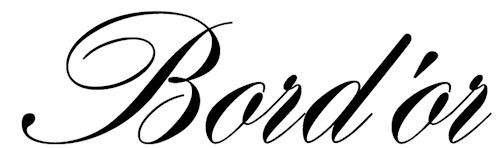
In a decision in an invalidation trial jointly claimed by INSTITUT NATIONAL DE L’ORIGINE ET DE LA QUALITE and CONSEIL INTERPROFESSIONNEL DU VIN DE BORDEAUX, the Invalidation Board of Japan Patent Office (JPO) ordered the invalidation of trademark registration no. 5737079 for a word mark “Bord’or” in script fonts (see below) in violation of Article 4(1)(vii) of the Trademark Law, writes Masaki Mikami.

How International IP Policy Reconfigured National Politics: An Interview With Prof. Ken Shadlen

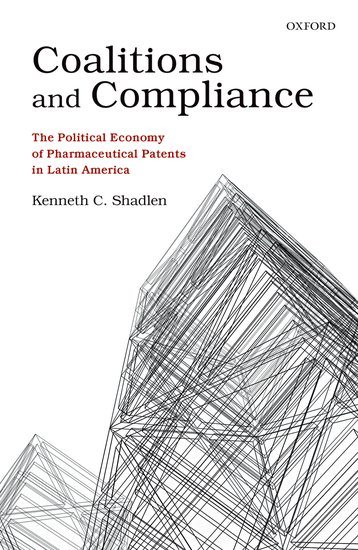
The recently published book Coalitions and Compliance by Professor Ken Shadlen of the London School of Economics examines how international changes can reconfigure domestic politics. Since the late 1980s, developing countries have been subject to intense pressures regarding intellectual property rights. These pressures have been exceptionally controversial in the area of pharmaceuticals. Historically, fearing the economic and social costs of providing private property rights over knowledge, developing countries did not allow drugs to be patented. Now they must do so, an obligation with significant implications for industrial development and public health. This book analyses different forms of compliance with this new imperative in Latin America, comparing the politics of pharmaceutical patenting in Argentina, Brazil, and Mexico. The book focuses on two periods of patent politics: initial conflicts over how to introduce drug patents, and then subsequent conflicts over how these new patent systems function. Intellectual Property Watch recently conducted a Q&A with Prof. Shadlen, which appears below.

US IP Law – A Look At The Year Ahead

In the coming year, one US Supreme Court case promises to dominate developments in America’s IP law. The upcoming decision in Oil States Energy Services v. Greene’s Energy Group could have major ramifications for patents, copyrights, trademarks, and the USPTO. But even as that case steals the limelight, 2018 could bring other significant changes to America’s IP law. Here are some of the key developments to watch for.

Top IP-Watch Stories Of 2017: What Do They Tell Us About Multilateral IP Policy?

What IP-Watch stories were readers reading most in 2017, and what does it say about the state of global intellectual property policy? In this article, we look at the most-trafficked stories of last year, and make a few assumptions. Asia, Europe, trade, health. These were the top targets of interest to readers among our offerings. Interestingly, despite all the sound and fury in Washington, our coverage there was not at the top of the list. Even more interestingly, neither was our extensive and world-leading coverage of the World Intellectual Property Organization.