Category Patents/Designs/Trade Secrets

WHO: Access To Hepatitis C Treatment Increasing, But Most Patients Undiagnosed
Access to hepatitis C treatments is increasing, so are therapeutic options, but most of those living with the disease are not diagnosed and thus remain untreated, the World Health Organization found in a new report. Upper-middle income and high-income countries continue to pay high prices, impeding equitable access, and those countries which have been most successful in increasing access have mobilised a strong government response, the report found.


Introduction Of A Grace Period In Europe

The protection of inventions is a cornerstone to encourage innovation as engine of economic growth. As one of the world‘s leading centres for innovation, the level of scientific and technological performance in Germany is very high, thanks to an excellent research landscape and a good technological and economic basis. But the global innovation competition is intensifying, and new competitors are seeking to enter international markets. However, Germany is falling short of its potential when it comes to leveraging technology to create new products, writes Michael Kahnert.

Zimbabwe Establishes An Intellectual Property Tribunal, As A Special Division Of High Court

KAMPALA, Uganda -- In what is seen as a significant achievement in the making of history of intellectual property law, the Government of Zimbabwe has instituted and operationalised an Intellectual Property Tribunal, with the mandate to speedily preside over all IP matters, disputes, infringements, passing off and other related issues. The Tribunal recently heard its first case. [A reminder to readers: All IP-Watch stories are totally free for least-developed countries and almost all developing countries. Just sign up for a password under Subscribe.]

EU Council’s IP Enforcement Changes: Judicial Systems, Customs, Open Source, WIPO – And An IP Watchlist

The European Council of ministers today adopted a set of conclusions on the enforcement of intellectual property rights in the European Union, aimed at improving protection in the digital era and promoting innovation. This includes a list of suggested actions, including possible changes to national laws and judicial systems, bolstering customs, agreements with industry, encouraging open source, strong representation at the World Intellectual Property Organization, and possibly setting up an IP watch list reminiscent of the one in the United States.

New IP-Sharing Framework To Accelerate R&D

Pharmaceutical R&D constantly leads to the generation of new intellectual property (IP), from clinical trial data to libraries of promising compounds. Not all IP assets generated by a company are used in their future R&D. When this happens, companies can choose instead to share them with other third-party researchers, under licensing agreements. The Access to Medicine Foundation has worked with BIO Ventures for Global Health (BVGH) to develop a framework for identifying which IP assets are most difficult for companies to share, yet most likely to speed up R&D of the medicines and vaccines needed by people living in low- and middle-income countries (LMICs), write Clarke B. Cole and Katie Graef.

New TPP Still Most Advanced IP Trade Agreement Ever, Think Tank Says

The Comprehensive and Progressive Agreement for Trans-Pacific Partnership (CPTPP) is on track to offer "the most advanced and detailed standards on intellectual property in a trade agreement to date" despite revisions scaling back the IP chapter after the United States dropped out, says the Washington, DC-based Center for Strategic and International Studies (CSIS).

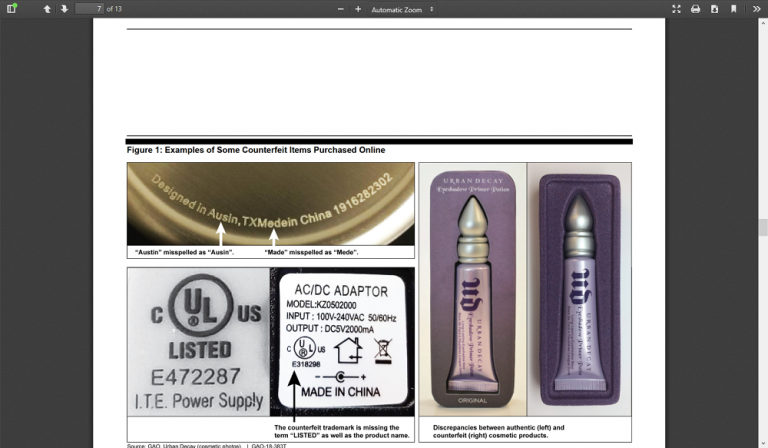
‘Mede In China’: US Customs May Bring In Rights-Holders To Help Stop Counterfeiters

The United States Customs and Border Patrol (CBP) this week said it is considering sharing more information with the intellectual property rights holders about possible counterfeit goods entering the US, in order to improve prevention. But CBP said it is still unclear whether changes in the law will be required to allow it to do this.

What We Know – And What We Don’t – About Counterfeit Goods And Small Parcels

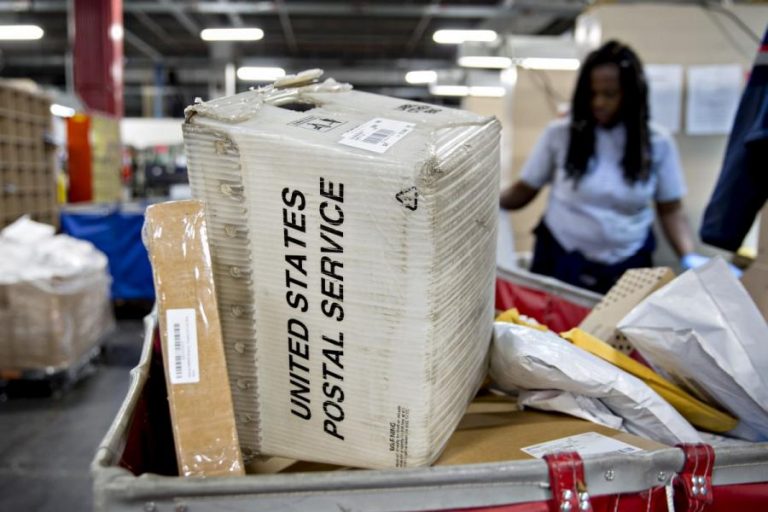
Kasie Brill writes: Cross-border e-commerce is growing exponentially. Consumers can purchase products from all over the world and have them delivered straight to their doors with just the click of a button. In fact, the U.S. Postal Service’s (USPS) international small parcel business increased 232% from 2013 to 2017, when it received nearly half a billion packages.

Out of those half a billion packages, USPS only had critical safety information on 36% of them. In other words, millions of packages reached American consumers with little or no security screening at all. Though most of these packages contained exactly what the customer ordered, counterfeiters have discovered that small parcels are an easy means to distribute fake and often dangerous goods.

EPO Reports Record Volume Of Patents, Seeks To Assure Quality

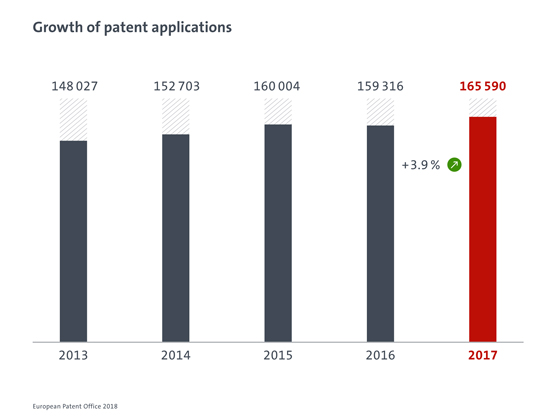
The European Patent Office today issued statistics which it claimed show the continued ascendance of Europe as a premier destination for patenting, not only from European countries. The statistics focus strongly on the increased volume of patents filed and granted, which it argued is a result of the office's focus on "efficiency and quality" and a boost to innovation.