Category Features

Why Follow-On Pharmaceutical Innovations Should Be Eligible For Patent Protection

Christopher M. Holman writes: Despite the important role of intellectual property rights in incentivizing innovation, the patenting of pharmaceutical innovation is frequently accused of impeding access to medicine. Criticism of the prevailing patent regime has focused in particular on patents directed towards follow-on pharmaceutical innovation, i.e., innovation that seeks to improve upon existing pharmaceuticals and their use in treating patients. Patents on follow-on innovation are often derided as “secondary” patents, with the implication that the underlying inventions are somehow lesser in nature than the subject matter claimed in “primary” patents, i.e., the drug active ingredient per se. While implicitly acknowledging the legitimacy of primary patents, critics of so-called secondary patents contend that patents on follow-on innovation allow drug innovators to “evergreen” their products, i.e., to extend the period of patent exclusivity beyond the expiration of any original patent on the drug active ingredient, and in doing so contribute to the high cost of drugs, thereby limiting the ability of patients to access the drugs upon which they have come to rely.

Analysis: Move To Contain Global Challenge By Ascending China At Play In Escalating Trade War Between Washington And Beijing

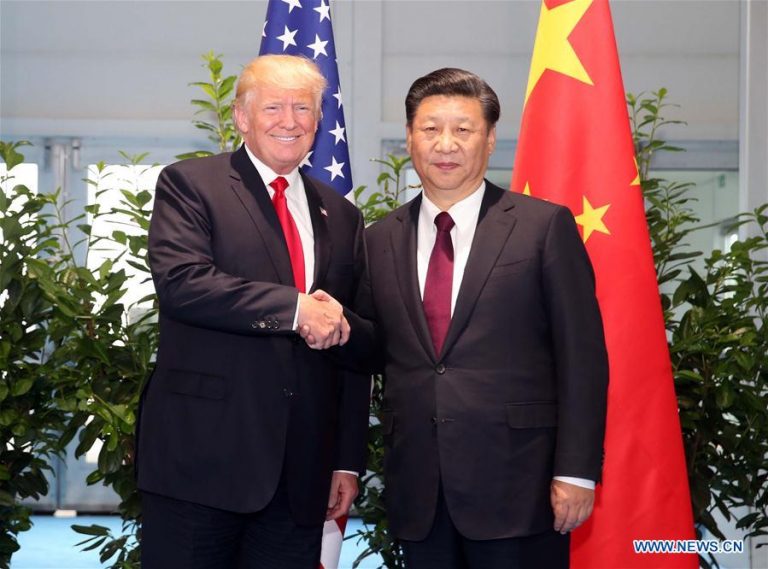
The latest escalation in US-Sino trade tensions following the announcement by President Donald Trump on 17 September that the US will slap 10 percent punitive tariffs on $200 billion worth of Chinese goods imports effective on 24 September and increase them to 25 percent on 1 January 2019, and China's counter-salvo announced on 18 September to impose tariffs of between 5 and 10 percent on $60 billion worth of US goods imports to kick in on 24 September may prove difficult to ease back from the brink.

WIPO, Global Protector Of Creators’ Rights, Hosts A Sizeable Art Collection Itself

International organisations are the repository of many works of art, but little is known by the public of their vast collections. The UN’s World Intellectual Property Organization in Geneva hosts over 500 works of art, some of them displayed in public spaces, most of them in storage, their value unclear. They have been gathered since the inception of the organisation, before it became WIPO in 1970, most of them given or loaned. What is considered works of art include a diversity of items. The most unusual and rare, a piece of the moon, sits in full view in a glass display in a lobby.

Brazilian Supreme Court Refuses To Judge Its Biggest Case On IP And Access To Medicines, And Benefits Big Pharma With Undue Monopolies

Marcela Fogaça Vieira and Pedro Villardi write: The Brazilian Supreme Court (STF) has mysteriously cancelled the judgment of the most important case regarding intellectual property and health ever to be decided by the court. On 28 June, the date of the judgment was set for 6 September. The cancellation occurred on the eve of the judgment, something very rare in the practice of the Court. The lack of decision on the case only benefits the transnational companies awarded with hundreds of undue monopolies. Just a few days before, the President of the STF - Judge Carmem Lucia - had a meeting with Interfarma, the association of multinational pharmaceutical companies in Brazil.

Welcoming People In Fresh Roles In The IP Community

Looking at movements in the global IP community over the summer and heading into fall, many old faces among the government delegations in Geneva left for new posts, while a new set of faces is taking up residence. Meanwhile, people are on the move at international organisations and NGOs, and law firms continued to see high turnover.

Fifa Rahman

Extended Monopolies On Biologic Drugs – A Warning To Developing Countries

Historically, the US has been the primary demandeur of maximalist IP norms in FTAs. Pharmaceutical IP is market-driven, and this is no different for biologic drugs, which dominate the list of bestselling drugs worldwide, making them important economic commodities. Developing country governments must take note of the US pushing for biologics exclusivity through NAFTA as this signifies an effort to change norms worldwide.

UN Human Rights Council Begins; Freedom Of Expression Issues Highlighted By Article 19 Group

Today, the UN Human Rights Council begins its 39th Session (HRC 39) in Geneva – over the next three weeks the UN’s top human rights body will come together to discuss and act on some of the world’s most pressing human rights violations and abuses, writes civil society group Article 19. There is a lot on the HRC’s agenda for September, with a number of issues important to the right to freedom of expression to be considered, and it is essential that the Council acts on improving protections. In addition to important reports from OHCHR and from special procedures up for discussion, several thematic and country-specific resolutions will also be negotiated, to be considered for adoption on 20 and 21 September.

Not Just A Matter Of Matter: ‘The Way Forward’ For The UNCBD, NP And Half-Earth

Prof. Joseph Henry Vogel writes: Is information something or is it about something? That is essentially the question before the Fourteenth Conference of the Parties (COP) to the 1993 United Nations Convention on Biological Diversity (CBD), which meets from 19-27 November 2018. And it is a “$64 billion question”. The answer could determine the modality for “access to genetic resources” and “the fair and equitable sharing of benefits” (ABS), which is the third objective of the CBD. If the information conveyed in life is something, then the obligation of benefits could be orders of magnitude greater than if that same information is only about something. Re-phrasing the question: Are Users of genetic resources accessing information? Or are they accessing matter, the properties about which are diffused over organisms and jurisdictions? Information-as-the-answer leads to an economic rationale for tens of billions of dollars in payments per year. Properties-as-the-answer justifies the “peanuts” currently being paid.

New Health Ministry Of Chile Reaffirms Path To Compulsory Licence For Hepatitis C Drugs

Last week, Chilean Health Minister Emilio Santelices, appointed by President Piñera - who took office this year - rejected an attempt from company Gilead and a Big Pharma-related association of international drug makers in Chile to put down the resolution 399/2018 declaring public health justifications for the issuing of compulsory licences for sofosbuvir to treat a hepatitis C epidemic in Chile, that was issued by the previous government of Michele Bachelet, writes Luis Villarroel.

UN Tuberculosis Negotiations: What Is At Stake?

With negotiations over the final language of a United Nations high level declaration on ending tuberculosis still ongoing, the stakes are high as different TB stakeholders await the outcome. The language in question could either raise or reduce barriers to affordable access to life-saving TB drugs, according to civil society groups.

New Dutch Foundation To Address High Medicines Pricing Announces Plan To File Complaint With Competition Authority

The newly established Dutch Pharmaceutical Accountability Foundation has announced its first action to address unreasonably high medicines prices in the Netherlands. The Foundation will request the Netherlands Authority for Consumers and Markets to look into the price hike for the medicine chenodeoxycholic acid (CDCA) by the company Leadiant Biosciences Ltd (formerly Sigma-Tau). CDCA is used for the treatment of children and adults with cerebrotendinous xanthomatosis (CTX), a rare genetic metabolic disease that affects around 60 people in the Netherlands.

Conceptualizing Minimum Core Beyond Affordable Goods And Services – Trade For Human Rights As A Minimum Core Obligation

Prof. Sakiko Fukuda-Parr writes: The conception of the Minimum Core Doctrine around low cost goods and services is unnecessarily restrictive. It is also out of line with concerns to meet pressing and priority health needs of the population. It departs from the original concept of obligations of immediate effect. It limits the consideration of the wide range of measures that national governments should take to expand the enjoyment of the right to health such as by reversing damaging policies or setting new ones. A salient example is policy choices governments might make in the area of intellectual protection provisions in free trade and investment agreements.